You’ve got your first hook in hand, a ball of yarn that looks like a rainbow threw up on it, and a pattern that says “Use size G hook with worsted weight yarn.” And you’re thinking… Wait, what does that even mean?
If you’ve ever felt lost staring at a yarn label like it’s ancient hieroglyphics, you’re not alone. Crocheting can feel overwhelming at first—not because it’s hard, but because there’s a whole secret language around materials that no one ever taught you. But here’s the good news: understanding yarn weights and hook sizes isn’t about memorizing charts. It’s about learning how to feel your way to beautiful, even stitches. And once you do, your projects will look professional, fit right, and actually feel satisfying to make.
In this guide, we’ll break down yarn weights and hook sizes into plain, everyday language—no jargon, no confusion. You’ll learn what those numbers and labels really mean, how to pick the right combo for your project, what happens when you mix the wrong ones, and how to fix common mistakes before they turn into frustrated tears (we’ve all been there). Plus, I’ll share real-life examples from my own crocheting journey—from that first lopsided blanket to the cozy hat I now gift every Christmas. By the end, you won’t just know what to use… you’ll feel confident choosing what’s right for you.
Let’s start with the foundation: what exactly is yarn weight?
What Is Yarn Weight? (It’s Not About How Heavy It Is!)
Let’s clear up the biggest myth right away: yarn weight doesn’t mean how heavy the ball feels in your hand. Nope. It’s about the thickness of the strand itself. Think of it like pasta—spaghetti is thin, fettuccine is medium, and rigatoni? That’s bulky. Same idea.
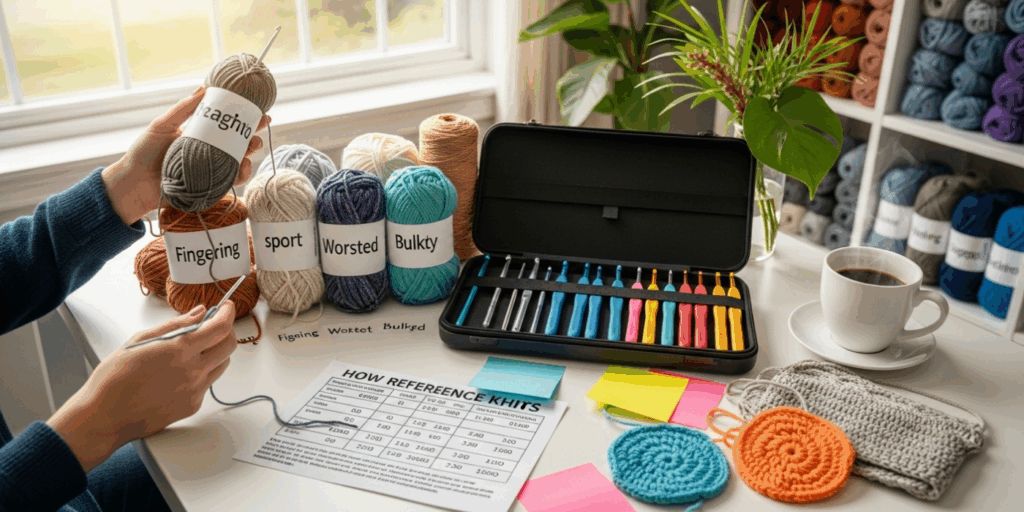
The Craft Yarn Council (the official rulebook of yarn in the U.S.) has standardized yarn weights into 8 categories, from super thin to super chunky. Here’s the simple version:
- Lace (0) – Thread-thin. Think bridal veils or delicate doilies.
- Super Fine (1) – Sock yarn. Great for baby clothes and lightweight shawls.
- Fine (2) – Sport weight. Perfect for lightweight sweaters.
- Light (3) – DK or light worsted. A favorite for baby blankets.
- Medium (4) – Worsted weight. The most common yarn you’ll find in craft stores.
- Bulky (5) – Thick, cozy, and fast. Perfect for scarves and rugs.
- Super Bulky (6) – Like a rope. Knits up in hours.
- Jumbo (7) – So thick you might use your arms instead of hooks!
Why does this matter? Because if you use a super bulky yarn with a tiny hook, you’ll be fighting your own hands. The stitches will be tight, uneven, and frustrating. But if you use lace yarn with a huge hook? You’ll end up with holes bigger than your kitchen window.
Most beginner patterns use Medium (4) worsted weight yarn—and for good reason. It’s easy to handle, widely available, and forgiving. If you’re just starting out, stick with this. You’ll thank yourself later.
Pro tip: Always check the label. It’ll have a little symbol—a number inside a circle—that tells you the weight category. No need to guess.
Hook Sizes: The Secret Partner to Your Yarn
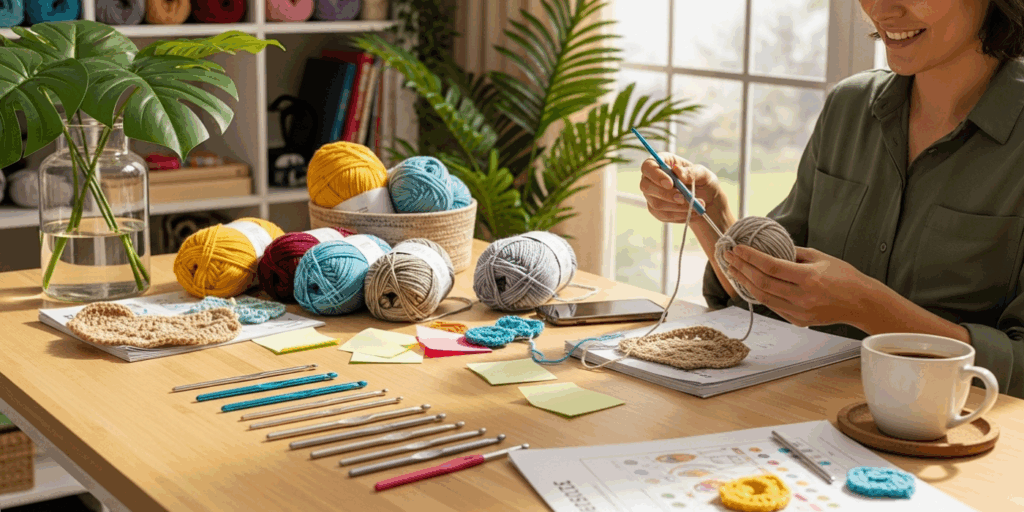
Now that you know your yarn weight, let’s talk about the other half of the duo: hook sizes.
Hooks come in two numbering systems: metric (mm) and U.S. letters/numbers. This is where things get confusing—because a “G” hook in the U.S. is 4.00 mm, but in some countries, it’s labeled differently. Don’t panic. You don’t need to memorize them. Just remember this:
Thicker yarn = bigger hook. Thinner yarn = smaller hook.
Here’s a simple cheat sheet for beginners:
| Lace (0) | B-1 to D-3 | 2.25–3.25 mm |
| Super Fine (1) | C-2 to E-4 | 2.75–3.5 mm |
| Fine (2) | E-4 to F-3 | 3.5–3.75 mm |
| Light (3) | F-5 to G-6 | 3.75–4.5 mm |
| Medium (4) | G-7 to I-9 | 4.5–5.5 mm←Your best friend |
| Bulky (5) | I-9 to K-10.5 | 5.5–6.5 mm |
| Super Bulky (6) | L-11 to M-13 | 8–9 mm |
| Jumbo (7) | N-15 and up (or fingers!) | 10+ mm |
Notice how G-7 (4.5 mm) and I-9 (5.5 mm) show up again and again? That’s because worsted weight yarn (Medium 4) is the most popular. So if you buy one hook, make it one of these.
Here’s a real-life story: When I started crocheting, I used a size H (5.0 mm) hook with a bulky yarn I thought looked “cozy.” Result? My scarf looked like a net. The stitches were giant gaps, and it barely kept me warm. I thought I was doing it right—until I switched to a size K (6.5 mm). Suddenly, the fabric looked intentional. Smooth. Warm. Like it was supposed to be.
That’s the magic: the right hook size turns “meh” into “wow.”
Why Mixing the Wrong Yarn and Hook Ruins Your Project (And How to Fix It)
Let’s say you’re following a pattern that says: “Use worsted weight yarn with a 5.5 mm hook.” But you’ve got a different brand of yarn—same label, different feel. You grab your favorite size G hook (4.5 mm) because “it feels right.” You start crocheting… and by row 5, you realize your hat is too small. Way too small. You’ve made a beanie for a toddler… when you meant to make one for your husband.
This happens all the time.
Why? Because not all “worsted weight” yarns are created equal. One brand’s “medium” might be slightly thinner than another’s. And if your hook is too small, your stitches get tight, your fabric pulls inward, and your project shrinks.
The fix? Make a gauge swatch.
Yes, I know. You’re thinking: “I just want to start crocheting!” But hear me out—this one step saves hours, heartache, and wasted yarn.
How to make a gauge swatch (in 5 minutes):
- Chain 15 stitches.
- Work 10 rows in single crochet (or whatever stitch the pattern uses).
- Lay it flat without stretching.
- Measure 4 inches across. How many stitches fit in that space?
- Compare it to the pattern’s gauge (e.g., “16 sts = 4 inches”).
If you have more stitches than the pattern calls for? Your hook is too small. Switch up a size.
If you have fewer? Your hook is too big. Go down a size.
It’s like baking. If you use the wrong cup of flour, your cake sinks. Same here. A tiny difference in hook size can change your whole project’s dimensions.
Bonus tip: If you’re not following a pattern—say, you’re making a blanket for fun—just crochet a 6×6 inch square. If you like how it looks and feels? Keep going. No rules, no stress. That’s the beauty of crochet.
The Joy of Experimenting: Finding Your Perfect Combo
Here’s the secret no one tells beginners: there’s no single “right” combination.
Yes, patterns give you recommendations. But crocheting is an art, not a science. You might love the drape of a slightly looser stitch. Or maybe you want your blanket to be dense and warm, even if it takes longer.
I once made a blanket using a size H (5.0 mm) hook with worsted yarn—even though the pattern said G. It turned out softer, more flexible, and perfect for draping over a couch. My friend used the same yarn and hook size G. Her blanket was stiffer, more structured. Both were beautiful. Neither was “wrong.”
The key? Know the effect you want.
- Want something light and airy? Use a slightly larger hook.
- Want something dense and warm? Go smaller.
- Making a bag or basket? Tighter stitches = more structure.
- Making a shawl or scarf? Looser stitches = better drape.
Think of it like cooking. A recipe says “bake at 350°F.” But if you like your cookies chewy instead of crisp, you might lower the temp and bake longer. Same idea.
Start with the recommended hook. Then, if you’re not thrilled with the result, change one thing: your hook size. Not the yarn. Not the pattern. Just the hook. See what happens. You’ll learn more in 10 minutes of experimenting than in 10 hours of reading.
And here’s the best part: your hands will start to remember. After a few projects, you’ll close your eyes, feel the yarn, and just know which hook feels right. That’s when you become a real crocheter.
How to Read Yarn Labels Like a Pro (Even If You’re New)
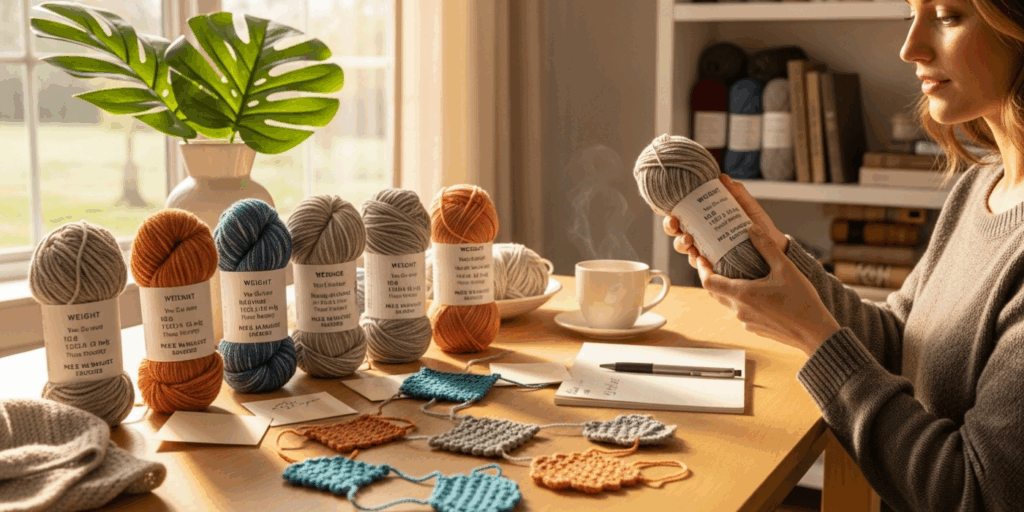
You’re at the craft store. There are 50 different brands of “medium” yarn. How do you pick?
Here’s your decoder ring:
Look for these 4 things on every label:
- Yarn Weight Symbol – That little circle with a number (4 for medium).
- Recommended Hook Size – Usually listed right under the weight.
- Gauge – “16 sc x 20 rows = 4 inches.” This is your cheat code.
- Fiber Content – Acrylic? Cotton? Wool? Each behaves differently.
Example: Red Heart Super Saver (acrylic) vs. Lion Brand Wool-Ease (wool/acrylic blend). Both are medium weight. But wool stretches more, holds shape better, and is warmer. Acrylic is easier to wash and cheaper. Choose based on your project.
Pro tip: Buy a small skein first. Test it with your hook. Make a swatch. If you love it? Buy more. If not? No big loss.
Also—don’t ignore the yardage. A 100g ball of lace yarn might have 500 yards. A 100g ball of jumbo yarn? Maybe 50 yards. That means you’ll need way fewer balls of bulky yarn to finish a blanket. Budget matters!
And here’s something I wish I’d known: yarn dye lots. Always buy enough yarn from the same dye lot number (it’s printed on the label). If you run out and buy another ball with a different lot, your color might be slightly off. Imagine finishing your blanket… and one corner looks like it’s from a different universe. Not ideal.
Real Projects, Real Tips: What to Use When
Let’s bring this all together with real-life examples:
🧣 Beginner Scarf
- Yarn: Medium (4) worsted weight
- Hook: I-9 (5.5 mm)
- Why? Fast, warm, forgiving. Perfect for learning single and double crochet.
👶 Baby Blanket
- Yarn: Light (3) DK or Medium (4) cotton blend (soft, washable)
- Hook: G-7 (4.5 mm)
- Why? Cotton is breathable and gentle on skin. Smaller hook = tighter weave to keep little toes warm.
🧶 Chunky Arm-Knit Throw
- Yarn: Jumbo (7) or Super Bulky (6)
- Hook? You don’t need one! Use your arms.
- Why? This is the “no-tool” project. Big yarn + big stitches = done in one weekend.
🧢 Beanie for Winter
- Yarn: Medium (4) acrylic
- Hook: H-8 (5.0 mm)
- Why? Slightly tighter than average for structure. Keeps the hat from flopping.
🌸 Delicate Doily (for the adventurous!)
- Yarn: Lace (0) or Super Fine (1)
- Hook: B-1 (2.25 mm)
- Why? Tiny hook + thin yarn = intricate lace. Takes patience. But oh, the beauty!
Start with the scarf. Then try the baby blanket. Then—when you’re ready—dive into lace. Each step builds your confidence. You’re not just making things. You’re building skills.
The Big Picture: Why This Matters More Than You Think
Learning yarn weights and hook sizes isn’t just about following instructions. It’s about taking control of your creativity.
When you understand these basics, you stop being afraid of patterns. You start adapting them. You swap yarns. You resize projects. You make gifts that are perfect for the person, not just “whatever I had in my stash.”
I once made a hat for my niece using leftover yarn from my mom’s old project. It wasn’t the right brand. It wasn’t the right hook size I was told to use. But I knew how to adjust. I made a swatch. I changed the hook. And when she put it on? It fit like it was made for her.
That’s the power of knowing your materials.
Crochet isn’t just about making things. It’s about making things that matter. A blanket for a newborn. A scarf for a grandparent. A bag you made yourself and carry to work every day. These aren’t just crafts. They’re love, stitched by hand.
And none of it would be possible without understanding the quiet, powerful relationship between yarn and hook.
You’ve Got This—Now Go Make Something Beautiful
So let’s recap:
- Yarn weight = thickness, not weight.
- Hook size = your tool to control stitch size.
- Always check the label.
- Make a swatch—it’s your secret weapon.
- Don’t be afraid to experiment.
- Your hands will learn before your brain does.
You don’t need to be perfect. You just need to start.
If you’ve ever felt overwhelmed by yarn labels, I want you to know: you’re not behind. You’re right where you need to be. Every expert crocheter started exactly where you are now—staring at a ball of yarn, wondering what the “4” meant.
So grab your hook. Pick up a medium weight yarn. Try a size H or I. Make one row. Then another. Feel how it moves. Listen to the sound of the yarn sliding through your fingers.
That’s the magic.
And if you’re still unsure? Comment below with your current project—or the yarn you’re holding right now. I’ll help you pick the right hook. No judgment. Just encouragement.
Because the best part of crochet? It’s never too late to begin. And you? You’re already on your way.
Now go make something that makes you proud. 💛
Maria Santos is a dedicated crochet and knitting enthusiast who finds joy in turning simple strands of yarn into meaningful, handmade art. With a natural eye for detail and a deep love for fiber crafts, she brings warmth, creativity, and years of personal experience to every project. Maria is inspired by the stories woven into each stitch and loves sharing that passion with others.