Ever fallen in love with a gorgeous pattern from a UK designer—only to realize the yarn is labeled “Double Knitting” and you have no idea what that means in US terms? Or tried to substitute a skein you picked up in Paris, only to end up with a sweater three sizes too big?
You’re not alone. For crafters who shop online, follow international designers, or travel with their hooks and needles, yarn weight confusion is one of the biggest hurdles to project success. And it’s not just about names—it’s about meterage, ply, needle size, and even how different countries define “worsted.”
But here’s the good news: once you understand the global language of yarn weights, you’ll never panic over a foreign label again. In this guide, you’ll get a clear, printable yarn weight conversion chart, learn how to decode labels from the US, UK, EU, Australia, and beyond, and discover practical tips to match yarn and tools like a pro—no matter where your inspiration (or stash) comes from.
Whether you’re shopping on Etsy, knitting from a Japanese magazine, or just trying to use up that mystery skein in your closet, this guide will save you time, yarn, and frustration. Let’s unravel the tangle—once and for all.
Why Yarn Weight Really Matters (Beyond Just Thickness)
Yarn weight isn’t just about how thick the strand feels—it’s the foundation of gauge, drape, fit, and function. Using the wrong weight can:
- Turn a cozy cardigan into a tent
- Make socks too loose to stay on your feet
- Cause a lace shawl to lose its delicate structure
For example: substituting bulky (#5) yarn for worsted (#4) in a sweater pattern could add 5–7 inches to the finished bust measurement—enough to ruin the entire fit.
The core problem? There’s no universal standard. The US uses a number system (0–7), the UK uses names like “DK” or “Aran,” Australia uses ply counts, and Europe often lists meters per 100 grams. Without a conversion key, it’s like trying to bake using cups, grams, and ounces—all without a kitchen scale.
That’s where this guide comes in.
The Universal System: US Yarn Weight Standards
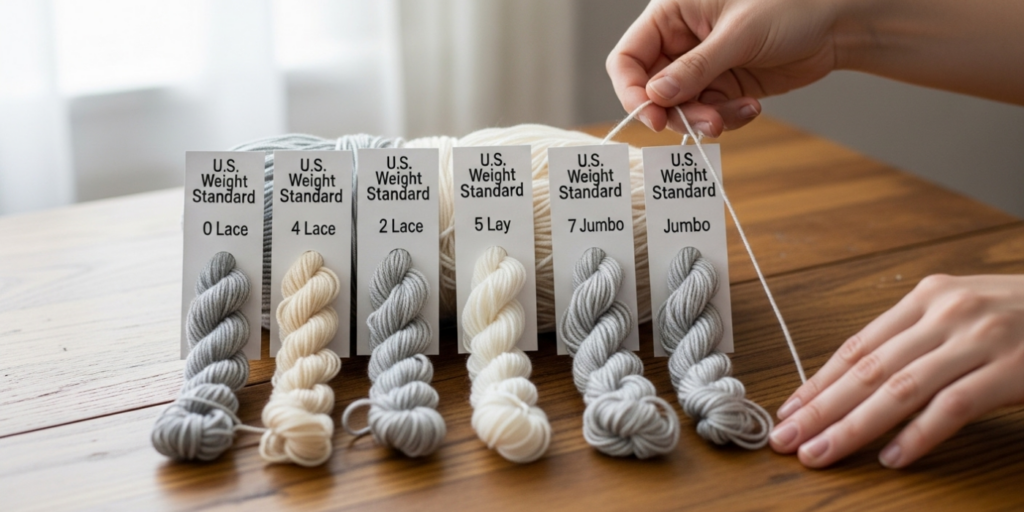
In 2004, the Craft Yarn Council (a US-based industry group) introduced the Standard Yarn Weight System to bring clarity. It uses numbers 0 to 7, each with a name, recommended hook/needle size, and typical gauge.
Here’s your go-to reference—print it, screenshot it, or tape it to your craft room wall:
| US # | Name | UK/AU Name | Typical Meters/100g | Crochet Hook (mm) | Knit Needles (mm) | Common Uses |
|---|---|---|---|---|---|---|
| 0 | Lace | 1- or 2-ply | 600–800+ | 1.5–2.25 | 1.5–2.25 | Doilies, shawls, fine lace |
| 1 | Super Fine | Fingering / 4-ply | 400–450 | 2.25–3.5 | 2.25–3.25 | Socks, baby items, lace tops |
| 2 | Fine | Sport / 5-ply | 300–350 | 3.5–4.5 | 3.25–3.75 | Lightweight garments, hats |
| 3 | Light | DK / 8-ply | 200–250 | 4.5–5.5 | 3.75–4.5 | Sweaters, baby blankets |
| 4 | Medium | Worsted / Aran / 10-ply | 150–200 | 5.5–6.5 | 4.5–5.5 | Afghans, scarves, amigurumi |
| 5 | Bulky | Chunky / 12-ply | 100–120 | 6.5–9.0 | 5.5–8.0 | Thick blankets, rugs, coats |
| 6 | Super Bulky | Super Chunky | 70–100 | 9.0–15.0 | 8.0–12.0 | Arm knitting, quick throws |
| 7 | Jumbo | — | <70 | 15.0+ | 12.0+ | Baskets, home decor, rugs |
Important: This is a general guide—always swatch! Yarns within the same weight can vary widely by fiber, twist, and brand.
Decoding International Yarn Labels Like a Pro
Now let’s translate real-world labels you’ll encounter online or abroad.
🇬🇧 UK & Australia: It’s All About Ply (Sort Of)
Don’t be fooled—“ply” no longer means actual strands. It’s a historical term that now indicates weight:
- 4-ply = Fingering = US #1
- Double Knitting (DK) = US #3
- Aran = US #4 (Worsted)
- Chunky = US #5
⚠️ Warning: In the UK, “worsted” often refers to Aran-weight yarn (#4), not the US “worsted-spun” (which can be any weight). Always check meterage or gauge, not just the name.
🇪🇺 Europe (Germany, France, Italy, etc.)
Labels typically show:
- Meters per 100g (higher = finer yarn)
- Recommended needle/hook size in mm
- Sometimes a symbol (e.g., a number inside a wool skein icon)
Quick reference by meterage:
- 500–600m = Lace (#0)
- 400–450m = Fingering (#1)
- 300–350m = Sport (#2)
- 200–250m = DK (#3)
- 150–200m = Worsted (#4)
- 100–120m = Bulky (#5)
🇯🇵 Japan
Japanese patterns use symbol charts, but yarn labels include:
- Gauge squares (stitches per 10cm)
- Needle/hook size in mm
- Weight in grams and meters
Pro tip: Japanese yarns tend to run finer than Western equivalents—consider going up a hook size when substituting.
How to Substitute Yarn Confidently (Even Without the Exact Match)
You rarely need the “perfect” yarn—just the right weight and gauge. Follow these steps:
Step 1: Check the Pattern’s Gauge
If it says “16 sc x 18 rows = 4” square,” that’s your target.
Step 2: Swatch Your Substitute
- Use the recommended hook/needle
- Wash and block your swatch (some yarns stretch or shrink!)
- Measure again—this is non-negotiable.
Step 3: Adjust Your Tools
- Swatch too small? Go up a hook/needle size
- Swatch too big? Go down a size
Real example: A crocheter in Oregon wanted to make a UK DK (#3) pattern but only had worsted (#4). She used a 4.0mm hook instead of 4.5mm, and her gauge matched perfectly.
Bonus: The “Wrap Test” in a Pinch
Wrap yarn around a ruler for 1 inch:
- 18–20 wraps = Lace
- 14–16 wraps = Fingering
- 12–14 wraps = Sport
- 11–12 wraps = DK
- 9–11 wraps = Worsted
- 7–8 wraps = Bulky
It’s not perfect, but it works in a yarn shop aisle!
Common Pitfalls (and How to Avoid Them)
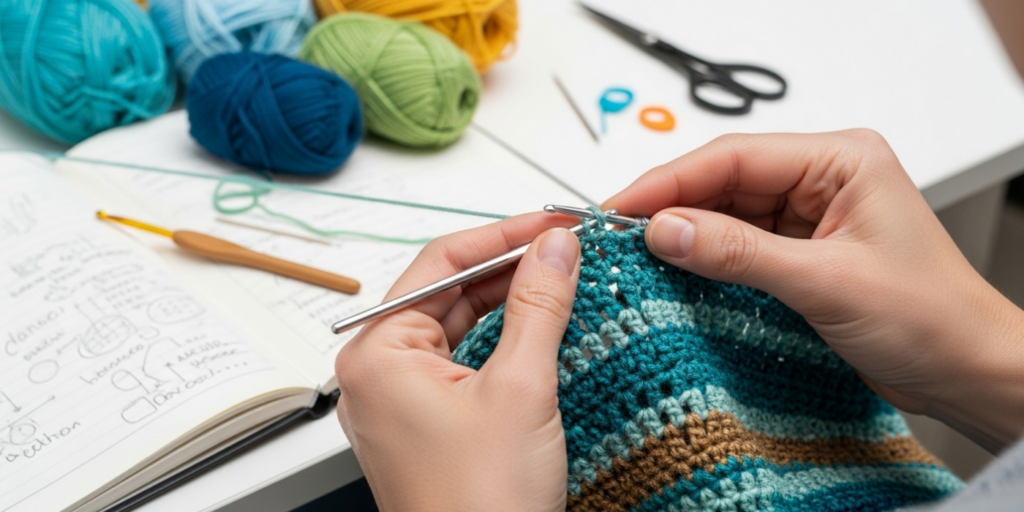
Even experienced crafters get tripped up. Here’s how to dodge the big mistakes:
❌ Assuming “Worsted” Means the Same Everywhere
As noted, UK “worsted” ≠ US “worsted”. Always check meterage or gauge.
❌ Ignoring Fiber Content
A cotton DK behaves very differently than wool DK—cotton has no stretch, so it may need a smaller hook for the same gauge.
❌ Trusting Online Photos
Colors and thickness can look different on screen. If ordering online, check reviews for “runs thick/thin” comments.
❌ Skipping the Swatch
Yes, it’s tempting to dive in—but 5 minutes of swatching saves 20 hours of frogging.
Remember: Yarn weight is a starting point—not a final verdict.
Digital Tools to Simplify Conversions
Make your life easier with these free resources:
- YarnSub.com: Enter your yarn, and it suggests global substitutes
- Ravelry’s Yarn Database: Search by weight, fiber, or meterage
- Craft Yarn Council’s Official Chart: Printable PDF for your craft room
- Google Lens: Point your phone at a foreign yarn label to translate symbols
Pro tip: Save a screenshot of the conversion chart on your phone for quick reference at yarn stores.
Why Understanding Yarn Weight Expands Your Creative World
Mastering global yarn weights does more than prevent mistakes—it opens doors. You can:
- Confidently buy from international indie dyers on Etsy
- Follow vintage patterns from 1950s UK magazines
- Use up stash yarn from travels abroad
- Join global knit-alongs and crochet-a-longs without fear
As one maker put it: “Learning yarn conversions felt like getting a passport for my hook.”
In a craft rooted in tradition yet thriving online, this knowledge turns frustration into freedom.
Final Tips for Stress-Free Yarn Shopping
To shop like a savvy global crafter:
✅ Always note meterage (m/100g)—it’s the most reliable indicator
✅ Keep a physical swatch card of your favorite yarns with hook size and gauge
✅ Buy one extra skein when substituting—dye lots vary!
✅ When in doubt, go lighter—it’s easier to adjust tension than undo a too-thick fabric
And remember: imperfect substitutions can lead to beautiful surprises. Some of the best projects come from creative problem-solving!
Conclusion: Speak the Universal Language of Yarn
Yarn weight confusion doesn’t have to hold you back. With this guide—and the simple conversion chart above—you now have the tools to shop, stitch, and create with confidence anywhere in the world.
Whether you’re making a sweater from a Scandinavian blog, using up souvenir yarn from Paris, or just trying to match that mystery skein in your stash, understanding weight is your superpower.
So next time you see “DK” or “Nadelstärke 3.5,” smile—you’ve got this. Grab your hook, check your gauge, and stitch on.
What’s the trickiest yarn substitution you’ve ever made? Did it work out? Share your story or favorite conversion hack in the comments below—and if this guide saved your project, pass it on to a fellow maker who’s staring at a confusing label right now! Happy crafting! 🧶🌍
Maria Santos is a dedicated crochet and knitting enthusiast who finds joy in turning simple strands of yarn into meaningful, handmade art. With a natural eye for detail and a deep love for fiber crafts, she brings warmth, creativity, and years of personal experience to every project. Maria is inspired by the stories woven into each stitch and loves sharing that passion with others.