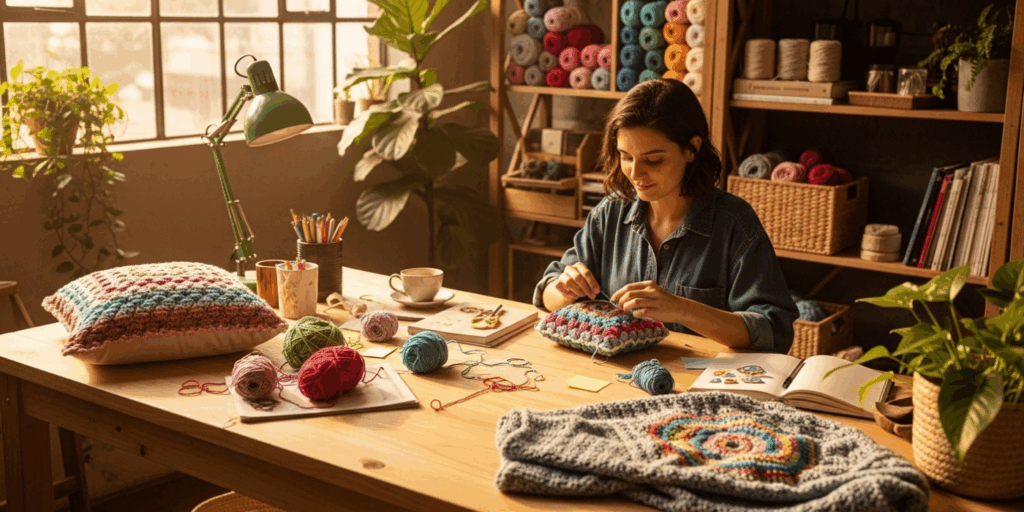
Imagine holding an old, frayed sweater—once cozy, now forgotten in the back of your closet—and seeing not trash, but a blank canvas. What if you could transform it into a vibrant market bag, a chunky pillow, or even a one-of-a-kind tote that turns heads? That’s the quiet magic of crochet upcycling.
In a world drowning in fast fashion and disposable goods, upcycling isn’t just trendy—it’s essential. Every year, the average American throws away 81 pounds of clothing. Meanwhile, landfills swell, synthetic fibers shed microplastics into our oceans, and the environmental cost of producing new yarn continues to climb. But here’s the beautiful twist: you don’t need to buy new materials to create something meaningful. With just a hook, some leftover yarn, and a little creativity, you can breathe new life into old fabrics, worn-out blankets, and forgotten garments.
This article isn’t about perfection. It’s about possibility. Whether you’re a seasoned crocheter or someone who’s never held a hook, you’ll find simple, inspiring ways to turn what’s “done” into something delightful. We’ll explore how to source materials you already own, transform tired textiles into functional art, and even save money while reducing your footprint. Along the way, you’ll meet real people who turned their grandmothers’ sweaters into cozy coasters and their child’s outgrown onesie into a statement wall hanging. And yes—we’ll give you step-by-step ideas you can start today, no experience required.
Let’s dive in.
Why Crochet Is the Perfect Tool for Upcycling
Crochet has a superpower: it’s forgiving. Unlike knitting, where a dropped stitch can unravel an entire project, crochet stitches are more forgiving and easier to fix. Plus, you can work with almost any fiber—old t-shirts, worn-out sweaters, even plastic bags—by turning them into “yarn” through a simple process called t-shirt yarn or fabric strips.
Think about it: most of us have at least one sweater that’s shrunk in the wash, a pair of jeans with frayed hems, or a blanket with a hole you keep ignoring. Instead of tossing them, you can cut them into strips, knot them together, and crochet them into something beautiful. And here’s the best part—you’re not just saving fabric; you’re saving money. A ball of high-quality acrylic yarn can cost $6–$10. But your old t-shirt? Free.
According to the Environmental Protection Agency, only 15% of textile waste in the U.S. gets recycled. The rest? Landfills. But when you upcycle with crochet, you become part of the 15%—the ones who choose creativity over convenience.
Plus, there’s emotional value. That sweater your grandma knitted? Turning it into a set of cozy coasters isn’t just recycling—it’s honoring memory. A child’s outgrown onesie? Crocheting it into a framed art piece keeps childhood close, without cluttering your space.
You don’t need fancy tools. Just scissors, a hook (size J or K works great for thick strips), and a willingness to try. Start small: a single coaster. Then a placemat. Then a bag. Each project builds confidence—and reduces waste.
Turning Old Clothes Into Yarn: The Simple “T-Shirt Yarn” Method
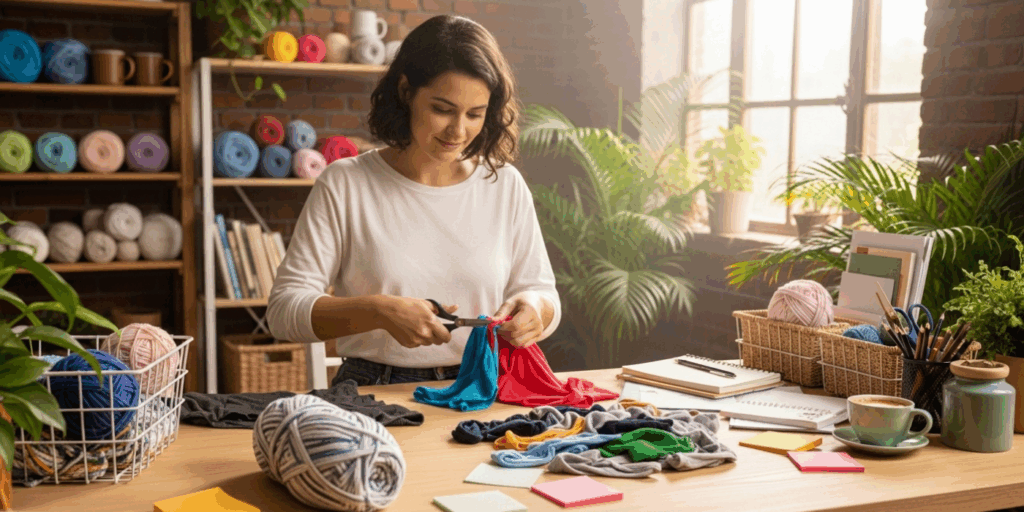
Let’s get practical. One of the easiest and most satisfying ways to upcycle is turning old cotton t-shirts into “yarn.” It’s called t-shirt yarn, and it’s soft, stretchy, and perfect for baskets, rugs, or even chunky blankets.
Here’s how to do it in under 10 minutes:
- Lay your shirt flat and cut off the seams at the shoulders and sleeves.
- Cut horizontal strips about 1 inch wide, starting from the bottom hem and working up toward the neckline. Stop about 2 inches before the neckline—don’t cut through it.
- Cut the neckline into one continuous spiral—this turns your strips into one long, unbroken strand.
- Gently stretch the strip to curl it into a coil. That’s your yarn!
You’ll end up with 10–15 yards of soft, durable yarn from a single shirt. No sewing, no special tools—just your hands and a little patience.
Try crocheting this into a market tote. Chain 40, work in single crochet for 10 rows, then add handles made from double-stranded t-shirt yarn. It’s sturdy enough to carry groceries, washable, and completely unique. No two bags look alike—and that’s the point.
Or, make a bath mat. Crochet a circle in spiral rounds using 3–4 colors of t-shirt yarn. The texture is grippy, absorbent, and feels luxurious underfoot. Bonus? It’s machine-washable.
Pro tip: Use dark-colored shirts for a modern, monochrome look. Light-colored ones? Perfect for adding pops of color when mixed with leftover yarn from other projects.
I once turned three old band tees into a colorful rug for my daughter’s playroom. She calls it her “magic carpet.” It’s seen juice spills, toy explosions, and three birthday parties—and it still looks great.
Breathing New Life Into Worn-Out Blankets and Sweaters
You know that blanket you’ve had since college? The one with the hole near the corner? Or that sweater that’s lost its shape but still holds the scent of your favorite winter nights? Don’t toss them. Transform them.
Start by unraveling. Yes, unraveling. It sounds intimidating, but it’s surprisingly therapeutic. Take a wool or cotton sweater, gently pull at the seams, and unwind the yarn. You’ll be amazed at how much usable fiber you can recover—even if it’s a bit fuzzy.
Once you have your yarn, here are three easy ideas:
- Patchwork Pillow Covers
Cut the sweater into squares (6×6 inches works well). Crochet them together with a simple single crochet border. Add a zipper or button closure, and you’ve got a cozy, textured pillow that tells a story. Try mixing sweaters from different eras—vintage cable knits with modern colorblocks—for a visually stunning piece. - Cozy Headbands or Ear Warmers
Cut a strip from the sweater’s ribbed cuff, about 3 inches wide. Fold it in half lengthwise, then crochet a simple chain to connect the ends. Add a button or bow. Instant accessory—and you didn’t buy a thing. - Blanket-to-Baby Blanket
If you have a large, worn-out throw blanket, cut it into 4–6 smaller squares. Crochet each square with a border of contrasting yarn (even old embroidery floss works!), then join them into a baby blanket. The result? A soft, durable, and sentimental gift that’s far more meaningful than anything from a store.
One reader, Maria from Portland, turned her late mother’s hand-knit cardigan into six baby hats. She gave one to each of her grandchildren. “It’s not just warm,” she told me. “It’s love they can wear.”
These projects aren’t just eco-friendly—they’re emotionally rich. You’re not just reusing fabric. You’re reusing memories.
From Forgotten Yarn to Functional Art: Creative Projects You Can Start Today
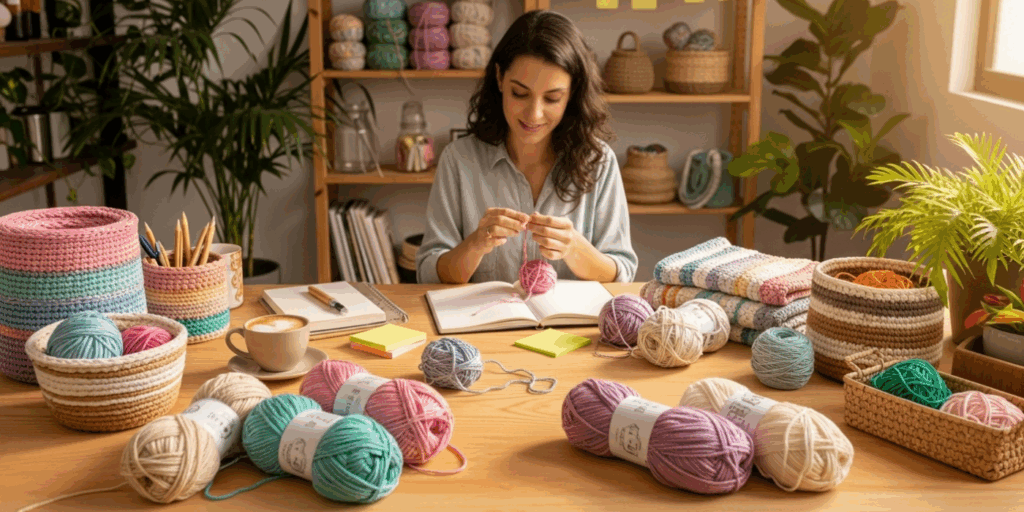
Chances are, you’ve got a stash. A tangled ball of yarn tucked behind a bookshelf. A half-finished scarf from 2019. A skein you bought on sale but never used.
Upcycling with crochet doesn’t just mean reusing fabric—it means reimagining what you already own.
Here are five projects to spark your creativity:
- Yarn-Wrapped Coasters: Take old yarn and wrap it around cardboard circles, then crochet a simple edge to hold it together. Add a drop of fabric glue for extra durability. Perfect for coffee tables—and great for using up odd bits of color.
- Fringed Wall Hanging: Use leftover yarn from past projects to create a macramé-inspired wall piece. Crochet a long chain, then cut and tie fringe along the bottom. Hang it with a wooden dowel. It’s boho-chic, zero-cost, and instantly elevates any room.
- Phone Holder for Your Couch: Crochet a small pouch with a strap. Add a pocket for your keys. Use an old sweater for the body and a scrap of denim for the strap. Now your phone won’t disappear under the cushions again.
- Pet Bed Liner: Cut an old blanket into a rectangle, then crochet a border around it using soft yarn. Slip it into a plain pillowcase. Voilà—a warm, washable bed for your dog or cat.
- Reusable Produce Bags: Make lightweight mesh bags using cotton yarn or t-shirt yarn. They’re perfect for farmers’ markets and eliminate plastic bags forever.
These aren’t just crafts—they’re solutions. Each one replaces something you’d normally buy. A $12 produce bag? Gone. A $25 wall decor piece? Replaced with love and leftover yarn.
And here’s the secret: you don’t need a pattern. Start with a chain, work in rounds or rows, and let your hands guide you. Crochet is intuitive. It’s okay if it’s lopsided. That’s what makes it human.
The Joy of Slow Crafting in a Fast-Paced World
There’s something deeply healing about crochet. In a world of instant gratification—swipe, buy, receive, repeat—upcycling with crochet is the opposite. It asks you to slow down. To notice. To be present.
I’ve watched friends turn their grief into stitches after losing a loved one. Others use it to manage anxiety. One woman I met crocheted a new blanket every month during her divorce. “Each stitch,” she said, “was a breath I didn’t know I needed.”
When you upcycle, you’re not just making something. You’re reclaiming time, intention, and value. You’re saying: This doesn’t have to be thrown away. I can make it matter again.
And that mindset spills over into other areas of life. You start seeing potential where others see waste. You notice the beauty in imperfection. You begin to question: Do I really need to buy this?
That’s the quiet revolution of upcycling. It’s not about being perfect. It’s about being purposeful.
You don’t need Instagram-worthy results. You need a hook, a little time, and the courage to try.
How to Get Started: Your 7-Day Upcycling Challenge
Ready to begin? Here’s a simple, no-pressure challenge to get you hooked (pun intended):
Day 1: Go through your closet. Pull out one item you haven’t worn in a year.
Day 2: Cut it into strips and make your first t-shirt yarn.
Day 3: Crochet a coaster or a small square. Don’t worry if it’s messy.
Day 4: Find an old blanket or sweater. Unravel a small section.
Day 5: Try crocheting a simple chain (10 stitches).
Day 6: Combine your yarn and fabric strips into one project—a bag, a mat, a pillow.
Day 7: Display it somewhere you’ll see it daily. Smile.
That’s it. Seven days. No investment. Just curiosity.
You don’t need to be an expert. YouTube has free tutorials for “how to make t-shirt yarn” or “basic crochet stitches for beginners.” I recommend channels like Bella Coco or Crochet Guru—they’re warm, clear, and encouraging.
And if you’re nervous? Start with a dishcloth. It’s small. Forgiving. And you’ll use it every day.
Final Thoughts: Your Hands Can Change More Than Fabric
Every time you pick up a hook and transform an old sweater into a bag, you’re doing more than crafting—you’re resisting a culture that tells us to consume, discard, repeat.
You’re saying: I see value where others see trash.
You’re saying: I honor what came before me.
You’re saying: Beauty doesn’t need to be new to be meaningful.
Upcycling with crochet isn’t a trend. It’s a return to something ancient and true: making things with care, using what you have, and finding joy in the process.
So go ahead. Dig through that closet. Pull out that sweater. Cut it up. Stitch it back together.
You might just discover that the thing you thought was done… was just waiting to be reborn.
And if you do—would you mind sharing a photo of your creation? I’d love to see what you’ve turned into art. Drop a comment below or tag me on Instagram (@UpcycleWithHook). Let’s build a community of makers who believe that the best things aren’t bought… they’re made.
Your hands have power. Let’s use them wisely.

Maria Santos is a dedicated crochet and knitting enthusiast who finds joy in turning simple strands of yarn into meaningful, handmade art. With a natural eye for detail and a deep love for fiber crafts, she brings warmth, creativity, and years of personal experience to every project. Maria is inspired by the stories woven into each stitch and loves sharing that passion with others.