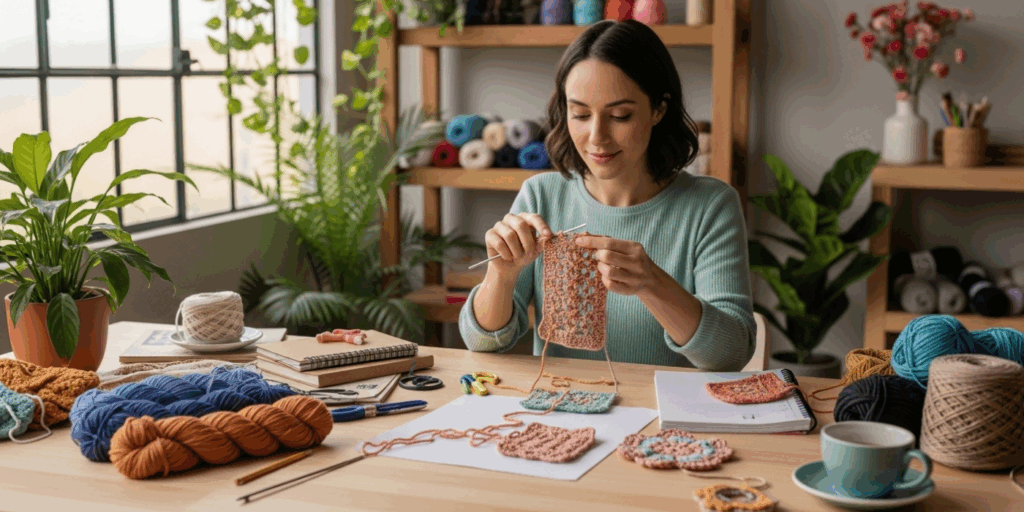
Imagine this: You’re curled up on the couch with a warm cup of tea, your fingers moving effortlessly through a lush, textured blanket you made yourself—each stitch smooth, even, and alive with character. No tangled yarn. No uneven edges. Just pure, satisfying rhythm. This isn’t magic. It’s Tunisian crochet—and once you unlock a few simple tricks, it becomes not just easier, but joyful.
If you’ve ever felt frustrated by Tunisian crochet—maybe your edges curl, your tension’s inconsistent, or you just can’t seem to get that signature “waffle” texture right—you’re not alone. Many crocheters love the rich, dense fabric it creates, but find the technique intimidating. The truth? Tunisian crochet isn’t harder than regular crochet. It just works differently. And once you understand its rhythm, you’ll wonder why you ever hesitated.
In this guide, we’ll walk through four powerful, little-known tricks that will transform your Tunisian crochet from “meh” to magnificent. Whether you’re a beginner who’s just picked up your first hook or a seasoned crafter looking to refine your craft, these tips are designed to save you time, reduce frustration, and elevate your projects—from cozy blankets to stylish bags—in record time. No jargon. No overwhelm. Just practical, real-world advice that actually works.
Let’s dive in.
Trick #1: Master the Return Pass Like a Pro (It’s Not What You Think)
Most Tunisian crochet tutorials focus on the forward pass—pulling loops onto the hook—and gloss over the return pass. Big mistake.
The return pass is where the magic happens. It’s what creates that beautiful, fabric-like texture Tunisian crochet is famous for. But if you rush it, pull too tight, or skip yarn overs, your work will pucker, curl, or look uneven.
Here’s the secret: Treat the return pass like a gentle conversation, not a race.
Instead of yanking the yarn through every loop in one go, slow down. Work in small groups—two or three loops at a time. As you yarn over and pull through, let the hook glide, not tug. Think of it like brushing your hair: you wouldn’t yank it all at once, right? Same principle.
Pro tip: Use a hook one size larger than recommended for your yarn during the return pass. Why? It gives you more room to maneuver, reduces tension, and prevents those annoying “tight rows” that make your blanket look like a crumpled paper bag.
I learned this the hard way. My first Tunisian blanket? It looked like a waffle… if the waffle had been stepped on. The edges curled so badly, I had to block it for three days. Then I tried the larger-hook trick. Within two rows, my fabric relaxed. The curls vanished. And suddenly, my blanket looked like something I’d actually want to snuggle under.
Bonus hack: If you’re working in Tunisian Simple Stitch (TSS), try a partial return pass. After the first half of your loops, pause, flip your work slightly, and ease the tension with your fingers before continuing. It’s a game-changer for evenness.
This one small adjustment will make your work look professional—without needing to relearn the entire technique.
Trick #2: Stop Fighting the Curl—Embrace It (Then Tame It)

Let’s be honest: Tunisian crochet loves to curl. It’s not your fault. It’s physics.
The forward pass creates loops that are stretched on one side, while the return pass pulls them back. This imbalance naturally causes the edges to roll inward. Most beginners panic, thinking they’re doing something wrong. They tug harder. They rip out rows. They almost quit.
Here’s the truth: Curling is normal. And it’s fixable—not by fighting it, but by working with it.
First, accept it. Don’t stress. Every Tunisian crocheter, from beginners to pros, deals with this. Even the pros have a “curling moment” when they start a new project.
Now, here’s how to tame it:
- Use a larger hook overall. A bigger hook creates looser stitches, which reduces tension imbalance. If your pattern calls for a 5mm hook, try a 5.5mm or 6mm. You’ll be amazed at how much smoother your edges become.
- Add a border. This isn’t just decorative—it’s structural. A simple single crochet border worked around all four sides after you finish your piece will anchor the edges and prevent rolling. Work it lightly, though. Don’t pull tight or you’ll create new distortions.
- Block, don’t just wash. After finishing, lay your piece flat on a towel, gently stretch it into shape, and pin it down with rust-proof pins. Mist it lightly with water. Let it dry overnight. This relaxes the fibers and sets the shape permanently. I’ve seen flat, gorgeous blankets emerge from once-curling nightmares using this method.
One of my students, Lisa, made a shawl that curled so badly she nearly threw it in the trash. She tried blocking it—just once—and it transformed into a flowing, elegant piece she now wears to every family gathering. “I thought I’d ruined it,” she told me. “Turns out, I just needed patience.”
Curling isn’t a flaw. It’s a signal. Listen to it. Adjust. Then let your work breathe.
Trick #3: The “No Count” Method for Perfect Rows (Yes, It’s Real)
How many times have you counted stitches… again… and again… only to realize you’re one stitch off after row 12? You sigh. You rip. You cry a little. Then you start over.
I’ve been there. And I’ve found a better way.
Meet the “No Count” Method—a technique that lets you crochet Tunisian without counting every single stitch. It works because Tunisian crochet has a built-in visual cue: the vertical bar.
In Tunisian Simple Stitch, each stitch creates a vertical “bar” on the front of your work. These bars line up in neat columns. Here’s the trick: Use those bars as your guide.
Instead of counting stitches, count bars. At the beginning of each row, look at the last vertical bar from the previous row. That’s your starting point. When you finish the row, you should end right before the edge chain. If you’re off, you’ll see it instantly—there’ll be a gap or an extra bar sticking out.
How to use it:
- At the start of your row, insert your hook under the first vertical bar (not the chain space).
- Work your forward pass as usual.
- When you finish, your last loop should sit just before the edge chain. If it’s on the chain, you’ve added a stitch. If it’s before it, you’re good.
- For edge consistency, always work into the same edge stitch on the return pass. Don’t skip or double up.
I use this method for everything—even complex patterns like Tunisian Lace or Honeycomb. It’s faster, more accurate, and way less stressful than counting 80 stitches per row.
Pro tip: Place a stitch marker in the first vertical bar of each row. It’s a tiny visual anchor that keeps you on track. No more guessing.
This trick doesn’t just save time. It saves your sanity.
Trick #4: The Secret to Even Tension (Hint: It’s Not Your Hands)
Tension issues are the #1 reason Tunisian crochet looks messy. Too tight? Your fabric looks stiff and distorted. Too loose? It’s floppy and unstructured.
Most people blame their hands. But here’s the truth: Your tension isn’t about how hard you grip—it’s about how you hold the yarn.
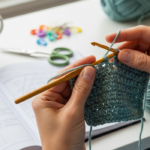
Try this: Hold your yarn between your index finger and thumb—not wrapped around your fingers like you’re holding a pencil. Let it glide over your index finger like a silk ribbon. Your thumb controls the flow. Your finger guides it.
Now, here’s the real secret: Let your hook do the work.
Think of your hook as a fishing line. You don’t yank the fish out—you reel it in gently. Same with Tunisian crochet. Let the hook pull the yarn through the loops. Don’t force it. Don’t tighten every loop with your fingers as you go.
Bonus trick: Use a hook with a smooth, rounded shaft. Metal or bamboo hooks with a polished finish glide better than rough plastic ones. I switched from a cheap plastic hook to a lightweight aluminum one—and my tension improved overnight. The difference? Less friction. Less resistance. Less frustration.
And here’s a little-known fact: Your posture matters.
Sit up straight. Rest your elbows on a table. Don’t hunch over your work. When you’re tense in your shoulders, your hands mirror that tension. Take a breath. Relax your shoulders. Let your hands follow.
I once taught a workshop where a woman couldn’t get her tension right for weeks. She was gripping her hook like she was holding a hammer. Once she relaxed her grip, adjusted her yarn hold, and sat back in her chair… her next row looked like it was made by a pro. She started crying. Not from frustration—from joy.
Tension isn’t something you fight. It’s something you invite.
Putting It All Together: Your 5-Minute Tunisian Tune-Up Routine
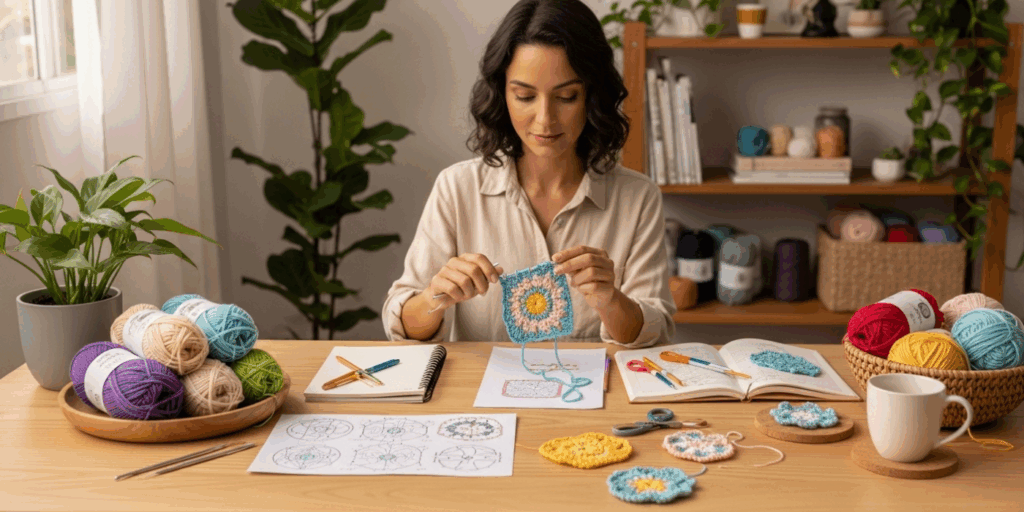
Now that you’ve got these four tricks, here’s how to make them part of your daily crochet ritual—no extra time needed.
Before you start any Tunisian project:
- Pick the right hook. Go up half a size from what the pattern recommends.
- Check your yarn hold. Is it flowing? Or are you choking it?
- Place a stitch marker in your first vertical bar.
- Take three deep breaths. Seriously. It resets your tension and your mindset.
While you crochet:
- Work your return pass slowly. Two loops at a time.
- Let the bars guide you—no counting.
- If you feel your edges starting to curl? Pause. Flip your work. Gently stretch it with your fingers.
After you finish:
- Block it. Even if you think it’s fine. You’ll thank yourself later.
These aren’t fancy tools or expensive supplies. They’re habits. And habits, repeated, become mastery.
Why This Matters More Than You Think
Tunisian crochet isn’t just a craft. It’s therapy.
In a world that moves too fast, where screens buzz and deadlines loom, Tunisian crochet gives you a rhythm. A slow, steady, tactile rhythm. It’s meditation with a hook.
When you master these tricks, you’re not just making blankets or scarves—you’re reclaiming moments of calm. You’re creating something beautiful with your own hands, something that lasts longer than a TikTok trend.
And here’s the best part: You don’t need to be perfect to start.
You just need to begin.
I’ve seen people with arthritis, new moms with 10-minute breaks between feedings, retirees looking for purpose—all find joy in Tunisian crochet. Not because they’re experts. But because they learned to work with the technique, not against it.
Your next project doesn’t need to be flawless. It just needs to be yours.
Final Thoughts: Your Turn to Shine
You’ve got the tools. You’ve got the tricks. Now it’s time to make them yours.
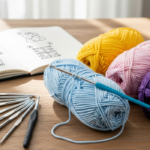
Grab your hook. Pick up a skein of soft, medium-weight yarn. Start a small swatch—just 10 stitches wide. Apply all four tricks. Feel the difference. Notice how the fabric flows. Watch the curl settle. See how easily your stitches align.
Then, do it again tomorrow.
That’s how mastery happens—not in one big leap, but in a hundred small, quiet moments of presence.
If you’ve been holding back because you thought Tunisian crochet was “too hard,” I want you to know: it’s not. You just didn’t have the right keys yet. Now you do.
So—what’s your first project going to be? A cozy throw for your couch? A gift for a friend? A scarf you’ll wear while sipping coffee on a chilly morning?
I’d love to hear about it. Drop a comment below—tell me what you’re making, or share a photo of your first “trick-boosted” Tunisian piece. Let’s build a community of crocheters who aren’t just making things… but making them with joy.
And if this helped you—even just a little—please share it with someone else who’s been struggling. Because the best stitches aren’t the ones we make with our hands.
They’re the ones we make with our hearts.
Happy hooking. 🧶

Maria Santos is a dedicated crochet and knitting enthusiast who finds joy in turning simple strands of yarn into meaningful, handmade art. With a natural eye for detail and a deep love for fiber crafts, she brings warmth, creativity, and years of personal experience to every project. Maria is inspired by the stories woven into each stitch and loves sharing that passion with others.