You’ve just finished your first handmade blanket—soft, colorful, and full of love. You snap a photo, post it online, and wait for the compliments… only to see a comment: “The pattern says it should be 48 inches, but yours looks way too small.” Your heart sinks. You followed every stitch. You counted every row. So what went wrong?
The answer might not be you.
It could be the pattern.
In today’s digital crafting world, crochet patterns are downloaded faster than ever—from Etsy, Ravelry, Instagram, and even free blogs. But here’s the uncomfortable truth: not all patterns are created equal. Many contain errors—missing stitches, unclear instructions, mismatched measurements—that can turn a joyful project into a frustrating mess. That’s where tech editing comes in.
Tech editing isn’t about changing your design. It’s about making sure your brilliant idea translates perfectly into clear, accurate, and foolproof instructions for others. Whether you’re a hobbyist sharing patterns for fun or a small business selling your designs, getting your patterns tech-edited isn’t just nice—it’s essential.
In this guide, we’ll walk you through everything you need to know about tech editing crochet patterns: why it matters, what it actually involves, how to find a reliable editor, and even how to do a basic self-check if you’re on a budget. By the end, you’ll not only understand why accuracy is the secret sauce behind beloved patterns—you’ll know exactly how to make sure yours are flawless.
Why Accuracy in Crochet Patterns Isn’t Just Nice—It’s Necessary
Imagine baking a cake using a recipe that says “add a pinch of salt,” but the author meant a teaspoon. You add a pinch. The cake tastes bland. You try again. Still bland. You start doubting your skills… when the real issue was a tiny, overlooked detail in the recipe.
Crochet patterns work the same way.
A single missed stitch count, an unclear increase/decrease instruction, or a wrong hook size recommendation can send a crafter down a rabbit hole of confusion. And when that happens, they don’t blame the pattern—they blame themselves. “I must be bad at this.” “Maybe I’m not cut out for crochet.” That’s heartbreaking.
According to a 2023 survey by Ravelry, over 68% of crocheters have abandoned a project because the pattern contained errors. Worse? 42% said they stopped buying patterns from that designer altogether after a bad experience.
That’s not just a missed sale—it’s a broken trust.
Tech editing fixes that. It’s the professional proofreading and testing process that ensures every word, symbol, and measurement in your pattern is clear, consistent, and correct. A good tech editor doesn’t just catch typos—they check for logical flow. Does “ch 3, dc in next st” actually create the right stitch count? Does the schematic match the written instructions? Is the gauge realistic for the recommended yarn?
This isn’t about perfectionism. It’s about respect—for your craft, your customers, and your time.
When your pattern is accurate, people finish it. They love it. They tag you. They buy your next design. They leave glowing reviews. Accuracy builds reputation. And reputation? That’s what turns hobbyists into successful creators.
What Exactly Does a Tech Editor Do? (Spoiler: It’s Way More Than Spelling)

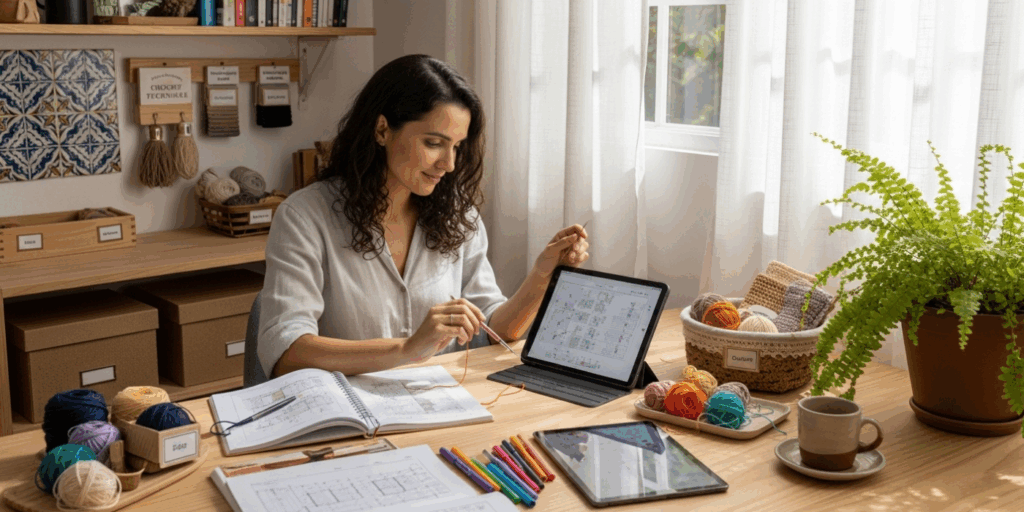
When most people think “editing,” they think grammar checks or fixing “their” to “they’re.” But tech editing for crochet patterns? It’s like being a detective, a mathematician, and a crocheter rolled into one.
Here’s what a professional tech editor actually does:
- Stitch Count Verification: They literally count every stitch in every row and round, comparing written instructions to the expected outcome. If a pattern says “repeat 4 times” and you end up with 48 stitches instead of 44, they’ll spot it.
- Gauge Consistency Check: If the pattern says “16 dc = 4 inches,” does it actually work with the recommended hook and yarn? A tech editor will crochet a swatch—or at least simulate the math—to confirm it’s achievable.
- Terminology Alignment: Is the pattern using US terms (single crochet) or UK terms (double crochet)? Mixing them up is a common—and confusing—mistake. A tech editor standardizes everything.
- Pattern Flow & Clarity: Does “Row 5: (sc, 2dc, sc) in next st” make sense? Or is it ambiguous? Tech editors rephrase confusing sections so even beginners can follow.
- Schematic Matching: Many patterns include diagrams. Does the written description of the sleeve length match the drawing? If not, the editor flags it.
- Yarn & Hook Recommendations: Is that bulky yarn really suitable for a delicate lace shawl? Tech editors use their experience to suggest realistic alternatives.
One editor I spoke with, Sarah from Stitch & Check, told me about a pattern she edited that had a 12-stitch error in the third row. That error cascaded through the entire piece—by the end, the hat was 3 inches too wide. Without tech editing, the designer would’ve sold hundreds of flawed patterns. With it? A quick fix, and a happy customer base.
The bottom line? Tech editing catches what you can’t see because you’re too close to your own work.
How to Find the Right Tech Editor (Without Getting Scammed)
You don’t need to hire a fancy editor from New York. But you do need someone reliable.
Here’s how to find the right one without wasting time or money:
1. Look for Certification
The most trusted names in the industry are certified by organizations like the Craft Yarn Council or Ravelry’s Tech Editor Directory. These editors have passed rigorous tests on terminology, math, and clarity.
2. Ask for Samples
A good editor will happily share a redlined sample of a pattern (with personal info removed). Look for clear, color-coded edits and thoughtful notes—not just “fixed typo.”
3. Check Reviews & Portfolios
Search for “tech editor for crochet patterns” on Etsy or Facebook groups. Read reviews carefully. Look for comments like: “She caught a mistake I’d missed for months!” or “My sales went up 30% after fixing my patterns.”
4. Avoid the “Too Good to Be True” Deals
If someone offers to tech edit 10 patterns for $20, run. Quality takes time. A thorough edit for a 10-page pattern typically costs $30–$75, depending on complexity. That’s an investment—not an expense.
5. Start Small
If you’re new, pick one pattern—maybe your most popular one—and get it edited. See how it changes your feedback. Then scale up.
Pro tip: Many tech editors also offer pattern formatting services—cleaning up fonts, adding headers, creating PDFs that print beautifully. That’s a bonus worth considering.
And if you’re on a tight budget? Don’t skip editing—just do a self-tech edit.
How to Tech Edit Your Own Patterns (A Simple 5-Step Checklist)
You don’t always need to pay someone. If you’re just starting out or want to double-check before sending your pattern out, here’s a foolproof 5-step self-editing checklist:
✅ Step 1: Print It Out
Reading on a screen hides errors. Print your pattern and grab a pen. Circle anything that feels confusing.
✅ Step 2: Crochet It (Even Just a Swatch)
Follow the pattern exactly as written. Don’t skip rows. Count stitches after every section. If you get stuck, the pattern needs fixing.
✅ Step 3: Read It Aloud
Say each instruction out loud. If you stumble over a sentence like “ch 2, skip 2, dc in next 3,” you’ve found a clarity issue. Rewrite it: “Chain 2. Skip the next 2 stitches. Double crochet in each of the next 3 stitches.”
✅ Step 4: Use a Pattern Checklist
Create a simple checklist for every pattern you write:
- Are all terms consistent (US vs. UK)?
- Is the gauge clearly stated and testable?
- Are all abbreviations defined?
- Do row/round numbers match the instructions?
- Is the finished size realistic?
✅ Step 5: Get a Second Pair of Eyes
Ask a friend who crochets to follow your pattern. Don’t help them. Just watch. Where do they pause? Where do they sigh? That’s your edit point.
I once gave my friend a free pattern to test. She finished it… but sent me a voice note saying, “I had to Google ‘what does ‘sk’ mean?’” Turns out, I’d used “sk” without defining it. A tiny oversight. A big lesson.
The Ripple Effect: How One Accurate Pattern Can Change Your Business
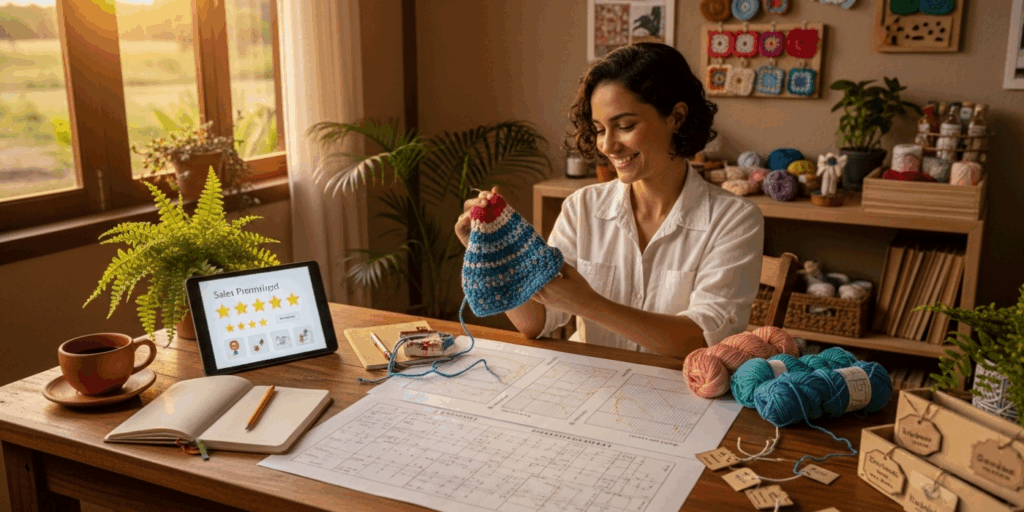
Let me tell you about Maya, a mom in Ohio who started selling crochet amigurumi patterns on Etsy.
Her first pattern—“Cute Bunny with Bow”—had 17 errors. Sales were slow. Reviews were mixed: “Adorable design, but impossible to follow.”
She spent $50 on a tech editor. The editor fixed 12 stitch errors, clarified 8 confusing phrases, and added a photo guide for the ears.
Within three months, her sales doubled. Then tripled.
Why? Because people finished it. They posted photos. They tagged her. They said, “This pattern was SO clear—I made three!”
That’s the power of accuracy.
When your pattern works, it doesn’t just get sold—it gets shared. It becomes a recommendation. A testimonial. A legacy.
And in a saturated market where everyone sells “cute crochet patterns,” accuracy is your differentiator.
Think of it like this:
- A pattern with errors = a broken tool.
- A pattern that’s tech-edited = a precision instrument.
One makes people quit. The other makes them obsessed.
Final Thought: Your Patterns Are More Than Instructions—They’re Connections
Every time someone follows your pattern, they’re not just making a blanket or a hat.
They’re spending hours of their time—quiet evenings, weekend mornings, moments of calm—turning yarn into something beautiful. Maybe they’re making it for a baby. For a loved one recovering from illness. For themselves, as a way to heal.
Your pattern is the bridge between their intention and their creation.
If your instructions are messy, unclear, or wrong, you’re not just handing them a template—you’re handing them frustration.
But when your pattern is accurate, clear, and lovingly edited?
You’re giving them confidence. Joy. Pride.
You’re saying: I believe in you. I made this so you could succeed.
That’s not just good business.
That’s craft with heart.
Ready to Make Your Next Pattern Flawless?
You don’t need to be a professional editor. You don’t need a degree in math. You just need to care enough to check.
Start today:
👉 Pick one pattern you’ve written.
👉 Print it.
👉 Follow it stitch by stitch.
👉 Note where you get stuck.
Then fix it.
If you’re ready to go further, search for a certified tech editor on Ravelry or Etsy. Invest in one pattern. See the difference.
And when you do—when you finally see that first comment: “I finished it! And it’s perfect!”—you’ll know why this matters.
Accuracy isn’t boring. It’s beautiful.
What’s the most frustrating pattern error you’ve ever encountered?
Was it a missing stitch? A confusing abbreviation? A size that didn’t match?
Share your story in the comments below. You might just help another crocheter avoid the same mistake—and inspire someone to tech edit their next pattern.
And if you found this guide helpful? Share it with a fellow designer. Because great patterns shouldn’t be a gamble. They should be a gift.
Maria Santos is a dedicated crochet and knitting enthusiast who finds joy in turning simple strands of yarn into meaningful, handmade art. With a natural eye for detail and a deep love for fiber crafts, she brings warmth, creativity, and years of personal experience to every project. Maria is inspired by the stories woven into each stitch and loves sharing that passion with others.