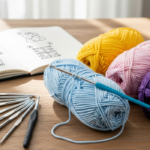

There’s something almost magical about lace crochet.
It’s the kind of craft that makes you pause—maybe while sipping morning coffee, or watching sunlight filter through a delicate curtain you made yourself. It’s not just thread and yarn; it’s poetry stitched into fabric. Light as air, intricate as snowflakes, and timeless in its elegance. Whether you’re a seasoned crocheter or just beginning to explore the world of fibers and hooks, lace crochet offers a gentle, rewarding journey into artistry that feels both ancient and utterly modern.
In this article, we’ll dive into the enchanting world of lace crochet patterns designed for lightness and delicacy. You’ll discover why these patterns are more than just decorative—they’re therapeutic, sustainable, and deeply personal. We’ll explore the history behind lace crochet, break down the most beloved patterns for beginners and experts alike, share practical tips for working with fine yarns, and show you how to turn your creations into meaningful gifts or even small income streams. By the end, you won’t just know how to make lace—you’ll feel inspired to create it.
So grab your hook, find a cozy corner, and let’s unravel the beauty of lace together.
Why Lace Crochet Feels Like Whispers in Yarn
Lace crochet isn’t just about making pretty things—it’s about creating space. Unlike dense, bulky crochet, lace patterns use openwork stitches, yarn overs, and strategic decreases to form airy, breathable designs. Think of it like lace curtains at a seaside cottage: they let the breeze in while still offering a veil of privacy. That’s the essence of lace crochet.
Historically, lace was a luxury. In 17th-century Europe, handmade lace was so labor-intensive that only the wealthy could afford it. Women spent hours, sometimes years, crafting intricate collars and shawls by hand. Today, we have the same tools—just a hook and yarn—but none of the pressure. That’s the gift of modern craft: we get to enjoy the beauty without the burden.
What makes lace crochet so special now? For one, it’s incredibly sustainable. You use less yarn than traditional projects, making it eco-friendly and budget-conscious. Plus, the open structure means your finished piece is lightweight—perfect for spring shawls, summer tops, or delicate table runners that don’t overwhelm a room.
And let’s not forget the emotional benefit. Many crocheters say lace projects are meditative. The repetitive nature of double crochets and chains, paired with the patience required to read a pattern, creates a quiet rhythm that calms the mind. It’s mindfulness with a hook.
If you’ve ever felt overwhelmed by a project that’s too bulky or too fast-paced, lace crochet might be your gentle reset button.
The Most Beloved Lace Patterns (and Why They Endure)

Not all lace patterns are created equal. Some are dense with texture, others float like spiderwebs. Here are three timeless designs that have stood the test of time—and why they’re perfect for your next project.
First up: The Shell Stitch Lace. This classic pattern creates gentle, scalloped waves that mimic ocean waves or flower petals. It’s ideal for baby blankets, scarves, or even wedding veils. The magic lies in its simplicity: clusters of double crochets spaced apart with chains. It’s forgiving for beginners, yet elegant enough for experts. Pair it with a soft cotton thread, and you’ve got a piece that feels like morning mist.
Then there’s Filet Crochet—a grid-based pattern that uses chains and double crochets to form images or motifs. Think hearts, doves, or even tiny birds. Filet is like pixel art, but in yarn. You can create custom designs by graphing them out on paper first. It’s perfect for personalized gifts: imagine a curtain with your initials, or a napkin with a single blooming rose. The possibilities are endless—and surprisingly easy once you get the hang of counting blocks.
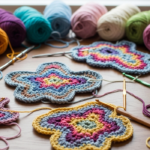
And finally, Irish Crochet Lace. Yes, it sounds intimidating, but hear me out. Irish lace is made of small, individual motifs—flowers, leaves, vines—that are later joined together. It’s the kind of project you work on in small moments: while waiting for your child’s piano lesson, during a quiet evening after dinner. Each motif is a tiny masterpiece. When assembled, they form a breathtaking whole. Many crocheters start with a single rose motif and slowly build a shawl over months. It’s not about speed—it’s about presence.
These patterns endure because they’re not just techniques—they’re stories. Each stitch carries intention.
Working with Fine Yarns: Tips for Success (No Frustration Guaranteed)
Let’s be honest: working with fine thread can be frustrating. That tiny hook? It slips. The yarn? It tangles like a cat in a ball of string. But don’t quit yet. With a few simple tricks, you’ll be gliding through lace patterns like a pro.
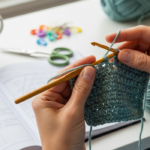
First, choose the right hook size. Most lace patterns call for steel hooks—sizes 0.6mm to 2mm. But if you’re just starting, try a 1.5mm or 1.75mm. They’re small enough to create detail but big enough to handle without trembling hands. Pro tip: Use a hook with a comfortable grip. Silicone or ergonomic handles make a world of difference.
Second, lighting matters. Lace is all about seeing those tiny loops and chains. Work near a window during daylight, or use a bright, focused lamp. I once lost an entire afternoon because I couldn’t see where my yarn had twisted. Don’t be me.
Third, use stitch markers religiously. Especially when working in the round (like for doilies or coasters), markers keep you from losing your place. A simple safety pin or a loop of contrasting yarn works perfectly.
Fourth, block your work. This is non-negotiable. Lace looks flat and messy right off the hook. But after blocking—gently pinning it to a towel or foam board and misting with water—it transforms. Suddenly, your scallops are symmetrical, your petals open, and your shawl looks like it came from a boutique in Florence. It’s like magic, but science.
And finally, be patient. Lace isn’t a weekend project. It’s a slow dance. Celebrate small wins: “I finished one motif!” “I didn’t drop a stitch today!” Progress, not perfection.
Turn Your Lace Into Meaningful Gifts (and Maybe Even Income)

Here’s the beautiful truth: lace crochet doesn’t just decorate—it connects.
A hand-crocheted lace doily isn’t just a coaster. It’s a piece of your time, your care, your quiet love. I once gave a lace-edged pillowcase to my grandmother. She cried. Not because it was expensive, but because she could feel the hours I’d spent making it. That’s the power of handmade.
Start small. Make lace-edged napkins for a friend’s wedding. Crochet a delicate hair scrunchie for your niece. Create a set of six lace coasters as a housewarming gift. Wrap them in tissue paper with a handwritten note: “Made with love, one stitch at a time.”
But lace crochet can do more than warm hearts—it can earn a little extra income. Etsy is full of handmade lace pieces: baby bonnets, bridal accessories, even lace-trimmed lingerie. One crocheter I know sells her Irish lace flower brooches for $25 each. She makes 10 per month. That’s $250 in passive income—without ever leaving her couch.
You don’t need to be a business owner to start. Try listing one item on Etsy or your local Facebook marketplace. Take clear photos in natural light. Write a heartfelt description. People crave authenticity. And lace? It screams authenticity.
Plus, selling your work gives you a new kind of motivation. Every stitch becomes a promise—to yourself, to your craft, to the person who will hold your creation.
Lace Crochet as a Mindful Practice in a Fast-Paced World
In a world of instant gratification—quick meals, one-click shopping, TikTok videos that last six seconds—lace crochet is a quiet rebellion.
It asks you to slow down.
To sit with your thoughts.
To notice the way the light catches the gaps in your work.
To breathe as you make each chain.
Many therapists now recommend crochet as a tool for anxiety and depression. Why? Because it engages the hands, calms the mind, and gives you tangible proof of progress. You don’t need to “fix” anything. You just need to keep going.
I’ve heard stories from veterans who found peace in lace after returning home. From mothers who crocheted through sleepless nights. From retirees who discovered a new purpose after retirement.
Lace doesn’t demand perfection. It invites presence.
And in that space between the stitches, you might just find something you’ve been searching for: stillness.
So when you feel overwhelmed, pick up your hook. Start with a simple chain. Work one row. Then another. Don’t think about finishing. Just be with the yarn.
You’re not making a shawl.
You’re making peace.
Where to Find Free, High-Quality Lace Patterns (No Spam, Just Soul)
You don’t need to buy expensive books or pay for patterns to create stunning lace. The internet is full of free, beautifully designed patterns from passionate crocheters who want to share their love.
Here are a few trusted sources:
- Ravelry.com (free account required): Search “free lace crochet patterns” and filter by difficulty. You’ll find hundreds of options, from vintage doilies to modern lace shawls.
- AllFreeCrochet.com: Curated by experts, this site has a “Delicate Lace” section with step-by-step tutorials and video links.
- YouTube Channels: Try “The Crochet Crowd” or “Maggie Weldon.” Their lace tutorials are crystal clear and beginner-friendly.
- Pinterest: Search “free lace crochet patterns for beginners.” Save pins to a board labeled “My Lace Journey.” It becomes your personal inspiration gallery.
Pro tip: Always check the pattern’s difficulty level and yarn weight. A pattern labeled “fingering weight” means fine thread—perfect for lace. Avoid patterns that say “worsted weight” unless you want something chunky, not delicate.
And remember: if a pattern feels too confusing, put it down. Come back tomorrow. There’s no deadline in lace crochet. Only joy.
Your First Lace Project: A Simple Beginner’s Starter
Ready to try? Here’s a project you can finish in under two hours:
The Lace Edge Coaster
Materials:
- 100% cotton thread, size 10 (or 20 for extra delicacy)
- 1.5mm steel hook
- Scissors
- Blocking mat or towel
Instructions:
- Chain 8. Join with a slip stitch to form a ring.
- Round 1: Chain 3 (counts as first dc), 2 dc in ring, chain 2, 3 dc in ring. Repeat 7 more times. Join with slip stitch.
- Round 2: Chain 3, chain 2, skip next 2 dc, 3 dc in next dc. Repeat around. Join.
- Round 3: Chain 3, chain 2, 3 dc in next chain-2 space. Repeat around. Join.
- Fasten off. Block gently by pinning the coaster into a perfect circle and misting with water. Let dry overnight.
That’s it. You’ve made your first lace piece.
It might not be perfect. But it’s yours.
And that’s what matters.
Final Thoughts: Let Your Hands Speak What Words Can’t
Lace crochet is more than a technique. It’s a language.
A language of patience. Of presence. Of quiet courage.
In a world that often values speed over soul, lace reminds us that beauty doesn’t rush. It unfolds—slowly, deliberately, beautifully.
Whether you’re making a gift for someone you love, seeking calm in a chaotic day, or simply enjoying the feel of yarn slipping through your fingers… you’re doing something sacred.
So pick up that hook. Find a pattern that calls to you. Start with one stitch.
And then another.
You don’t need to be an expert.
You just need to begin.
What’s Your Lace Story?
I’d love to hear from you. Have you ever made something in lace? Was it for a wedding? A memory? A moment of healing?
Drop a comment below with your favorite lace pattern—or even a photo of your latest project. Let’s build a community of quiet creators who believe in the power of slow, thoughtful making.
And if this article touched you, share it with a friend who needs a little more lace in their life.
Because sometimes, the most powerful things in the world are the ones made with gentle hands… and patient hearts.

Maria Santos is a dedicated crochet and knitting enthusiast who finds joy in turning simple strands of yarn into meaningful, handmade art. With a natural eye for detail and a deep love for fiber crafts, she brings warmth, creativity, and years of personal experience to every project. Maria is inspired by the stories woven into each stitch and loves sharing that passion with others.