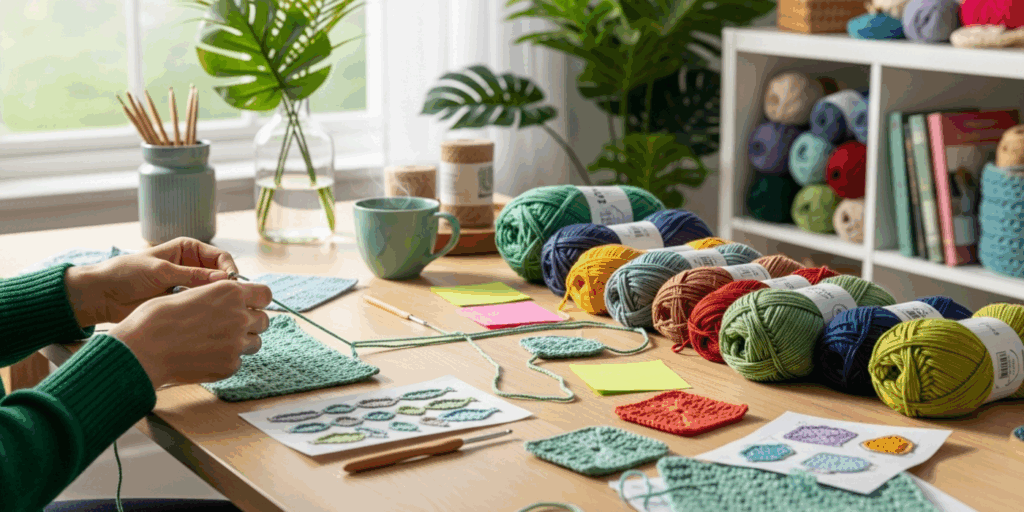
You’ve just finished your third row of that beautiful granny square… and then—snap. The yarn breaks. Or worse, you run out right at the edge of your project. You reach for a new ball, tie a knot, and keep going… only to realize later that the join is lumpy, visible, and ruins the whole look. Sound familiar?
If you’ve ever felt frustrated by clunky yarn joins that ruin the elegance of your crochet work, you’re not alone. Whether you’re crafting a delicate shawl, a cozy blanket, or a gift for someone special, a messy yarn join can be the difference between “wow” and “huh?”—especially when you’ve poured hours into your project.
The good news? Joining yarn neatly isn’t magic. It’s a simple skill—and one that anyone can master with a little practice and the right techniques. In this guide, we’ll walk you through why seamless joins matter, explore four proven methods to achieve them, share tips for choosing the right yarn and timing, and even reveal a little secret that professional crocheters use to hide joins like pros.
By the end, you’ll not only know how to join yarn without knots or bumps—you’ll feel confident doing it mid-project, even with fancy yarns like silk blends or hand-dyed variegateds. No more hiding seams. No more second-guessing your work. Just smooth, professional-looking crochet—every time.
Let’s dive in.
Why a Seamless Join Matters More Than You Think
It’s easy to think, “It’s just a little knot. No one will notice.” But here’s the truth: everyone notices—especially if they’re the ones receiving your handmade gift.
Think about it. You spent weeks crocheting a baby blanket with soft, hand-dyed yarn. The colors flow like watercolors. The stitches are even. The edges are crisp. Then… there it is. A tiny, bumpy knot right in the center of the border. Suddenly, the whole piece feels… unfinished. Like a beautiful painting with a smudge across the middle.
That’s because our eyes are drawn to inconsistencies. Even if we can’t explain why something looks “off,” we feel it. A poorly joined yarn breaks the visual rhythm of your work. And in projects like scarves, shawls, or garments—where the fabric flows continuously—any bump or change in texture becomes a distraction.
Plus, knots can snag. They can catch on jewelry, hair, or even the washing machine. Over time, they may loosen, unravel, or create weak spots that compromise the integrity of your piece.
And here’s something many beginners don’t realize: the way you join yarn affects your tension. A tight knot can pull your stitches tighter on one side, creating a subtle ridge. A loose join can leave gaps. Both ruin the uniformity you worked so hard to achieve.
The good news? You don’t need to be a pro to fix this. With just a few simple techniques, you can make joins so invisible, even seasoned crocheters will ask, “How did you do that?”
The goal isn’t perfection—it’s imperceptibility. And that’s totally within your reach.
Method 1: The Magic Knot (Also Called the Russian Join for Crochet)
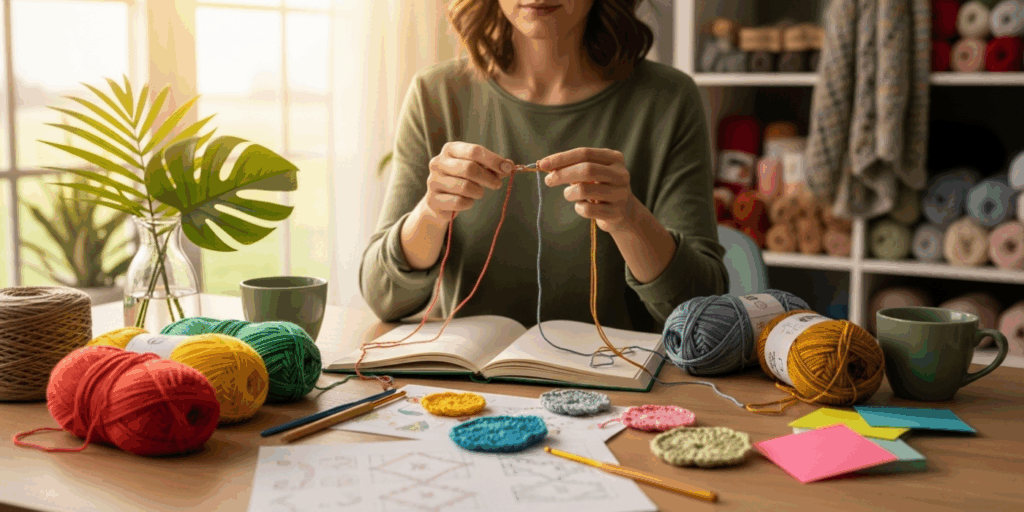
Let’s start with what might be the most elegant solution: the Magic Knot. Don’t let the name fool you—it’s not magic. It’s just clever.
This technique works best with medium to bulky yarns and is perfect for joining a new ball mid-row. No knots, no tails to weave in later—just a smooth, invisible connection.
Here’s how:
- Cut both yarn ends about 6 inches long.
- Unravel the last inch of each end to expose the individual plies (strands).
- Overlap the plies—take the last 2–3 strands from the old yarn and the first 2–3 from the new yarn.
- Twist them together gently, like you’re braiding three thin threads.
- Hold the twisted section and pull the yarns in opposite directions. The friction will lock them together.
That’s it. No knot. No bulk. Just a seamless transition.
Pro tip: If you’re using a slippery yarn like silk or acrylic, lightly dampen the twisted section with water and pinch it between your fingers. Let it dry for 30 seconds—it’ll cling even better.
I used this method on a shawl I made for my sister’s wedding. The yarn was a luxurious merino-silk blend with slow color changes. When she opened it, she said, “It looks like it was all one continuous skein.” That’s the goal.
Bonus: You don’t need to weave in ends later. The plies are locked inside the yarn itself. Less work. More peace.
Method 2: The Splice Join (For Wool and Natural Fibers)
If you’re working with wool, alpaca, or other animal fibers, there’s an even more magical technique: splicing.
Splicing doesn’t involve cutting or tying at all. Instead, you felt the fibers together using friction and moisture.
Here’s how:
- Unravel about 4 inches of each end of your yarn.
- Fluff out the fibers so they look like little clouds.
- Overlap the fluffy ends by about 2 inches.
- Rub them vigorously between your palms, back and forth, like you’re starting a fire.
- Dampen slightly with water or saliva (yes, really!) and keep rubbing.
Within 30–60 seconds, the fibers will begin to cling together. The result? A join so smooth, it’s practically invisible—even under a magnifying glass.
Why this works: Wool fibers have tiny scales. When rubbed together with moisture, those scales interlock—just like how felt is made. It’s nature’s own adhesive.
I tried this with a chunky wool blanket I was making for my nephew. I was nervous—I’d never spliced before. But after the first join, I was hooked. It felt like alchemy. The yarn didn’t just connect—it became one.
Best for: Handspun yarns, bulky sweaters, and anything where you want zero bulk.
Avoid with: Synthetic fibers like polyester or nylon—they won’t felt.
Pro tip: Do this join before you finish your last stitch. That way, you can start the next stitch with the new yarn right away, and no one will ever know you switched.
Method 3: The Weave-In Join (Perfect for Beginners and Variegated Yarns)
Maybe you’re just starting out—or you’re working with a yarn that changes color every few stitches. Maybe you’re not ready to twist or felt fibers. That’s okay. The Weave-In Join is your best friend.
This method is simple, forgiving, and works with any yarn.
Here’s the trick: Don’t cut the old yarn yet.
- When you’re about 6 inches from the end of your old ball, start the next stitch with the new yarn.
- Hold both yarns together as you complete the stitch.
- Crochet 3–4 more stitches using both strands.
- Now, drop the old yarn and continue with the new one.
- Later, when you weave in ends, weave the old yarn backward into the last 3–4 stitches you made with both yarns.
This creates a seamless transition because the old yarn is hidden inside the fabric, not sitting on top.
Why this works: By overlapping stitches, you’re essentially “trapping” the old yarn in the structure of your work. No bulk. No knots. Just smooth continuity.
I used this on a baby blanket with a rainbow variegated yarn. The colors shifted so naturally, even my mom—who’s seen dozens of my projects—asked, “Did you buy two balls of the same dye lot?”
Bonus: This method also helps prevent gaps at color changes. It’s the go-to for amigurumi and colorwork projects.
Pro tip: Always leave 6–8 inches of tail. That gives you enough to weave in securely without pulling too tight.
Method 4: The Invisible Join (For Seamless Rounds and Edging)
If you’re working in the round—like hats, bags, or circular afghans—there’s one join technique that’s the secret weapon: the Invisible Join.
This isn’t just for finishing rounds. It’s perfect for adding new yarn mid-round without breaking the flow.
Here’s how:
- When you’re about 3–4 stitches from the end of your round, stop.
- Insert your hook into the first stitch of the round (the one you started with).
- With the new yarn, pull up a loop through that stitch—just like you would for a slip stitch.
- Cut the old yarn, leaving a 6-inch tail.
- Pull the new yarn through the loop on your hook.
- Tighten gently—don’t pull too hard, or you’ll distort the stitch.
Now, continue crocheting with the new yarn. The join will be hidden inside the stitch, not on the surface.
Why it’s magic: Unlike a traditional slip stitch join—which creates a visible bump—the Invisible Join blends right into the fabric. It’s especially powerful when you’re working with single crochet or half-double crochet.
I used this on a winter beanie I made for my partner. He didn’t even notice the yarn change until I pointed it out. He said, “I thought you crocheted the whole thing in one go.”
Best for: Hats, amigurumi, blankets worked in rounds, and edging where you want a clean finish.
Pro tip: If you’re changing colors, do this join at the back of your work—where the seam naturally hides. It’s the ultimate stealth move.
Timing, Tension, and Choosing the Right Moment
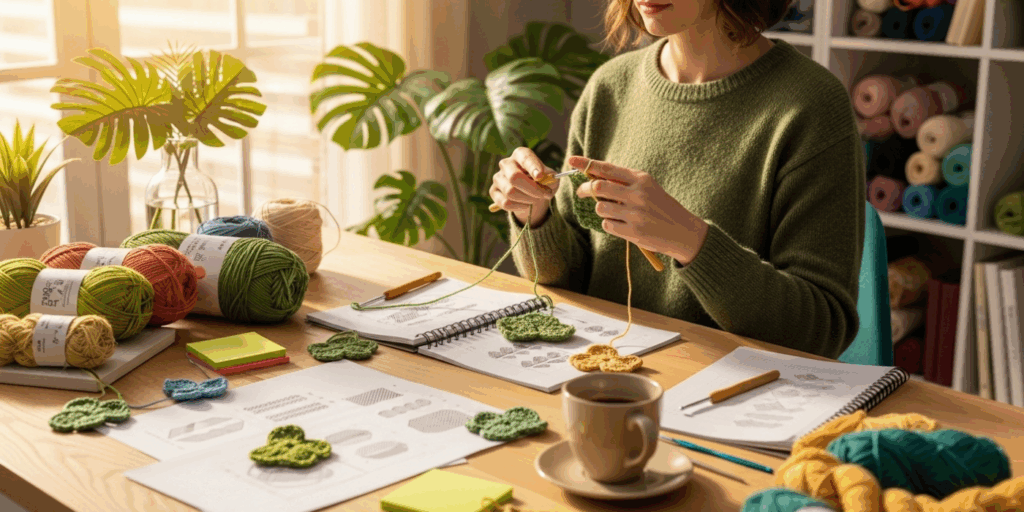
Knowing how to join is only half the battle. The other half? Knowing when.
Here’s a simple rule: Always join at the beginning or end of a row—or at the start of a new color block.
Why? Because that’s where the join will be least visible. Joining mid-row? That’s asking for trouble. You’ll create a noticeable ridge or uneven tension.
Also, pay attention to tension. Too tight? Your join will pucker. Too loose? It’ll create a gap. Aim for the same tension you’ve been using all along.
If you’re working with a variegated or self-striping yarn, try to join at a point where the color pattern repeats. That way, the transition feels intentional—not random.
And here’s a pro secret: Always test your join on a swatch first. Crochet a 4×4 inch square with your chosen yarn and method. See how it looks after washing and blocking. That’s your real-world test.
I once joined a luxury alpaca scarf without testing first. The yarn was so soft, I thought it would blend. But the Magic Knot created a tiny bump that caught the light. I had to frog the whole thing. Lesson learned.
Final Tips for Flawless Joins Every Time
Let’s wrap this up with five quick, powerful tips you can use today:
- Use the same yarn weight and fiber when joining. Mixing cotton with acrylic? You’ll see the difference.
- Never tie knots unless it’s an emergency. They create bulk, snag, and weaken your work.
- Weave in ends as you go—don’t wait until the end. It’s easier when the fabric is still fresh in your hands.
- Block your finished piece. Steam or wet blocking helps relax fibers and hide even the tiniest joins.
- Keep a small pair of scissors and a tapestry needle handy. You’ll thank yourself later.
And one last thing: Practice makes invisible. The first few joins might feel awkward. The fifth? You’ll wonder why you ever worried.
You’re Not Just Joining Yarn—You’re Honoring Your Craft
Crocheting isn’t just about stitches and patterns. It’s about patience. About care. About putting love into something that will be held, worn, and cherished.
Every time you choose a seamless join over a quick knot, you’re saying: This matters.
Every time you take the extra minute to splice or weave, you’re telling yourself: I deserve to make something beautiful.
Your hands are creating more than fabric. You’re creating memories—gifts for birthdays, comforts for hospital stays, heirlooms for future generations.
So the next time you reach for a new ball of yarn, don’t just grab it. Pause. Breathe. Choose the join that honors your work.
Because you’re not just crocheting. You’re crafting with intention.
And that makes all the difference.
Ready to Try It Yourself?
Which method will you try first? The Magic Knot? The Splice? The Weave-In? Or maybe you’ve got your own secret trick?
Drop a comment below—I’d love to hear which technique works best for you, and what kind of project you’re working on. And if you’ve ever had a “join disaster,” share it! We’ve all been there. (I once joined a sweater with a double knot and didn’t notice until I wore it to a family dinner. Let’s just say… I had to make a quick exit.)
Don’t forget to save this guide for your next project. Share it with a friend who’s always frustrated by lumpy joins. And if you loved this, pin it, bookmark it, or tag someone who needs to see it.
Your hands are capable of magic.
Now go make something beautiful—seamlessly.
Happy crocheting. 🧶

Maria Santos is a dedicated crochet and knitting enthusiast who finds joy in turning simple strands of yarn into meaningful, handmade art. With a natural eye for detail and a deep love for fiber crafts, she brings warmth, creativity, and years of personal experience to every project. Maria is inspired by the stories woven into each stitch and loves sharing that passion with others.