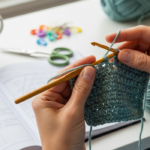
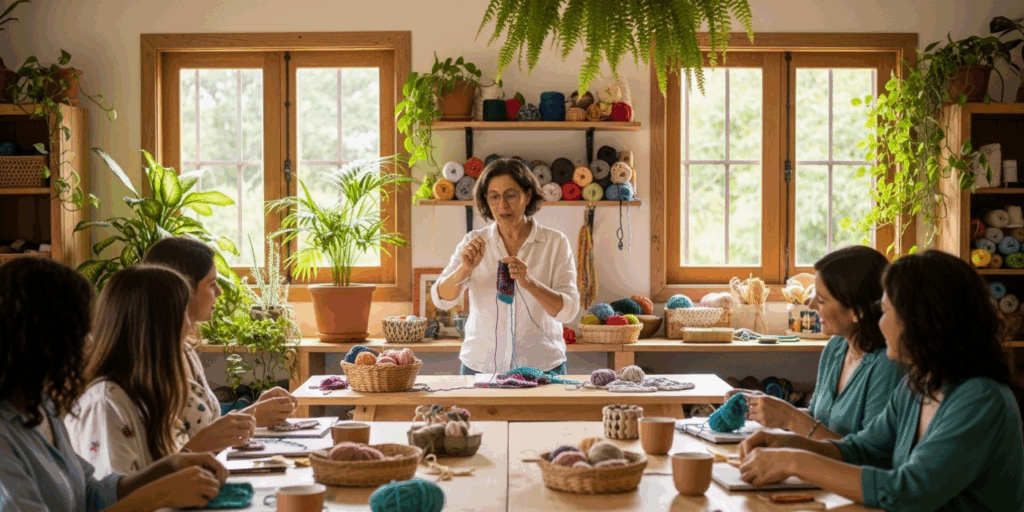
Imagine this: a quiet afternoon. Sunlight spills through the window, catching the soft fibers of yarn as they twist and turn under nimble fingers. Laughter bubbles up from a circle of women—and a few men—hunched over hooks and half-finished scarves. Someone accidentally drops a stitch. Instead of frustration, there’s a chorus of “Oh, I’ve been there!” and a gentle, patient tutorial begins. No one’s perfect. But everyone’s growing.
This isn’t just a craft class. It’s connection. Healing. Community.
Crochet isn’t just about making blankets or hats—it’s about creating spaces where people feel seen, heard, and capable. And if you’ve ever felt that spark while crocheting—whether you’re a beginner who just learned the chain stitch or a seasoned maker who’s stitched through heartbreak and joy—you know there’s something sacred in sharing it.
That’s why hosting crochet workshops is more than a hobby side hustle. It’s a powerful way to inspire others, build belonging, and turn a solitary craft into a collective experience. Whether you’re teaching friends in your living room or organizing a monthly event at a local café, this article will walk you through how to host meaningful, engaging, and sustainable crochet workshops that leave people not just with a finished project… but with confidence, connection, and a new sense of purpose.
Let’s dive in.
Why Crochet Workshops Matter More Than You Think
In a world that often feels rushed, digital, and disconnected, crochet offers a rare kind of slow magic. It’s tactile. It’s rhythmic. It demands presence.
And when you bring people together to learn it, you’re not just teaching stitches—you’re offering a refuge.
Think about it: studies from the Journal of Public Health and the American Journal of Occupational Therapy have shown that needlework like crochet can reduce stress, improve focus, and even help manage symptoms of anxiety and depression. But here’s the kicker—the real healing often happens in the space between the stitches. The quiet conversations. The shared glances when someone finally gets the pattern. The “I did it!” high when that first granny square comes together.
Hosting a workshop means you’re not just passing on a skill—you’re creating a micro-community. One where mistakes are celebrated, not scolded. Where beginners aren’t intimidated, but welcomed. Where someone who’s never felt “good enough” at anything walks out saying, “I made this.”
And here’s the beautiful part: you don’t need to be a master to lead this. You just need to be willing to show up—with patience, kindness, and a little bit of yarn.
Whether you’re a retiree looking to fill your days with purpose, a stay-at-home parent craving adult interaction, or an artist seeking to expand your creative impact—teaching crochet can transform your life, too.
How to Start: Planning Your First Workshop (Without Overwhelming Yourself)
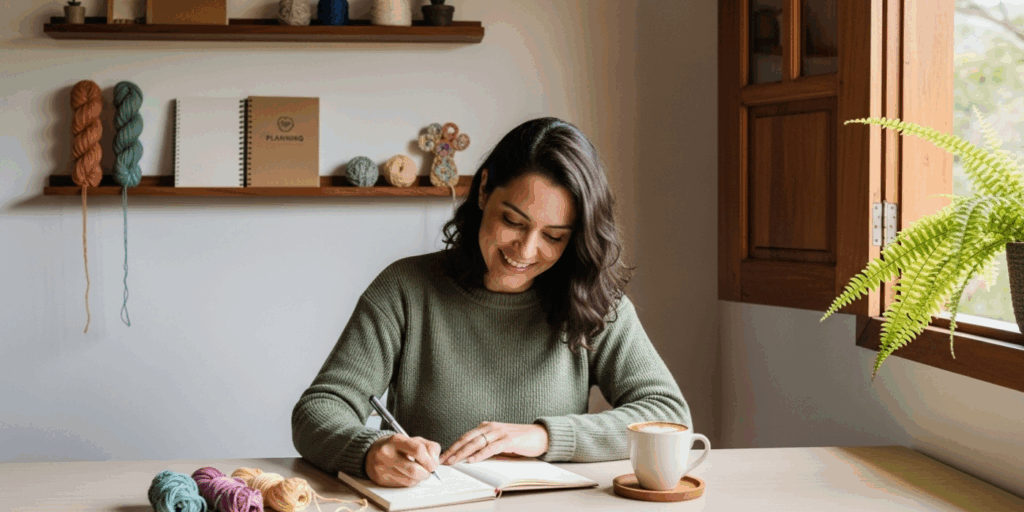
You don’t need a studio, a budget, or a degree in education to host a successful crochet workshop. In fact, some of the most memorable ones happen in kitchens and coffee shops.
Start small.
Step 1: Define Your “Why.”
Are you teaching to build community? To help people de-stress? To raise funds for a cause? Your “why” will shape everything—from the vibe of your event to how you promote it.
Step 2: Choose a Simple Project.
First-time learners need quick wins. A dishcloth. A coaster. A basic beanie. Something that takes 1–2 hours and gives visible results. Avoid complex patterns like lace doilies or intricate amigurumi on day one. You want people to leave feeling proud—not defeated.
Step 3: Pick Your Setting.
Your living room? Perfect. A local library meeting room? Even better—many offer free space for community events. Try a cozy café that lets you reserve a corner for an hour on a slow afternoon. Bring your own chairs, string up fairy lights, and maybe even bake cookies. Atmosphere matters.
Step 4: Keep It Affordable (or Free).
Consider a “pay-what-you-can” model or ask participants to bring their own yarn and hook. You can provide extra supplies for those who need them—maybe even host a yarn swap! This removes financial barriers and makes your workshop inclusive.
Pro Tip: Start with 4–6 people. That’s the sweet spot. Big enough to feel lively, small enough to give everyone personal attention.
One of my favorite stories? A woman named Linda, who hosted her first workshop in her garage after her husband passed away. She thought she was just teaching stitches. What she didn’t expect? The group became her lifeline. They met every Thursday. They shared grief. They laughed. One member, a veteran with PTSD, told her, “Crochet is the only thing that lets me breathe.”
You never know who you’ll touch.
Creating a Welcoming, Judgment-Free Space
Let’s be honest: the fear of “looking stupid” keeps a lot of people from trying crafts like crochet.
I once had a participant, Marcus, who showed up in a suit after work. He said, “I’ve never held a hook before. My wife thinks I’m crazy for trying.” He was terrified he’d be the only man. The only beginner. The only one who messed up.
By the end of the night? He was showing off his first granny square to everyone. And he came back the next week—with his wife.
Creating a space where people feel safe to be beginners is your superpower.
Here’s how:
- Normalize mistakes. Say it out loud: “I’ve dropped 17 stitches in my life. I still do.” Share your own funny fails. It breaks the ice.
- Use encouraging language. Instead of “That’s wrong,” say, “Let’s try this together—here’s how we fix it.”
- Celebrate effort, not perfection. “I love how you chose that color combo!” or “Look at how steady your tension is now!”
- Offer choices. Let people pick their yarn color. Let them make a square, a scarf, or a coaster. Autonomy builds confidence.
- Include visuals. Print out step-by-step photos or use a tablet to show slow-motion video clips of the stitches. Not everyone learns by listening.
And here’s a secret: silence is okay. Let people focus. Let them enjoy the rhythm of the hook. Sometimes, the most powerful moments are the quiet ones.
One of my workshop regulars told me, “It’s the only time in my week I don’t check my phone. I just… exist.”
That’s the magic you’re creating.
Turning Your Workshop Into a Repeatable Experience
You hosted one workshop. People loved it. Now what?
Don’t let it end there.
The secret to sustainability? Structure with flexibility.
Create a simple monthly rhythm.
Maybe it’s “Third Thursday Crochet & Chai” or “Yarn & Stories Night.” Name it. Make it feel like an event, not just a class.
Build a “Graduation” System.
After someone masters the basics, offer a “Next Level” session: learn how to read patterns, add color changes, or start amigurumi. Give them a little badge or certificate—yes, even a hand-drawn one. People love milestones.
Encourage peer teaching.
Once someone gets confident, invite them to help a new person. “You’ve got this—you can show Sarah how to do the half-double crochet.” This builds leadership and deepens community.
Keep it fresh.
Every few months, introduce a new theme: “Holiday Ornaments,” “Crochet for Kids,” “Men Who Crochet,” or “Crochet for Charity.” Theme nights spark excitement and give people a reason to come back.
And don’t forget the power of small gifts.
A handwritten note. A free ball of yarn for returning students. A playlist of calming music you made just for your group. These tiny gestures turn attendees into loyal friends.
I once had a student who started coming because she needed something to do after her divorce. Two years later, she’s leading her own workshop in another town. She sent me a photo of her group—14 people, all smiling, all crocheting. Her note? “You showed me I could teach. Now I do.”
That’s the ripple effect.
Beyond the Hook: The Unexpected Benefits You’ll Gain
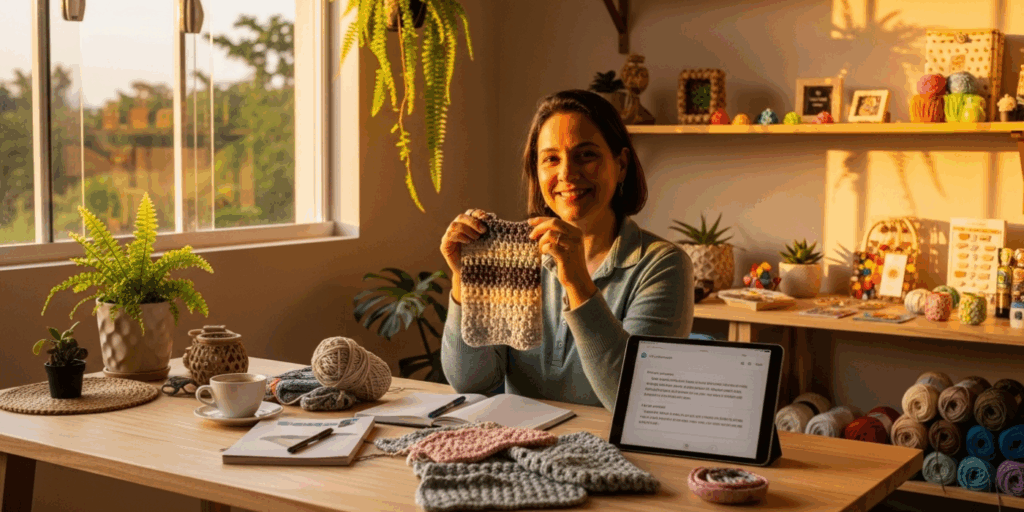
Here’s something no one tells you when you start teaching crochet: you will change, too.
You’ll learn patience you didn’t know you needed.
You’ll hear stories—real, raw, beautiful ones—about loss, resilience, joy, and hope. You’ll become a better listener. A better friend.
You’ll discover that teaching isn’t about being the expert. It’s about being present.
One of my workshop participants, a nurse working 12-hour shifts, told me, “When I come here, I’m not a caregiver. I’m just me. And I get to make something beautiful.”
That’s powerful.
And the best part? You don’t have to quit your job. You don’t need fancy equipment. You just need a hook, some yarn, and the courage to say, “Let’s do this together.”
Plus, there are practical perks:
- You’ll build a network. Crochet communities are fiercely loyal. They’ll recommend you to friends. They’ll show up when you need support.
- You’ll spark creativity. Teaching forces you to think differently—to simplify, explain, adapt. That creativity spills into other parts of your life.
- You’ll feel purpose. In a world full of noise, this is quiet, tangible impact.
Think of it this way: You’re not just teaching crochet. You’re teaching people how to be gentle—with their hands, with their minds, with each other.
And that’s a gift no app can replicate.
Inspiring the Next Generation: Making Crochet Accessible to All
One of the most rewarding things I’ve done? Hosting a workshop for teens at a local youth center.
They came in skeptical. “Crochet’s for grandmas,” one said.
By the end? They were designing their own beanies, texting each other patterns, and even starting a “Crochet Club” at school.
Kids today crave hands-on creativity. They’re tired of screens. They want to make something real.
So reach out.
- Partner with schools, libraries, senior centers, or shelters.
- Offer scholarships or free kits for those who can’t afford supplies.
- Use social media to show real people—diverse ages, genders, backgrounds—crocheting. Break the stereotype.
- Create a “Crochet Starter Kit” with a hook, one skein of yarn, and a simple pattern you printed out. Give them away at community events.
I once gave a kit to a girl in foster care. Two months later, she mailed me a tiny, lopsided octopus. “It’s for my little sister,” she wrote. “She says it’s the first thing that’s ever been made just for her.”
That’s why we do this.
Your Invitation: Start Small. Start Now.
You don’t need permission to host a crochet workshop.
You don’t need to be “good enough.”
You don’t need a big space.
You don’t need to be an expert.
You just need to care.
And if you’ve read this far, you do.
So here’s your challenge:
This week, pick one person.
Maybe it’s your neighbor. Your coworker. Your cousin.
Ask them: “Hey, I’ve been thinking—would you want to learn how to crochet? We could do it in my backyard, over coffee, for 30 minutes.”
That’s it.
Start with one. Then two. Then a circle.
Watch what happens.
Because crochet isn’t just about making things. It’s about making space—space for healing, for connection, for quiet joy in a loud world.
And you? You have the power to create that space.
Final Thoughts: The Stitch That Changes Everything
The first stitch you teach might seem small.
But it’s the beginning of something bigger.
It’s the moment someone realizes they can learn.
It’s the first time they laugh at their own mistake.
It’s the quiet nod between strangers who now understand each other without words.
Crochet workshops aren’t about perfect squares or flawless edges.
They’re about people.
And you?
You’re not just a teacher.
You’re a weaver of belonging.
So grab your hook. Pick up that yarn. Invite someone over.
And start stitching—not just fabric—but community.
What’s holding you back from hosting your first workshop?
Is it fear? Time? Not knowing where to start?
Drop a comment below—I’d love to hear your story.
And if this article inspired you, share it with someone who needs a little yarn and a lot of heart.
Because the world doesn’t need more perfect crocheters.
It needs more people who dare to say:
“Come, let’s make something beautiful… together.”
Maria Santos is a dedicated crochet and knitting enthusiast who finds joy in turning simple strands of yarn into meaningful, handmade art. With a natural eye for detail and a deep love for fiber crafts, she brings warmth, creativity, and years of personal experience to every project. Maria is inspired by the stories woven into each stitch and loves sharing that passion with others.