You’ve spent hours—maybe even days—crocheting that perfect blanket, scarf, or amigurumi. The stitches are even, the colors pop, and you’ve nailed the pattern down to a T. But now… you’re staring at a tangle of loose yarn ends and a piece that looks a little lopsided. Wait—did I forget something?
You didn’t.
Most crocheters focus so much on the making that they overlook the finishing—the quiet magic that turns a good project into a showstopper. Weaving in ends and blocking aren’t just “optional steps.” They’re the difference between something that looks handmade… and something that looks professionally handmade.
In this guide, you’ll learn how to weave in ends like a pro—no more unsightly bumps or yarn that comes loose after one wash. Then, we’ll walk through blocking in the simplest, most stress-free way possible, even if you’ve never done it before. No fancy tools. No complicated instructions. Just real, doable tips that make your work look polished, durable, and utterly gorgeous.
Whether you’re a beginner who just finished your first project or a seasoned crocheter looking to refine your technique, these finishing secrets will save you time, frustration, and maybe even a few beloved creations from the “I’ll fix it later” pile.
Let’s dive in.
Why Finishing Matters More Than You Think
Let’s be honest: finishing feels like the boring part. You’ve had your creative high—now you’re stuck with yarn tails and a lumpy edge. It’s easy to skip it. But here’s the truth: a poorly finished project can ruin the impression of hours of skilled work.
Think of it like painting a beautiful landscape… then leaving the canvas unframed and the paint drips untouched. The art is still there—but it doesn’t feel complete.
When you weave in ends properly, you prevent unraveling. A single loose tail can undo an entire sleeve, a sock cuff, or the edge of a blanket after just a few washes. I once gifted a handmade baby blanket to a friend… only to find it fraying at the corner three months later because I’d just tucked the ends under and called it done. She was kind enough not to say anything—but I felt terrible.
Blocking, on the other hand, transforms shape and drape. That scarf you crocheted? It might look wavy or uneven right off the hook. But after blocking? It falls like silk. That granny square afghan that looks like a crooked puzzle? Blocking makes the squares align like magic.
And here’s the kicker: people notice the difference—even if they can’t explain why. Your finished piece will look more intentional, more valuable. It’ll feel better to hold. And honestly? You’ll feel prouder showing it off.
Finishing isn’t about perfection. It’s about respect—for your work, for the people who’ll use it, and for the craft you love.
Weaving in Ends: No More Lumpy Bumps or Loose Threads
Okay, let’s get practical. You’ve got 15 yarn tails sticking out from your latest project. What now?
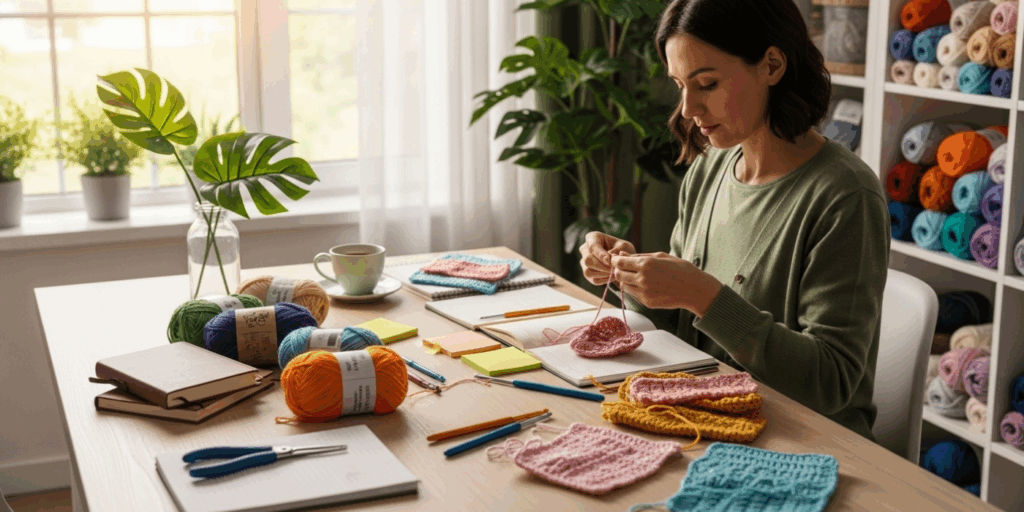
First—don’t panic. You don’t need a special tool. You just need a tapestry needle (the kind with a big eye and a blunt tip) and a little patience.
Here’s the trick most tutorials skip: weave in ends before you cut the yarn.
Yes, you read that right. Don’t snip that tail yet. Thread it onto your needle, then weave it back through the stitches you just made, going in the same direction as your rows. Go at least 1.5 to 2 inches—longer for bulky yarns. Then, go back in the opposite direction, weaving through a different set of stitches. This locks it in place like a tiny knot.
Pro tip: If you’re working with a solid color, weave the end along the back of a row where the stitch color matches. For variegated yarns, try to follow the color pattern so the tail blends in visually.
Avoid these common mistakes:
- Just tucking the end under a stitch. That’s a recipe for disaster. It’ll pop out.
- Cutting the tail too short. Leave at least 6 inches to work with. You can trim it later.
- Weaving in the same path twice. That creates bulk and can distort your fabric.
For granny squares, weave ends through the back loops of the last round. For garments, weave vertically along the seam lines. For amigurumi, weave through the stuffing area—just make sure you don’t poke through the front.
And here’s a game-changer: weave in ends as you go. Yes, right after you change colors or finish a section. It takes 30 seconds. Doing it all at the end? That’s 30 minutes of frustration. Do it little by little, and your final project will feel effortless.
You’ll thank yourself later—especially when you toss your blanket in the wash without worrying.
Blocking Made Simple: No Irons, No Steam, No Stress
Blocking sounds intimidating. You’ve probably seen photos of crocheters pinning their work to foam boards, misting them with water, and waiting 24 hours. It looks like a science experiment.
Here’s the good news: you don’t need any of that.
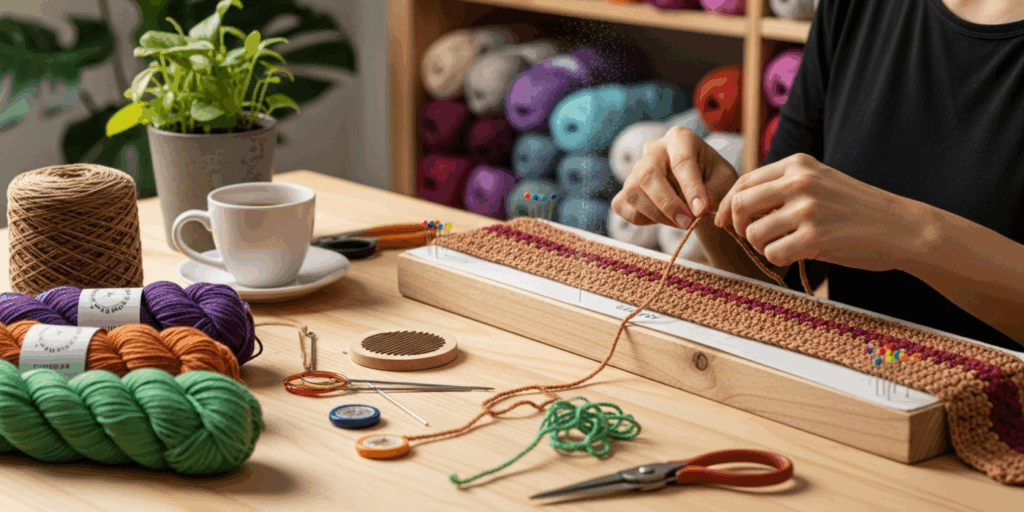
For most projects—especially scarves, blankets, and home décor items—you can block with just water, a towel, and a flat surface.
This is called wet blocking, and it’s the easiest method for beginners.
Step 1: Soak it gently. Fill a sink or basin with lukewarm water. Add a splash of gentle detergent if your yarn is wool or animal fiber (like Lanolin or a wool wash). Submerge your piece. Let it soak for 15–20 minutes. Don’t wring or twist—this can stretch or damage the fibers.
Step 2: Drain and roll. Lift your piece out and gently press out the excess water. Then, lay it flat on a clean towel. Roll the towel up like a burrito and press down. Unroll. Your piece should be damp, not dripping.
Step 3: Shape it up. Lay your project on a dry towel or a clean, flat surface (a bed, a table, even a yoga mat works). Gently stretch and smooth it into shape. Use your fingers to pull corners into alignment. For a square blanket, make sure all sides are even. For a shawl, ease out the points.
Step 4: Let it dry. Leave it alone. No fans. No direct sun. Just air. Depending on humidity, it’ll take 8–24 hours. Check it the next day—it’ll feel firm and crisp.
And that’s it.
Why this works: Blocking opens up your stitches, evens out tension, and relaxes the fibers. That “wonky” edge? Gone. That twisted hat? Now perfectly round. That lumpy cowl? Suddenly flows beautifully.
Bonus tip: If you’re short on time, try spray blocking. Lightly mist your project with water from a spray bottle, then shape and let dry. It’s not as effective as wet blocking for deep shaping, but it’s perfect for quick touch-ups.
The Secret Weapon: Using a Ruler (Yes, Really!)
Here’s something most crocheters don’t think to do: measure as you block.
If you’re making a blanket with multiple squares, or a sweater with consistent panels, blocking isn’t just about aesthetics—it’s about precision.
Grab a ruler or a measuring tape. After you’ve laid your piece flat, measure the length and width. Compare your squares. If one is 8 inches and another is 7.5, gently stretch the smaller one until it matches. Pin it down with rust-proof T-pins if you’re worried about shifting.
I learned this the hard way when I made a baby blanket with 49 granny squares. I blocked them individually… but didn’t measure. When I sewed them together, three squares were too small. The whole thing looked like a lopsided smile.
Now? I measure every square before sewing. It takes 10 extra minutes—but it saves hours of re-sewing.
Pro tip for garments: Measure your finished piece against the pattern’s dimensions. If your sleeve is 2 inches too short, blocking can add that missing length—especially with wool or alpaca. Fibers stretch when wet and hold their new shape when dry.
And if you’re working with cotton? Don’t skip blocking. Cotton doesn’t “bounce back” like wool, so it holds its shape even better after blocking. That’s why your cotton dishcloths look so crisp and square—because someone blocked them.
Your project deserves that same care.
The Final Touch: Trimming, Fluffing, and Loving Your Work
You’ve woven in the ends. You’ve blocked it into shape. Now, what?
Trim.
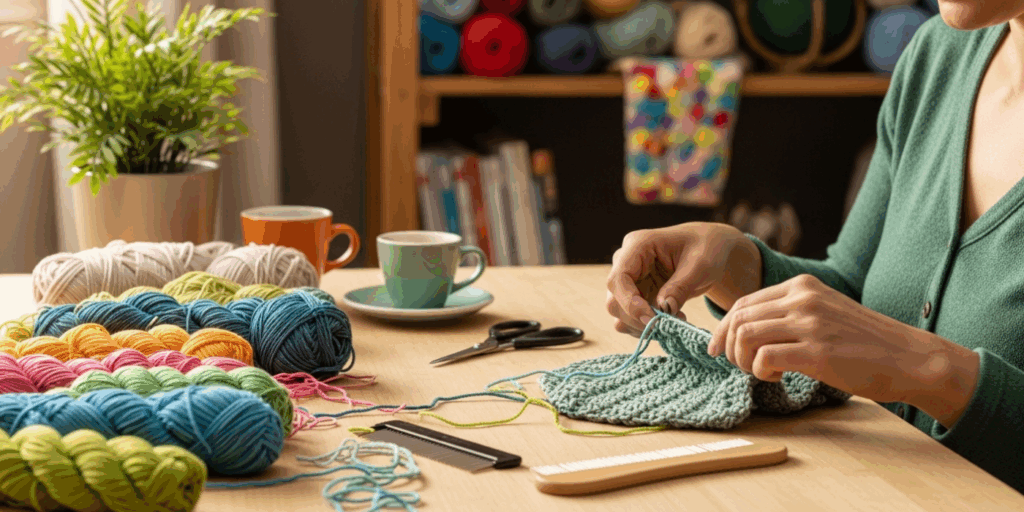
Use sharp, small scissors. Snip the ends close—but not too close. Leave about 1/8 inch. Too close, and the yarn can pull out. Too long, and it sticks out like a flag.
Then—fluff.
Gently run your fingers over the surface of your piece. Lift the stitches slightly. This opens up the texture and makes your work look fuller, softer, and more inviting. It’s like giving your crochet a little massage.
If you’re working with fluffy yarn (like mohair or chenille), this step is essential. It hides any remaining bulk and makes the texture glow.
And here’s the quietest, most powerful step of all: pause.
Look at your finished piece. Really look. Notice the way the light catches the stitches. The evenness of the edges. The way the colors blend. This isn’t just a blanket. It’s a story. It’s patience. It’s your hands turning yarn into something warm, beautiful, and lasting.
That’s the magic of finishing.
It’s not about perfection. It’s about presence.
When you take the time to finish well, you’re not just making a project—you’re honoring the process. And that’s something no store-bought item can replicate.
Real-Life Wins: What Happens When You Finish Right
Let me share a quick story.
A few months ago, I taught a beginner crochet class. One student, Maria, made her first-ever scarf. It was lovely—bright colors, even stitches. But the ends were sticking out everywhere, and the edges curled like a sad taco.
She was ready to call it “good enough.”
I asked her: “What if you could make this look like something you’d buy in a boutique?”
She laughed. “No way.”
So we spent 20 minutes weaving in ends and doing a quick spray block. She didn’t believe it would change much.
The next day, she showed up beaming.
“I wore it to work,” she said. “My boss asked where I bought it. I told her I made it. She couldn’t believe it.”
That’s the power of finishing.
It doesn’t take much time. But it changes everything.
Your projects don’t need to be perfect. But they do deserve to be finished well.
And when you do? You’ll start to feel more confident. You’ll gift more. You’ll sell more. You’ll even start to see your crocheting as a real, valuable skill—not just a hobby.
Ready to Make Your Next Project Shine?
Finishing isn’t the glamorous part of crochet. But it’s the part that turns passion into pride.
Weaving in ends keeps your work lasting. Blocking turns your piece into something that looks—and feels—professional. And taking those extra minutes? That’s what separates “I made this” from “I crafted this.”
So here’s your challenge: Pick one unfinished project right now. The one tucked in your bin. The one with the loose ends. The one you’ve been avoiding.
Set aside 30 minutes this week. Weave in those ends. Block it gently. Trim and fluff.
Then, take a photo. Wear it. Gift it. Post it.
You’ve already done the hard part—making it.
Now, give it the finish it deserves.
Because you’re not just a crocheter.
You’re a creator.
And your work? It matters.
What’s your favorite finishing tip? Have you ever been surprised by how much blocking changed your project? Drop a comment below—I’d love to hear your stories, your tricks, and even your “I thought I’d never finish it… until I did” moments. And if this helped you, please share it with a fellow crocheter. The craft is better when we grow together. 🧶💛

Maria Santos is a dedicated crochet and knitting enthusiast who finds joy in turning simple strands of yarn into meaningful, handmade art. With a natural eye for detail and a deep love for fiber crafts, she brings warmth, creativity, and years of personal experience to every project. Maria is inspired by the stories woven into each stitch and loves sharing that passion with others.