You’ve just finished your first crocheted blanket—lopsided, a little too tight in one corner, but yours. You stare at it, wrapped in that quiet pride only a maker knows. And then… you pause. Who do I show this to?
If you’ve ever felt that lonely thrill after finishing a handmade project, you’re not alone. Crochet is intimate. It’s quiet. It’s hours of yarn, needles, and rhythm. But it doesn’t have to be solitary. Across the globe, a vibrant, warm, and wildly supportive crochet community is waiting—online and in person—to welcome you with open arms and a shared love of stitches.
Whether you’re a beginner holding your first hook or a seasoned artisan with a closet full of WIPs (Works In Progress), connecting with fellow crocheters can transform your hobby into a lifeline. It’s where you find patterns that actually work, get advice when your tension goes rogue, celebrate milestones like your first amigurumi, and even make real friends who understand why you’re excited about a new skein of merino wool.
In this article, we’ll explore how to find and nurture your place in the crochet world—both digitally and in real life. You’ll learn practical ways to join online groups that feel like home, discover local circles that turn yarn into friendship, and uncover how these connections can boost your creativity, reduce stress, and even inspire new projects you never imagined. By the end, you won’t just know where to connect—you’ll feel ready to walk right in.
Why the Crochet Community Matters More Than You Think
Let’s be honest: crochet is often seen as a quiet, solitary craft. And yes, it can be deeply peaceful to sit with your hook and yarn, lost in the rhythm of loops and chains. But here’s the secret most makers know: you don’t have to do it alone.
Studies show that creative hobbies like crochet can reduce anxiety and improve mental well-being. But when you add community into the mix? The benefits multiply. A 2023 survey by the Craft Yarn Council found that 78% of crocheters who joined online groups reported feeling less isolated, and 65% said they were more motivated to keep crafting regularly.
Think about it: when you’re stuck on a tricky stitch pattern, a quick post in a Facebook group can get you five helpful replies within minutes. When you finish your first granny square blanket and feel proud but unsure if it’s “good enough,” a few likes and encouraging comments can mean the world.
This isn’t just about patterns and tips—it’s about belonging. Crochet communities are full of people who’ve been where you are: frustrated by dropped stitches, overjoyed by color changes, and secretly obsessed with yarn dye lots. They don’t judge your shaky foundation rows. They cheer you on.
And here’s the beautiful thing: you don’t need to be “good” to belong. You just need to care.
Whether you’re a teen learning to crochet from YouTube videos or a retiree rediscovering a skill from childhood, there’s a space for you. The crochet community doesn’t ask for perfection. It asks for presence.
So if you’ve ever felt like your passion is too niche, too quiet, or too “old-fashioned” to matter—this is your sign. It matters. You matter. And there are thousands of people out there, just waiting to say, “Me too.”
Finding Your Online Crochet Home: Where to Start
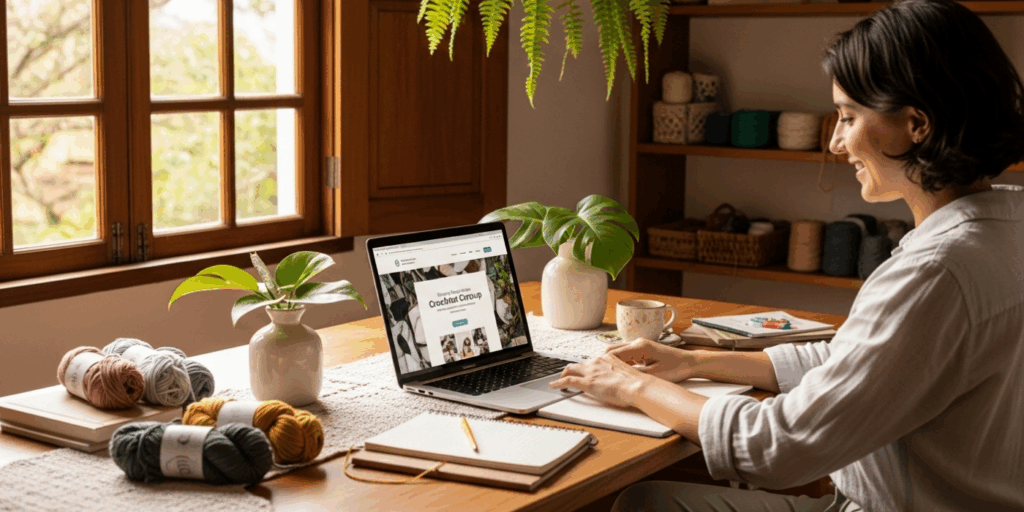
The internet is bursting with crochet communities—but where do you even begin?
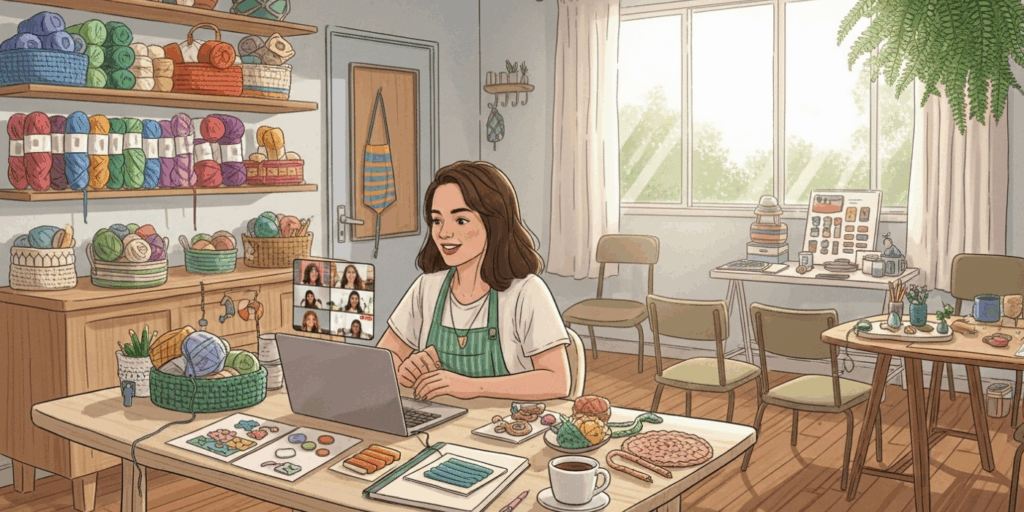
Start simple. Facebook Groups are the heartbeat of the digital crochet world. Search for groups like “Crochet Lovers United,” “Amigurumi Addicts,” or “Crochet for Beginners.” These aren’t just forums—they’re living spaces. People share photos of their latest projects, ask for help with confusing patterns, and even host weekly “Show & Tell” threads. One group I stumbled into had a member who posted a photo of her crocheted cat wearing a tiny hat every Monday. It became a ritual. People looked forward to it. That’s the magic.
Instagram is another goldmine. Use hashtags like #crochetcommunity, #crochetlife, or #amigurumimaker to discover makers whose style speaks to you. Don’t just scroll—comment. Say something real: “I love the color combo! What yarn did you use?” Most makers will reply—and soon, you’ll have your first crochet friend.
For pattern lovers, Ravelry is the ultimate hub. It’s like Pinterest meets a library meets a social network—for fiber artists. You can track your projects, save patterns, join forums, and even join “Crochet Along” (CAL) events where hundreds of people stitch the same design together over weeks. Imagine finishing a blanket and knowing 2,000 others are doing it too—right now, across the globe. That’s powerful.
And don’t overlook YouTube. Many top crochet instructors have thriving comment sections where beginners ask questions and veterans offer gentle advice. I once watched a tutorial on how to fix a twisted foundation chain—and the top comment? “I did this exact thing last week. Took me three tries. You got this!” That comment kept me going.
Pro Tip: Don’t join ten groups at once. Pick one or two that feel warm and welcoming. Engage slowly. Comment. Share a photo. Ask a question. Let yourself be seen. The community will meet you there.
From Screen to Stitch: Building Real-Life Crochet Connections
Online groups are wonderful—but nothing beats the quiet hum of yarn being worked, the smell of wool, and the real-life laughter that comes when someone accidentally crochets a sock instead of a hat.
So how do you find in-person crocheters?
Start local. Libraries, community centers, and craft stores often host free or low-cost crochet circles. Call ahead. Ask if they have a “Yarn & Chat” night. Many do. I met my best crochet friend at a monthly group at our local library. We bonded over our shared love of gradient yarns and our mutual hatred of invisible joins. Three years later, we still meet every other Thursday—with snacks and tea.
Local yarn shops are your secret weapon. These aren’t just retail stores—they’re hubs. Many host weekly meetups, classes, or “stitch nights.” Even if you don’t buy anything, pop in, say hi, and ask if anyone’s working on something interesting. You’d be surprised how many people are quietly stitching in the corner.
Meetup.com is another underrated gem. Search “crochet” in your city. You’ll find everything from casual drop-in groups to themed events like “Crochet for Charity” or “Vintage Pattern Swap.” One group I found meets in a coffee shop every Sunday. They bring their projects, their dogs, and their cookies. No pressure. Just connection.
And if you’re feeling bold? Start your own circle. You don’t need experience—you just need enthusiasm. Post on your neighborhood Facebook page: “Looking for fellow crocheters to meet up for yarn and chat every other Friday at the park. Bring your hook and snacks!” Within days, you’ll have responses. One woman joined because she was grieving her husband and said crocheting alone wasn’t helping. Now, she’s part of our little tribe.
Real-life crochet circles are different from online ones. There’s no algorithm. No likes. Just presence. The silence between stitches? That’s where the deepest conversations happen.
The Magic of Crochet Alongs (CALs): Stitching Together Across Time Zones
Have you ever started a project and lost steam halfway through? You’re not alone. That’s where Crochet Alongs (CALs) come in.
A CAL is a collaborative project where people around the world stitch the same pattern over several weeks, sharing progress, tips, and encouragement along the way. Think of it like a book club—but instead of chapters, you’re working on a blanket, a sweater, or a whole set of amigurumi animals.
CALs are powerful because they turn isolation into accountability—and loneliness into camaraderie. When you join a CAL, you’re not just crocheting a blanket. You’re joining a story.
One of the most popular CALs last year was the “Cozy Granny Square Blanket” hosted by a popular YouTube creator. Over 12,000 people signed up. Every Monday, a new square tutorial dropped. People posted their progress with photos tagged #CozyGrannyCAL. Someone shared that she crocheted her squares while her newborn slept in her arms. Another said she finally finished her first blanket after 18 months—and cried when she posted it.
The result? Not just finished projects—but real emotional milestones.
CALs also introduce you to designers, teach you new techniques, and often support charitable causes. Many are tied to donations—for example, making blankets for NICUs or hats for cancer patients.
You can find CALs on Ravelry, Instagram, YouTube, and even Etsy. Look for announcements tagged #CrochetAlong or #CAL2025. Start with a simple one—something with clear instructions and a friendly host. Don’t worry if you’re behind. CALs are about the journey, not speed.
And here’s the best part: even if you’re shy, you can participate silently. Just follow along. Show up. Stitch. You’ll be surprised how much comfort comes from knowing you’re not alone in your stitches.
How Community Transforms Your Crochet—and Your Life
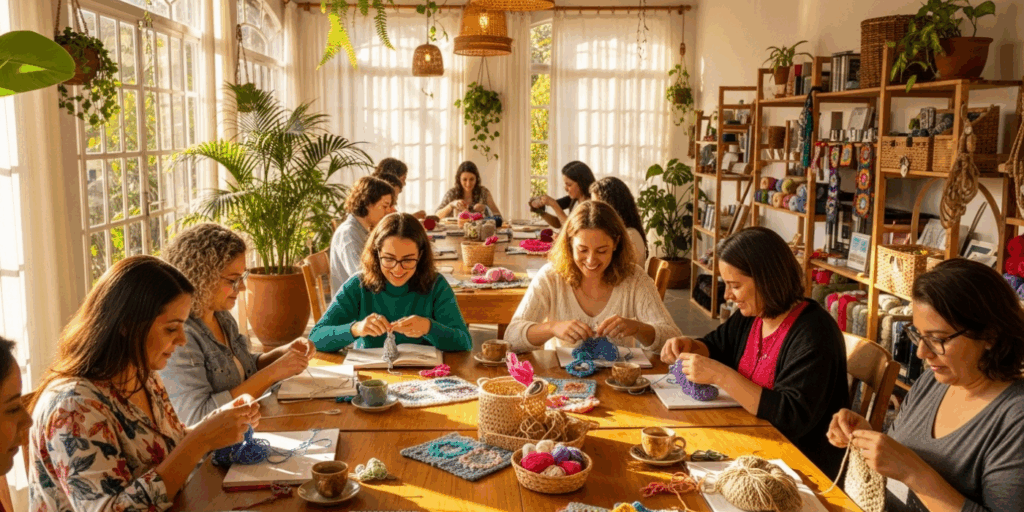
Let’s talk about impact.
When you connect with other crocheters, something shifts. It’s subtle at first. Maybe you start trying new colors. Maybe you finally finish that sweater you started in 2022. Maybe you feel less guilty taking time for yourself.
But over time, the change runs deeper.
Crochet communities teach you patience—not just with your stitches, but with yourself. They remind you that progress isn’t always visible. That it’s okay to take breaks. That “good enough” is sometimes the best you can do—and that’s still beautiful.
I once spoke with a woman named Linda, a retired nurse who joined a crochet group after her husband passed away. She told me, “For the first time in a year, I didn’t feel like I was just waiting to die. I was creating something. And people cared about what I made.”
That’s the power of community.
It doesn’t fix grief. But it gives you a place to sit with it—and keep going.
For teens, it’s a safe space away from screens and social media pressure. For seniors, it’s a way to stay mentally sharp and socially connected. For immigrants, it’s a bridge to a new culture through a universal language: fiber and thread.
Even your skills improve. You learn new stitches from a stranger in Canada. You discover a color palette from a mom in Texas. You get feedback that helps you grow—not criticize you, but guide you.
And when you give back? When you teach a beginner, donate a blanket, or simply send a kind comment? You complete the circle.
Crochet isn’t just about making things. It’s about making connections.
Your Invitation: Step Into the Circle
So where do you go from here?
You don’t need a fancy hook. You don’t need a perfect project. You don’t even need to know all the stitches.
All you need is this: a willingness to show up.
Here’s your simple, no-pressure action plan:
- Join one online group today. Facebook, Ravelry, or Instagram—pick one. Post a photo of something you’ve made—even if it’s tiny. Say: “Hi, I’m new here. This is my first project. I’m learning!”
- Visit a local yarn shop this week. Just walk in. Say hello. Ask if they have a crochet group.
- Look for a CAL starting next month. Pick one that excites you—even if it’s just a coaster. Show up.
- Reach out to someone. Comment on a post. Send a DM. Say, “I love your work. I’m new too.”
You don’t have to be loud. You don’t have to be fast. You just have to be there.
The crochet community doesn’t demand perfection. It celebrates presence.
And if you’re reading this, wondering if you belong? You already do.
You’ve picked up a hook. You’ve loved the feel of yarn. You’ve felt that quiet joy when a stitch falls into place.
That’s enough.
That’s always been enough.
Final Thought: You’re Not Just Crocheting. You’re Belonging.
Crochet is more than a craft. It’s a quiet revolution of care.
In a world that moves too fast, we slow down. We loop, we pull, we create. And in doing so, we create space—for connection, for healing, for peace.
The people you’ll meet through this community? They’ll remember your name. They’ll cheer for your wins. They’ll hold space for your struggles. And one day, you’ll be the one to welcome the next new crocheter with a warm smile and a simple, “Me too.”
So go ahead.
Open that Facebook group.
Walk into that yarn shop.
Start that CAL.
Your next friend is waiting—with a hook in hand, and a heart ready to stitch beside you.
What’s your favorite way to connect with other crocheters?
Have you found a friend through your stitches? Share your story in the comments below—I’d love to hear it. And if this article resonated with you, please share it with someone who needs to know: you’re not alone. 🧶💛
Maria Santos is a dedicated crochet and knitting enthusiast who finds joy in turning simple strands of yarn into meaningful, handmade art. With a natural eye for detail and a deep love for fiber crafts, she brings warmth, creativity, and years of personal experience to every project. Maria is inspired by the stories woven into each stitch and loves sharing that passion with others.