You’ve just started a new crochet project—maybe a cozy blanket, a delicate shawl, or even a cute amigurumi toy. You grab the first skein of yarn you see, cast on, and… uh-oh. The stitches are too loose. The fabric feels scratchy. Or worse—it stretches out of shape after one wash. Sound familiar?
Here’s the truth: the yarn you choose is just as important as the pattern you follow. It’s not just about color or price. It’s about texture, weight, fiber content, and how it behaves under your hooks. Too many crocheters blame themselves when a project doesn’t turn out right—when really, the culprit was the yarn.
In this guide, we’ll break down the entire process of choosing the perfect yarn for any crochet project—whether you’re a beginner or a seasoned maker. No jargon. No overwhelm. Just clear, practical, real-life advice that helps you avoid costly mistakes and fall in love with your creations all over again.
We’ll explore how fiber types affect your finished piece, why yarn weight matters more than you think, how to match yarn to your project’s purpose (yes, a baby blanket isn’t just a blanket), and even how to shop smart when you’re short on time or budget. By the end, you’ll know exactly which yarn to reach for—every single time.
Let’s dive in.
Why Fiber Matters More Than You Think
Not all yarns are created equal—and the difference isn’t just in the price tag.
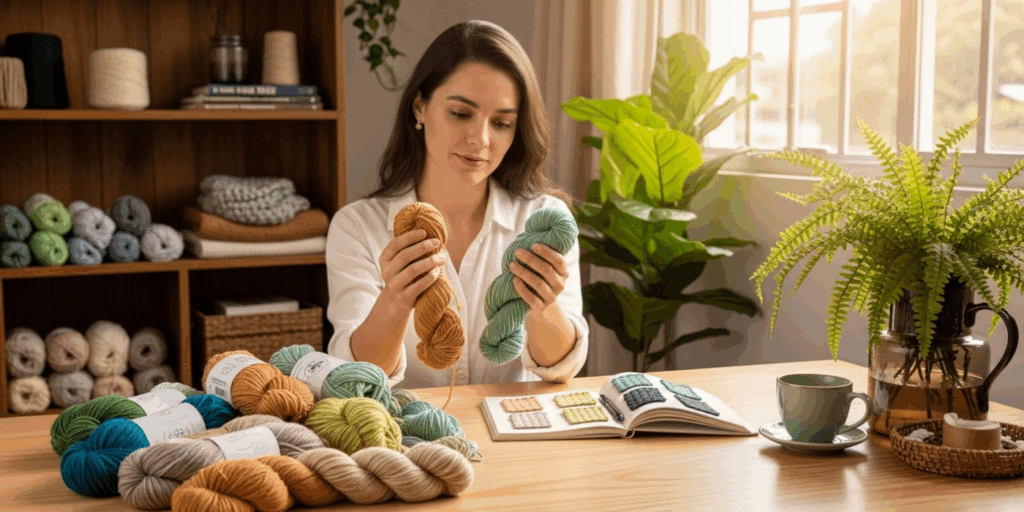
Think of yarn fiber like the ingredients in your favorite recipe. You wouldn’t swap butter for margarine in a soufflé and expect the same result, right? The same goes for crochet. The fiber determines how your project feels, how it drapes, how it wears, and even how it breathes.
Let’s break down the most common fibers you’ll encounter:
- Cotton: Great for dishcloths, summer tops, and baby items. It’s breathable, absorbent, and holds its shape well. But? It’s not stretchy. If you’re making a sweater, cotton can feel heavy and saggy over time.
- Wool: The superstar for warmth. Wool naturally insulates, wicks moisture, and has wonderful bounce. Perfect for winter hats, scarves, and blankets. But some people find it itchy—especially if it’s not superwash or blended with softer fibers.
- Acrylic: The budget-friendly workhorse. It’s soft, machine-washable, and comes in every color imaginable. Ideal for gifts, kids’ items, or practice projects. But acrylic doesn’t breathe like natural fibers, and it can pill or look “plasticky” after a few washes.
- Alpaca: Luxuriously soft and warmer than wool. It’s lightweight but can stretch out if not supported by another fiber (like wool or nylon). Great for shawls and luxury scarves.
- Bamboo or Hemp: Eco-friendly and silky smooth. These fibers drape beautifully and are perfect for lightweight garments. But they’re not very elastic, so they’re best for loose-fitting pieces.
Here’s a quick tip: If you’re making something for a baby or someone with sensitive skin, always choose a soft, hypoallergenic fiber like organic cotton, bamboo, or a high-quality merino wool blend. I once made a blanket for my niece using a cheap acrylic yarn—adorable at first, but after three washes, it looked like it had been through a sandstorm. Lesson learned.
And don’t forget: blends are your friend. A 70% wool / 30% nylon blend gives you warmth and durability. A 50% cotton / 50% acrylic mix gives you washability with a bit of softness. Don’t be afraid to mix and match!
Yarn Weight: It’s Not Just About Thickness
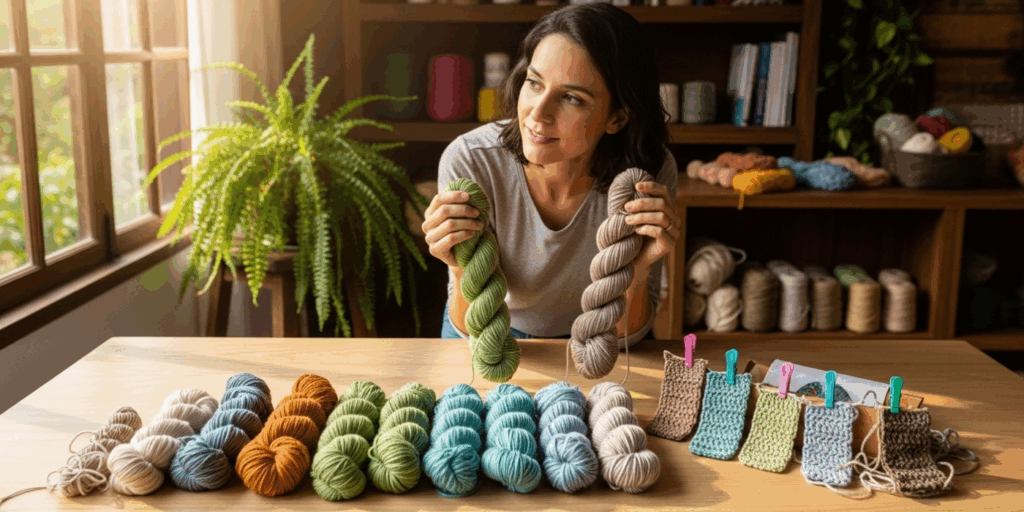
You’ve probably seen those little numbers on yarn labels: 1 (Super Fine), 4 (Medium), 6 (Super Bulky). These are called yarn weights, and they’re your secret weapon for getting the right drape, speed, and structure.
Think of yarn weight like shoe sizes. You wouldn’t wear hiking boots to the beach—and you wouldn’t use a chunky yarn to make a lace doily. The weight determines how fast you work, how warm the item gets, and even how much yarn you’ll need.
Here’s a simple cheat sheet:
| 1 | Lace / Thread | Doilies, delicate shawls | B-1 to D-3 |
| 2 | Fine / Sport | Baby clothes, socks | D-3 to E-4 |
| 3 | Light / DK | Light sweaters, scarves | E-4 to F-5 |
| 4 | Medium / Worsted | Blankets, afghans, hats | G-7 to I-9 |
| 5 | Bulky | Quick blankets, rugs | I-9 to K-10.5 |
| 6 | Super Bulky | Arm-knitted items, chunky cowls | L-11+ |
Here’s the golden rule: Always check your pattern’s recommended yarn weight. If it calls for worsted (weight 4), don’t substitute bulky unless you want a project that’s twice as thick—and uses double the yarn.
I once tried to make a granny square blanket with sport weight yarn. It took me three months. Three months! Meanwhile, my friend used worsted weight and finished hers in two weeks. Same pattern. Totally different experience.
And here’s a pro tip: If you’re designing your own project, start with worsted weight. It’s the most forgiving, easiest to handle, and widely available. Perfect for learning stitches, practicing tension, and making gifts that look professional without the stress.
Match the Yarn to the Purpose (Not Just the Pattern)
Your pattern might say “use worsted weight cotton,” but what if you’re making a blanket for a newborn? Or a bag that needs to hold heavy books?
Yarn choice should serve the project’s real-life function.
Let’s look at three common projects and how to nail the yarn:
1. Baby Blankets
You want softness, washability, and safety. Avoid wool (too itchy), and skip anything with glitter or metallic threads. Go for organic cotton, bamboo blends, or superwash merino wool. These are gentle on skin, hold up to frequent washing, and don’t shed. Bonus: Look for Oeko-Tex certified yarns—they’re tested for harmful substances.
2. Tote Bags or Market Bags
This isn’t about cuddliness—it’s about strength. You need something durable that won’t stretch into a hammock when you load it with groceries. Cotton rope yarn, hemp, or a sturdy acrylic blend are your best bets. I made a tote using 100% cotton rug yarn—and it’s lasted three years of farmers’ market runs. No fraying. No sagging.
3. Winter Hats and Scarves
Warmth is key. Wool or alpaca blends win here. But if you’re allergic to wool? Try a wool-acrylic blend or a high-quality cashmere-acrylic mix. These give you the warmth without the itch. And always avoid 100% acrylic for winter wear—it traps heat but doesn’t breathe, which can make you sweat and then feel cold.
Even something as simple as a dishcloth deserves attention. Cotton is ideal because it absorbs water and doesn’t leave lint. A fluffy acrylic one? You’ll be scrubbing with fuzz for weeks.
Your project’s purpose should guide your yarn choice—not the other way around.
The Secret to Avoiding Yarn Regret (Even on a Budget)
Let’s be real: yarn can be expensive. A single skein of luxury merino can cost $30. And if you buy the wrong one? That’s $30 down the drain.
Here’s how to shop smart without sacrificing quality:
1. Buy a Swatch First
Before committing to a whole skein, buy a small one (often called a “skeinlette”) or even a mini-skein. Crochet a 4×4 inch square. Wash it. Let it dry. Does it pill? Stretch? Feel scratchy? That’s your real-life test.
2. Read Reviews (But Be Smart)
Amazon and Etsy reviews are gold—if you know how to read them. Look for comments like:
- “Washed well after 10 cycles”
- “Didn’t stretch out like I feared”
- “Softer than expected”
Avoid reviews that just say “lovely color!” or “fast shipping.” Those don’t tell you about performance.
3. Shop Sales and Secondhand
Yarn stores often have end-of-season sales. Facebook Marketplace and local craft groups are full of unused skeins. I once got 5 skeins of beautiful worsted weight wool for $8 because someone was decluttering. That’s a $50 value!
4. Don’t Fall for “Free” Patterns with Expensive Yarn Recommendations
Many free patterns suggest luxury yarns because they’re sponsored. But 90% of the time, you can substitute with a budget-friendly alternative. Use the Yarn Substitution Calculator (free online tools like YarnSub.com) to find equivalent weights and fibers.
And remember: a well-chosen $12 yarn will look better and last longer than a poorly chosen $30 one.
The Emotional Side of Yarn: Choosing What Feels Right
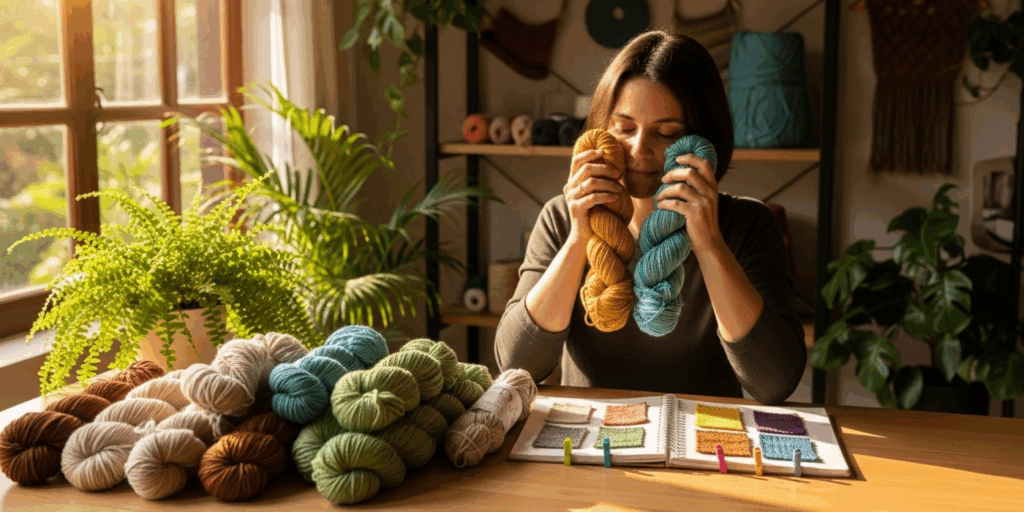
Here’s something most guides don’t talk about: yarn has emotion.
You know that feeling when you run your fingers over a skein and it just… calls to you? That’s not just magic. It’s intuition.
Sometimes, the perfect yarn isn’t the most practical one—it’s the one that makes you smile. The one that feels like a hug. The one that reminds you of your grandma’s knitting basket.
I once made a shawl out of a bright purple acrylic yarn I bought on a whim. It wasn’t “ideal.” It wasn’t even the most beautiful fiber. But I made it while grieving my mom—and every stitch felt like talking to her. That shawl is now my most treasured piece.
Your project isn’t just about technique. It’s about connection.
So if you’re drawn to a color, a texture, a brand—listen. Let yourself be inspired. The right yarn doesn’t just make a beautiful object. It makes a meaningful one.
And here’s the beautiful thing: you can still make something functional and beautiful—even if you choose based on feeling. Just pair your emotional pick with the right weight and fiber for the project’s purpose.
Love a fluffy alpaca? Use it for a scarf, not a bag. Love a vibrant cotton? Perfect for a summer top. Your heart leads you to joy—and your brain keeps it practical.
Final Checklist: Your Go-To Yarn Decision Guide
Before you buy your next skein, ask yourself these five questions:
- What is this project for? (Baby item? Winter wear? Daily use?)
- How will it be cared for? (Machine wash? Hand wash? Dry clean?)
- What’s the ideal texture? (Soft? Durable? Drapey? Bouncy?)
- What’s my budget? (And can I find a similar quality at a lower price?)
- Do I love how it feels? (If the answer is no, reconsider—even if it’s on sale.)
Keep this checklist handy. Print it. Save it on your phone. Use it every time you shop.
You’ve Got This—Now Go Make Something Beautiful
Choosing the right yarn doesn’t have to be confusing. It doesn’t require a degree in textile science. It just requires a little awareness, a touch of curiosity, and the courage to trust your instincts.
You don’t need to buy the most expensive yarn. You don’t need to follow every trend. You just need to understand what makes each yarn work—and then choose one that matches your project, your life, and your heart.
The next time you stare at a shelf of yarn, don’t panic. Take a breath. Ask yourself the five questions above. Feel the fibers. Imagine the finished piece in your hands, wrapped around a loved one, or worn on a chilly morning.
That’s the magic.
And now? You’re ready to create it.
So tell me—what’s the next project you’re dreaming of? Is it a cozy blanket for your couch? A gift for a friend? A bold, colorful scarf you’ve been too afraid to start? Drop a comment below—I’d love to hear what you’re making, and I’ll even help you pick the perfect yarn.
And if this guide helped you feel more confident, share it with a fellow crocheter. Because the best projects aren’t just made with yarn—they’re made with community.
Happy hooking. 🧶💛
Maria Santos is a dedicated crochet and knitting enthusiast who finds joy in turning simple strands of yarn into meaningful, handmade art. With a natural eye for detail and a deep love for fiber crafts, she brings warmth, creativity, and years of personal experience to every project. Maria is inspired by the stories woven into each stitch and loves sharing that passion with others.