You’ve just bought your first crochet hook, found a beginner-friendly pattern, and you’re ready to cast on your very first project. But then you walk into the yarn aisle—or scroll through an online store—and suddenly feel completely overwhelmed. Rows upon rows of colorful skeins, labels full of unfamiliar terms like “worsted,” “superwash,” and “mercerized.” Where do you even begin?
Here’s the good news: your yarn choice can make or break your first crochet experience—but it doesn’t have to be complicated. In fact, picking the right fiber is one of the simplest ways to set yourself up for success, enjoyment, and maybe even a little pride in your finished piece.
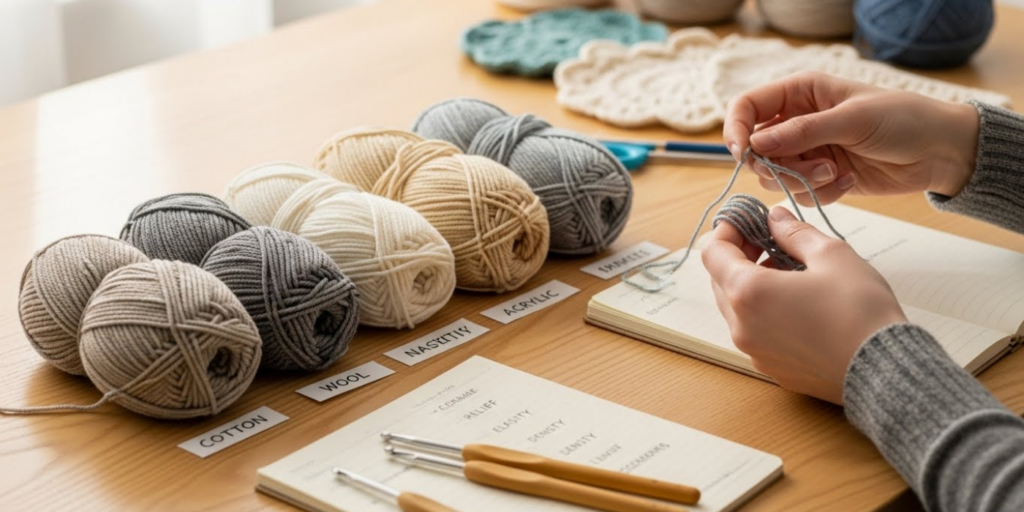
In this guide, we’ll walk you through the most common yarn fibers—acrylic, cotton, wool, and blends—and explain exactly why some are better suited for beginners than others. You’ll learn what to look for (and what to avoid), how fiber affects stitch definition, tension, and care, and even get specific yarn recommendations for your very first project. By the end, you’ll feel confident grabbing the right skein off the shelf—and actually enjoying every stitch along the way.
Let’s turn yarn confusion into your secret superpower.
Why Your First Yarn Choice Matters More Than You Think
When you’re just starting out, every stitch feels like a small victory—or a frustrating misstep. And believe it or not, the fiber you choose plays a huge role in how those stitches feel and look.
Imagine trying to learn to drive in a car with sticky brakes and foggy windows—it’s possible, but it’s way harder than it needs to be. The same goes for crochet. A yarn that’s too fuzzy, slippery, or splitty can make it nearly impossible to see your stitches or maintain even tension. On the other hand, a smooth, sturdy, forgiving yarn turns learning into play.
The right yarn for beginners should be:
- Smooth (so you can clearly see each stitch)
- Medium weight (not too thin, not too bulky)
- Inexpensive (because mistakes happen—and that’s okay!)
- Easy to care for (machine-washable is a big plus)
- Non-splitty (won’t unravel when your hook catches it)
Getting this right from the start doesn’t just make your project prettier—it makes the whole process more fun, less frustrating, and far more likely to keep you hooked for life.
Acrylic Yarn: The Beginner’s Best Friend
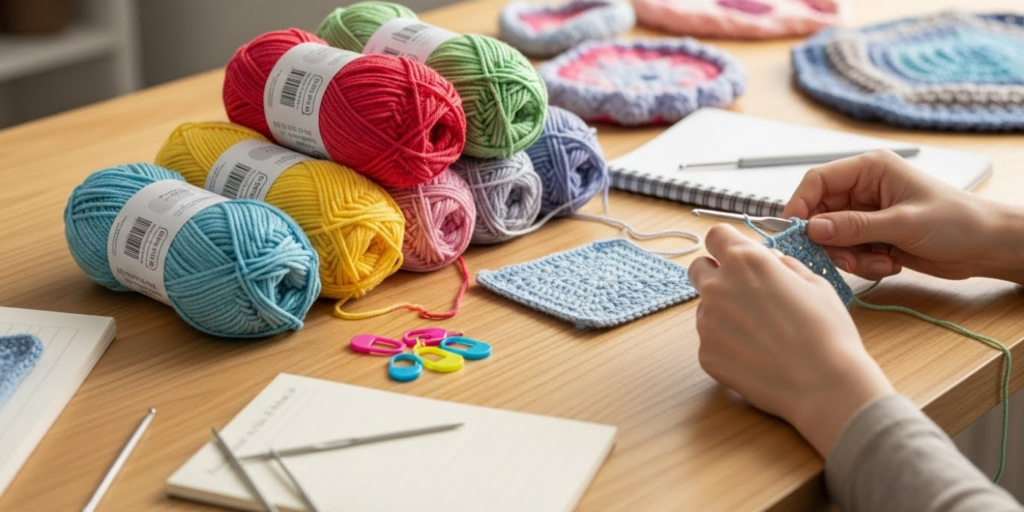
If there’s one fiber we recommend to nearly every new crocheter, it’s acrylic. And for good reason.
Acrylic is a synthetic fiber made from petroleum-based polymers, and it’s widely available, affordable (often $2–$5 per skein), and comes in every color imaginable. But what really makes it ideal for beginners is its consistency and durability.
Unlike natural fibers that can vary between dye lots or seasons, acrylic yarn is uniform in texture and thickness, so your stitches will look even from start to finish. It’s also machine-washable, hypoallergenic, and won’t felt or shrink—perfect for blankets, baby items, and everyday wear.
Look for smooth, worsted-weight (#4) acrylic yarns like:
- Caron Simply Soft – buttery soft with a slight sheen
- Lion Brand Basic Stitch Anti-Pilling – designed to stay smooth over time
- Red Heart Super Saver – budget-friendly and widely available
Tip: Avoid “fancy” acrylics with eyelash, bouclé, or thick-and-thin textures. Save those for later—right now, you want clarity, not chaos!
Best first projects: Dishcloths, scarves, beanies, and stuffed animals. Since acrylic holds its shape well, it’s perfect for practicing basic stitches like single crochet, double crochet, and granny squares.
Cotton Yarn: Crisp, Cool, and Great for Practice
If you love the idea of making something practical—like kitchen towels, market bags, or summer tops—cotton is a fantastic option. It’s breathable, absorbent, and gets softer with every wash, making it ideal for items that touch skin or need to dry quickly.
But cotton behaves very differently than acrylic. It has almost no stretch, which means:
- Your hands might tire faster (no “give” in the yarn)
- Stitches can look tighter or uneven if your tension isn’t consistent
- Finished items may sag over time (especially with heavy use)
That said, cotton’s smooth, matte finish makes stitch patterns incredibly clear—great for learning to “read” your work and spot mistakes early.
For beginners, choose a mercerized cotton (treated for extra smoothness and sheen) in worsted weight:
- Lion Brand 24/7 Cotton – soft, durable, and drapes beautifully
- Sugar ’n Cream – classic for dishcloths and afghans
- Knit Picks Dishie – tightly spun, less prone to splitting
Note: Cotton is heavier than acrylic, so large projects (like blankets) can become quite heavy—save those for when you’ve built up your stamina.
Best first projects: Washcloths, coasters, potholders, or a simple market tote. These small, flat projects help you build tension control without overwhelming your hands.
Wool and Wool Blends: Warm, Elastic, and Forgiving
Don’t let the word “wool” scare you! While some traditional wools can feel itchy, many modern superwash merino wools are luxuriously soft—and incredibly beginner-friendly thanks to their natural elasticity.
Wool stretches and bounces back, which means:
- Mistakes are easier to fix (stitches slide smoothly on the hook)
- Your tension doesn’t have to be perfect—the yarn “forgives” inconsistencies
- Finished items have beautiful drape, warmth, and memory
Wool is also temperature-regulating and naturally odor-resistant, making it ideal for winter wear.
For beginners, look for superwash wool blends (machine-washable!) in worsted weight:
- Lion Brand Wool-Ease (80% acrylic, 20% wool) – soft, affordable, durable
- Patons Canadiana – 100% superwash wool with excellent stitch definition
- Malabrigo Worsted – a splurge-worthy option with hand-dyed richness
Important: Pure (non-superwash) wool requires hand-washing and careful blocking—save that for when you’re more experienced.
Best first projects: A chunky infinity scarf, a beanie, or fingerless gloves. Wool’s memory helps these items hold their shape beautifully, even after repeated wear.
What to Avoid (For Now)
As much as we’d love to say “experiment freely,” some yarns are just too tricky for your very first project. Here’s what to skip until you’ve mastered the basics:
- Mohair or angora: Extremely fuzzy—hides your stitches completely.
- Bamboo or silk: Slippery and hard to control; stitches can unravel easily.
- Chenille or velvet: Stretches unpredictably and can twist while you work.
- Novelty yarns (eyelash, ladder, ribbon): Fun for accents, but impossible to count stitches in.
- Very thin yarns (lace or fingering weight): Tiny stitches = eye strain and frustration.
Stick with smooth, medium-weight (#4) yarns in solid or semi-solid colors. Variegated or “ombre” yarns can obscure stitch patterns, making it harder to see your progress.
Bonus tip: Check the yarn label! Look for:
- Weight symbol #4 (Worsted)
- Care instructions (machine-washable = beginner-friendly)
- Fiber content (avoid “unknown blends” for your first project)
Fiber Comparison Cheat Sheet
| Fiber | Pros | Cons | Best for Beginners? |
|---|---|---|---|
| Acrylic | Affordable, soft, machine-washable, consistent | Can pill over time, less breathable | ✅ YES |
| Cotton | Absorbent, crisp stitches, great for summer | No stretch, heavy, can split | ✅ (for small projects) |
| Wool | Elastic, warm, forgiving, beautiful drape | Some itchiness (not superwash), pricier | ✅ (in blends) |
| Bamboo | Silky, eco-friendly, drapey | Very slippery, hard to control | ❌ Not yet |
| Mohair | Fluffy, warm | Hides stitches, sheds | ❌ Avoid |
This chart isn’t about “good vs. bad”—it’s about matching the fiber to your skill level and project goals.
Real Talk: What Do Experienced Crocheters Wish They’d Known?
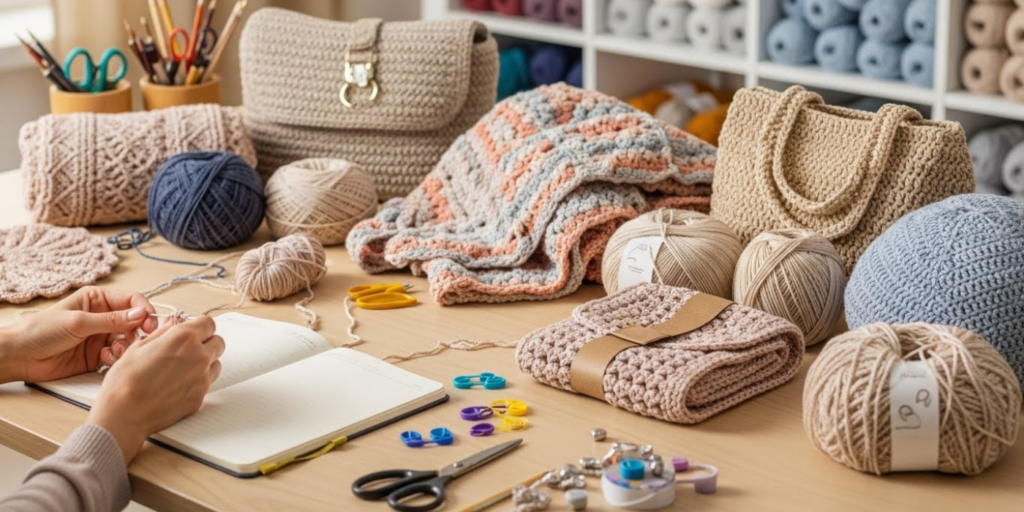
When we asked members of popular crochet groups what they’d tell their beginner selves about yarn, the answers were eye-opening:
“I bought the cheapest yarn I could find—a scratchy, splitty acrylic—and hated every minute. I almost quit! Switched to Caron Simply Soft, and it felt like magic.” — Lena, Ohio
“I used cotton for my first blanket. My wrists ached, and it took forever. Now I know: cotton = small projects only!” — Marcus, Texas
“I thought ‘natural fiber’ meant ‘better.’ But wool terrified me. Turns out, Wool-Ease blend was the perfect middle ground.” — Priya, California
The common thread? Don’t suffer through bad yarn. Your first project should feel good in your hands. If it doesn’t, switch yarns—no guilt!
Your Action Plan: How to Choose Today
Ready to pick your yarn? Follow this simple checklist:
- Go to a craft store (or shop online with clear photos)
- Find worsted weight (#4) yarn in a solid or lightly variegated color
- Choose one of these beginner-friendly fibers:
- Acrylic (easiest overall)
- Cotton blend (for kitchen or summer items)
- Wool blend (for warmth and stretch)
- Squeeze it! It should feel soft, smooth, and not too stiff
- Buy two skeins (you’ll need one for swatching and one for your project)
And remember: your first project doesn’t have to be perfect—it just has to be yours.
Conclusion: Your Perfect Yarn Is Out There
Choosing the right yarn fiber isn’t about finding the “best” material—it’s about finding the best match for you as a beginner. Whether you prioritize softness, ease of care, stitch clarity, or affordability, there’s a fiber that fits your needs.
Acrylic offers simplicity and value. Cotton gives you crisp, practical results. Wool blends bring warmth and forgiveness. And avoiding overly fancy or slippery yarns will save you hours of frustration.
Most importantly: your first project is about joy, not perfection. The right yarn turns the learning curve into a gentle slope—and maybe even a little fun.
So take a deep breath, grab that smooth skein of worsted-weight acrylic (or cotton, or wool blend!), and make your first stitch with confidence. You’ve got this—and your future self will thank you for starting with the right fiber.
Now, we’d love to hear from you! What yarn are you planning to use for your first project? Or what yarn mistake taught you the most? Share your story in the comments—your tip could be the one that helps another beginner fall in love with crochet!
After all, every expert crocheter started exactly where you are now—with a hook, a ball of yarn, and a whole lot of hope. 🧶
Maria Santos is a dedicated crochet and knitting enthusiast who finds joy in turning simple strands of yarn into meaningful, handmade art. With a natural eye for detail and a deep love for fiber crafts, she brings warmth, creativity, and years of personal experience to every project. Maria is inspired by the stories woven into each stitch and loves sharing that passion with others.