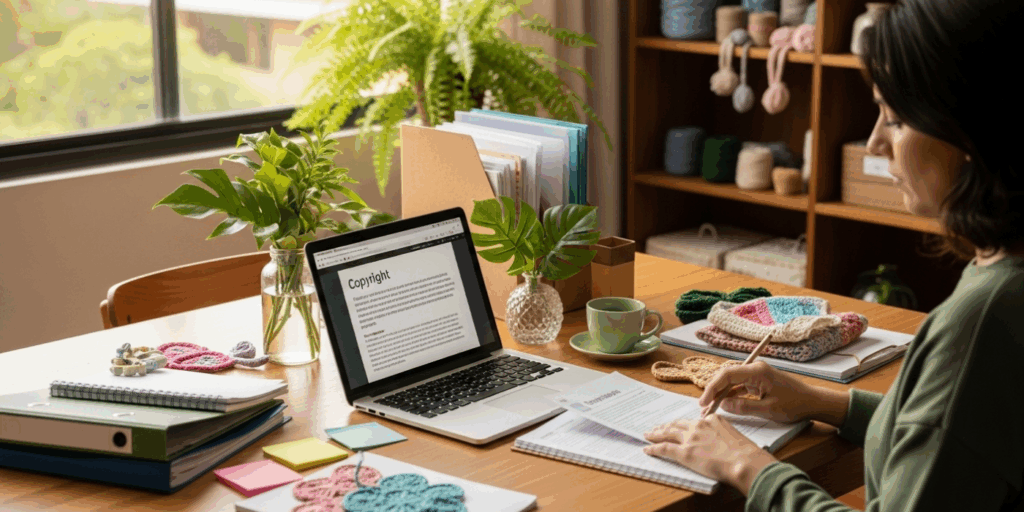
You spent weeks crafting that stunning amigurumi owl—every stitch intentional, every color chosen with care. You posted it online, and within hours, someone else was selling it as their own design. Your heart sank. Was that even legal?
If you’ve ever felt that pang of injustice after seeing your crochet creation copied without credit—or worse, sold—you’re not alone. Thousands of crocheters, from hobbyists to small business owners, face this exact dilemma every day. The truth? Your crochet patterns and finished pieces are protected by copyright law—but only if you know how to use it.
This guide isn’t about legal jargon or intimidating courtroom drama. It’s a practical, friendly roadmap for crocheters like you to understand, claim, and protect your creative work—without hiring a lawyer or drowning in paperwork. We’ll walk through what copyright actually covers (and what it doesn’t), how to officially protect your patterns, what to do if someone steals your design, and how to avoid accidentally infringing on someone else’s work.
By the end, you’ll walk away with clear, actionable steps to safeguard your creativity—and the confidence to stand up for it. Because your stitches matter. Your ideas deserve respect. And your art? It’s yours. Let’s make sure no one forgets that.
What Copyright Actually Protects (And What It Doesn’t)
Let’s clear up the biggest myth right away: Copyright doesn’t protect crochet stitches. Yes, you read that right. You can’t copyright a single chain stitch, a double crochet, or even the classic granny square. These are considered “techniques” or “methods,” and under U.S. copyright law, ideas, procedures, and functional elements aren’t protected.
But here’s the good news: your original pattern—your unique combination of instructions, photos, diagrams, and written descriptions—is absolutely protected. If you designed a whimsical mushroom-shaped coaster with a specific color sequence, a custom stitch pattern, and a detailed step-by-step guide with your own photos? That’s yours. Legally.
Think of it like baking. Anyone can make a chocolate chip cookie. But if you invented a cookie with sea salt, dark chocolate chunks, and a caramel swirl—then wrote down the exact measurements, baking time, and even took beautiful photos of it—that recipe? That’s your intellectual property. Copying it word-for-word and selling it as your own? That’s theft.
The same applies to crochet. If you create a pattern for a “Sunny Day Hat” with a unique brim stitch, a specific color gradient, and a tutorial with your own photos and diagrams, that entire package is protected. But if someone else uses the same basic half-double crochet stitch to make a similar hat? That’s fine. They’re using a common technique—just like you can’t stop someone from using a rolling pin.
Here’s a quick cheat sheet:
✅ Protected:
- Written patterns (PDFs, blog posts, books)
- Original diagrams and charts you created
- Photos of your finished items (if they’re part of the pattern)
- Unique design elements (e.g., a specific animal shape, a novel texture combo)
❌ Not Protected:
- Basic stitches (sc, dc, hdc, etc.)
- Common shapes (like circles or squares)
- General techniques (filet crochet, tapestry crochet)
- Colors or yarn brands
So if you’ve ever thought, “I’m just a hobbyist, my work isn’t important enough to copyright,” think again. Your creativity is valuable—even if you only sell one pattern a month. And that’s exactly why protection matters.
Why You Should Register Your Copyright (Even If You’re Just Starting Out)
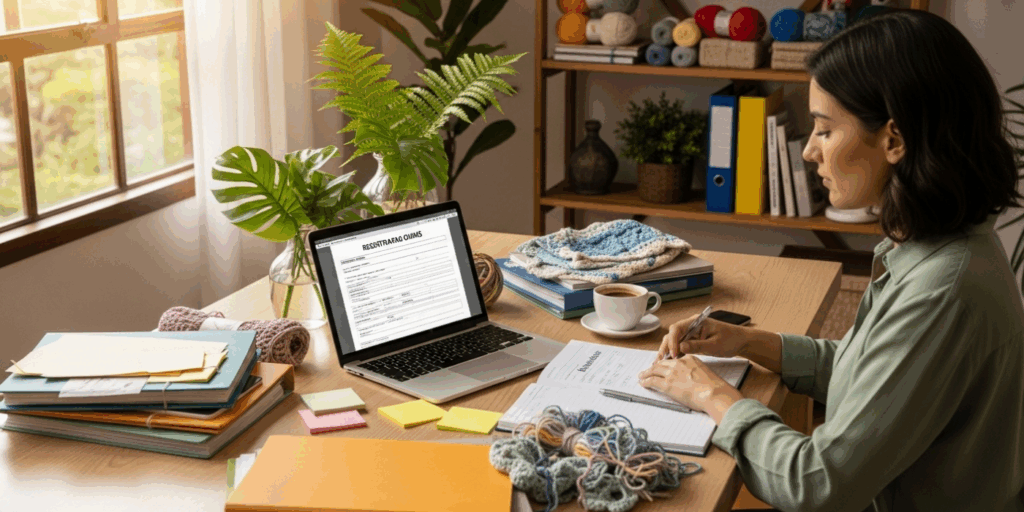
You might be thinking: “I don’t sell my patterns. I just share them for free. Do I even need to register?”
The answer? Yes—especially if you ever plan to share, sell, or grow.
Here’s why: Copyright protection exists the moment you create something original and fix it in a tangible form (like writing it down or saving a PDF). But registration with the U.S. Copyright Office gives you superpowers.
Let me explain. Imagine you discover someone selling your free pattern on Etsy as a paid download. Without registration, you can ask them to take it down—but you can’t sue them for damages. You can’t recover legal fees. You’re essentially asking nicely.
But if you’ve registered your copyright? You can file a lawsuit. You can demand compensation. You can send a legally binding cease-and-desist letter that actually gets results.
And here’s the kicker: Registration costs just $45–$65 (as of 2025), and it takes less than 20 minutes online. That’s less than the price of a skein of premium yarn.
Plus, registering your work creates a public record. It tells the world: “This is mine. I’ve taken the steps to protect it.” That alone can deter copycats before they even try.
Real-life example: Sarah, a crocheter from Ohio, designed a set of “Cozy Critter” amigurumi patterns. She shared them for free on her blog for two years. Then, she noticed a large craft site was selling them as their own. She hadn’t registered. She spent months sending polite emails. No response. She finally registered her copyright—and within a week, the site took down the patterns and offered a public apology.
Registration isn’t just for professionals. It’s for anyone who cares about their work.
Pro tip: Bundle your patterns. You can register multiple patterns in one application if they’re part of a collection (like “Winter Animal Patterns 2025”). Save time and money.
How to Copyright Your Crochet Patterns (Step-by-Step)
Ready to protect your work? Here’s how to do it—no lawyer needed.
Step 1: Save Your Final Pattern
Make sure your pattern is complete: clear instructions, stitch counts, photos, diagrams, and any special notes. Save it as a PDF. Don’t use handwritten notes or messy Word docs—clean, professional files show you take your work seriously.
Step 2: Go to Copyright.gov
Visit the official U.S. Copyright Office website: copyright.gov . Click “Register a Copyright” and choose “Literary Works” (even if it includes photos—you can still register them together under one application).
Step 3: Fill Out the Form
You’ll need:
- Your name and contact info
- Title of your pattern (e.g., “The Snuggle Bunny Amigurumi Pattern”)
- Year of creation
- Whether it’s published or unpublished
- A digital copy of your pattern
The form is straightforward. If you get stuck, use their live chat support—real people answer during business hours.
Step 4: Pay the Fee ($45–$65)
Pay with a credit card. No hidden fees. No subscriptions.
Step 5: Upload Your Pattern
Upload your PDF. Make sure it’s clearly labeled with your name and the pattern title.
Step 6: Wait (It’s Worth It!)
Processing takes 3–9 months, but you’re protected from day one. You’ll receive a certificate in the mail—frame it. Proudly.
Bonus: If you’re selling patterns regularly, consider registering them annually as a collection. It’s cheaper and easier.
And remember: You don’t need the © symbol to be protected—but using it helps. Add it to your pattern’s cover page: © 2025 Jane Doe. All rights reserved. Simple. Professional. Powerful.
What to Do If Someone Steals Your Pattern
You found it. Your pattern. On Etsy. On Pinterest. On a Facebook group. Sold for $10. With your photos. With your name removed.
Your first reaction? Anger. Fair. But don’t react in the heat of the moment.
Here’s your calm, effective action plan:
- Take Screenshots
Save everything: the listing, the seller’s profile, the date, the URL. This is your evidence. - Send a Polite DM or Email
Start with kindness:Hi [Name], I noticed you’re selling my pattern “Whispering Willow Shawl.” I created this design and shared it for free on my blog. I’d love to understand how it ended up on your shop. Could we talk?
Sometimes, people don’t realize it’s wrong. Maybe they thought “free on the internet = free to sell.” A gentle nudge can fix it.
- If They Ignore You or Say No? Send a DMCA Takedown Notice
This is a formal legal request. Platforms like Etsy, Shopify, and Pinterest are required by law to remove infringing content when notified.
You can find free DMCA templates online (the Copyright Office has one). Fill in your info, link to your original, and send it to the platform’s copyright agent. Most respond within 48 hours.
- Consider a Cease-and-Desist Letter
If it’s a repeat offender or a large seller, a formal letter (you can use a template from LegalZoom or a similar service) adds serious weight. It costs about $50 and often ends the issue fast.
Remember: You’re not being “mean.” You’re protecting your livelihood. If you’re a small business, your patterns are your income. Just like a baker wouldn’t let someone steal their secret recipe, you have every right to protect your design.
How to Avoid Stealing Someone Else’s Work (And Stay Ethical)
Protection isn’t just about defending your own work—it’s also about respecting others’.
Here’s the golden rule: If you didn’t create it, don’t claim it.
That includes:
- Don’t copy a pattern word-for-word—even if you change a few stitches.
- Don’t sell “free patterns” you found online unless they’re explicitly labeled as “free for commercial use.”
- Don’t use someone else’s photos to sell your version of their design.
What’s okay?
- Using a basic stitch pattern you learned from YouTube.
- Making an item from a pattern for personal use.
- Selling finished items made from a pattern if the designer allows it (many do!).
Always check the pattern’s terms. Most designers include a “Terms of Use” section. Look for phrases like:
- “For personal use only”
- “You may sell finished items, but not the pattern”
- “Credit required”
If in doubt? Ask. Send a quick message: “Hi! I love your pattern. Can I sell items made from it?” Most designers say yes—and they’ll appreciate you asking.
And here’s a little secret: Giving credit isn’t just ethical—it’s smart. If you make a variation of someone’s design and credit them, you build community. You become part of the crochet family—not the thief.
Beyond Copyright: Building a Brand That People Respect

Copyright protects your work. But your reputation? That’s what keeps people coming back.
Think of it this way: When you see “Made by Lila” on a crochet bag, you don’t just see a product. You see a story. A person. A passion.
So while you’re registering your patterns, also start building your brand.
- Add your logo to every PDF.
- Include a short bio: “Hi! I’m Mia. I’ve been crocheting since I was 8. This pattern took me 47 tries to perfect.”
- Watermark your photos with your website.
- Use consistent fonts and colors across your patterns.
People are more likely to buy from you than from a faceless copycat.
And here’s the beautiful part: When you protect your work, you inspire others to do the same. You become part of a movement that values creativity over copying.
Imagine a crochet community where every designer feels safe to share their boldest ideas—because they know they’ll be respected. That’s the future we can build.
Your Creations Matter. Protect Them.
You didn’t pick up a hook just to make scarves. You picked it up because you love the rhythm of the stitches, the way yarn transforms under your fingers, the joy of creating something beautiful from nothing.
That’s not just a hobby. That’s art.
And art deserves protection.
Copyright isn’t about being suspicious or greedy. It’s about saying: “My time, my skill, my creativity—they have value.”
You’ve already done the hard part: you created something original. Now, take the simple, powerful steps to protect it. Register your patterns. Know your rights. Speak up when you see theft. And always, always give credit where it’s due.
Because in a world where fast fashion and mass production rule, your handmade creations are a quiet rebellion. A reminder that beauty still takes time. That love still goes into every stitch.
So go ahead—register that pattern. Add your ©. Share your story.
Your next masterpiece is waiting.
And it? It’s yours.
What’s one pattern you’ve created that you’re proud of?
Have you ever had someone copy your work? How did you handle it? Share your story in the comments below—I read every one. Let’s build a community where every crocheter feels seen, respected, and protected. 💛
Maria Santos is a dedicated crochet and knitting enthusiast who finds joy in turning simple strands of yarn into meaningful, handmade art. With a natural eye for detail and a deep love for fiber crafts, she brings warmth, creativity, and years of personal experience to every project. Maria is inspired by the stories woven into each stitch and loves sharing that passion with others.