
You’ve just finished your favorite sweater pattern… only to realize the yarn you needed is sold out everywhere. Not just at your local shop—every online retailer is out of stock, backordered for months, or priced like a luxury handbag. Panic sets in. You stare at your half-finished project. Do you give up? Wait six months? Or… do you get creative?
The truth? You don’t need the exact same yarn to make something beautiful. In fact, some of the most beloved handmade pieces in the crochet community were born from substitutions—happy accidents, resourceful swaps, and clever problem-solving. Whether you’re on a budget, chasing sustainability, or simply running out of your go-to brand, learning how to swap yarns smartly isn’t just a hack—it’s a superpower.
In this guide, we’ll walk through four essential yarn substitution strategies every crocheter should know. You’ll learn how to match fiber content, gauge, weight, and texture—not just to replicate a pattern, but to enhance it. We’ll share real-life stories from crocheters who turned “disaster” into “masterpiece,” reveal the hidden tricks professionals use behind the scenes, and give you a simple, foolproof method to swap yarns with confidence—even if you’ve never held a skein of the original.
By the end, you won’t just be able to substitute yarns—you’ll feel empowered to experiment, adapt, and create fearlessly. Let’s dive in.
1. Don’t Panic—Start with Fiber Content
When you see “100% cotton” on your pattern’s yarn label, it’s tempting to think, “I need cotton. No exceptions.” But here’s the secret: fiber affects drape, care, breathability, and even how your stitches look—not just how it feels.
Imagine you’re making a summer top in a lightweight cotton yarn. You find a similar-weight yarn… but it’s 70% bamboo, 30% silk. At first glance, you might hesitate. “Isn’t that too fancy?” But here’s the magic: bamboo has the same cool, breathable qualities as cotton—and it drapes even softer. The silk adds a subtle sheen that makes your stitches glow under natural light. Result? A top that’s more elegant, more comfortable, and still perfectly suited for the pattern.
On the flip side, swapping cotton for acrylic might seem easy—after all, both are common. But acrylic tends to pill, hold heat, and lack structure. If your pattern calls for a structured tote bag in cotton, using acrylic could leave you with a floppy, overstretched mess.
So how do you choose wisely?
- Natural fibers (cotton, linen, wool, silk, bamboo): Great for garments, summer wear, and items that need to breathe or hold shape.
- Synthetic fibers (acrylic, nylon, polyester): Often more affordable, machine-washable, and durable—perfect for blankets, toys, or items that see heavy use.
- Blends: Often the sweet spot! A 50/50 cotton/acrylic blend gives you washability with a bit of structure.
Pro Tip: Always check the fiber content on your original yarn. Then look for a substitute with the same or similar composition. If your pattern uses 80% wool/20% nylon for warmth and resilience, aim for something close—like 75% wool/25% nylon. You’re not aiming for perfection—you’re aiming for compatibility.
And if you’re unsure? Pop into a local yarn shop and ask. Most crocheters love helping fellow makers. Bring your pattern and the original yarn. They’ll often point you to three perfect alternatives—and maybe even a discount.
2. Gauge Is Your Secret Weapon (Yes, Really)
Let’s be honest: most of us skip swatching. We’re excited to start. We trust the pattern. We think, “It’ll work out.” And then… your sweater’s too tight. Your blanket’s too small. Your hat won’t fit your head.
Gauge isn’t just a technical detail—it’s your safety net when swapping yarns.
Here’s the reality: two yarns can have the same “weight” label (like “worsted” or “DK”) but behave completely differently when crocheted. One might be fluffy and stretchy; another, dense and stiff. That’s why a 4.5mm hook on Yarn A gives you 16 stitches per 4 inches—but on Yarn B, you get 19. Suddenly, your project is 3 inches smaller than intended.
So what’s the fix? Swatch. Always.
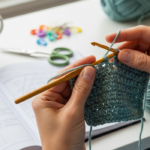
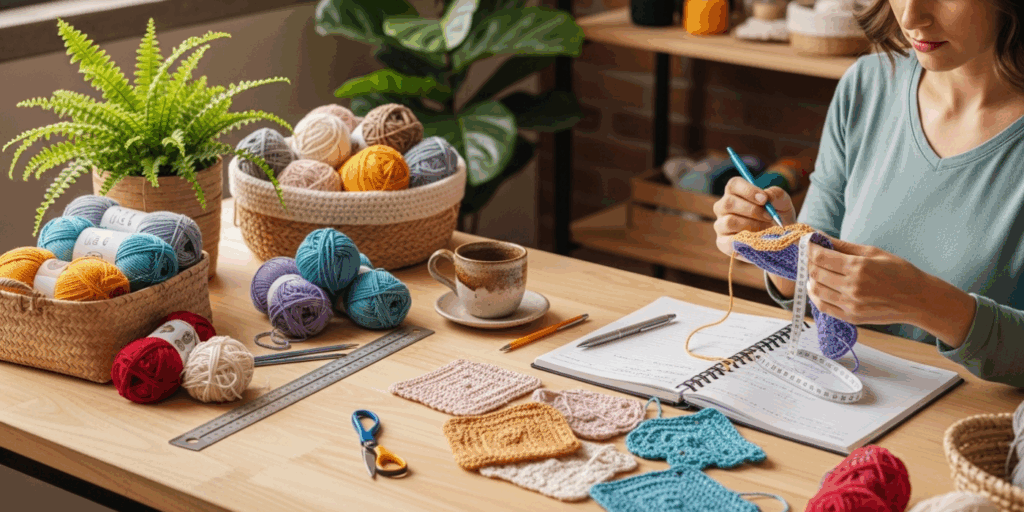
Even if you’re substituting yarns, make a 4×4 inch swatch with your new yarn and the hook size recommended in the pattern. Count your stitches and rows. If you’re off by more than 1–2 stitches per 4 inches, adjust your hook size.
- Too many stitches? Your yarn is thinner or you’re crocheting too tightly → Go up a hook size.
- Too few stitches? Your yarn is thicker or you’re crocheting loosely → Go down a hook size.
I once substituted a bulky wool for a super bulky acrylic in a cowl pattern. My swatch was way too loose. I dropped from a 10mm to a 9mm hook—and suddenly, the stitch definition popped. The cowl looked like it was designed for the new yarn. No one could tell I’d swapped it.
Bonus trick: Use a free online gauge calculator (like Ravelry’s or Crochet Gauge Calculator) to input your stitch count and hook size. It’ll tell you if you’re on track—or how much you’ll need to adjust the pattern.
And here’s the best part: once you master gauge, you can swap yarns across seasons, brands, and even countries. That gorgeous lace shawl pattern from a UK designer? You can make it with a US brand—no problem.
3. Texture and Drape: The Silent Game-Changers
You’ve matched the fiber. You’ve nailed the gauge. But something still feels… off.
That’s because texture and drape matter more than you think.
Think of it like clothing: two dresses can have the same size tag, but one flows like water, and the other stands stiff like cardboard. Same measurements. Totally different vibes.
Let’s say your pattern calls for a soft, fluffy alpaca blend for a cozy baby blanket. You find a substitute—same weight, same fiber content—but it’s a smooth, tightly spun merino wool. It’s technically “correct.” But when you finish the blanket, it feels… dense. Heavy. Like a wool rug, not a cloud.
That’s a texture mismatch.
Here’s how to avoid it:
- Fluffy yarns (like mohair, bouclé, or eyelash): Add volume, warmth, and visual interest—but can obscure stitch patterns. Best for simple stitches like single crochet or half-double.
- Smooth yarns (like cotton, mercerized cotton, or fine wool): Showcase stitch detail. Perfect for lace, cables, or intricate patterns.
- Textured yarns (with slubs, knots, or loops): Add character, but can be tricky to work with. Use them sparingly, or as accents.
Real story time: A friend of mine was making a granny square afghan using a soft, variegated acrylic. Halfway through, she ran out. She found a nearly identical yarn—but it was a self-striping cotton. The colors were beautiful, but the cotton was so smooth and crisp that the granny squares looked flat. No dimension. No cozy charm.
Her fix? She kept the cotton for the outer border and switched back to acrylic for the inner squares. The result? A stunning contrast: soft, warm centers with a bright, crisp edge. It became her most-loved blanket.
Your move: Before you commit, lay your substitute yarn next to the original. Hold them up to the light. Drape them over your hand. Ask yourself: Does this feel like the original? Does it move the same way?
If the answer is “kind of,” test a small section. Sometimes, a little texture difference becomes the thing that makes your piece unforgettable.
4. Budget, Sustainability, and the Joy of the Unexpected
Let’s talk about the elephant in the room: cost.
Yarn prices have skyrocketed. A single skein of premium wool can cost $30. A full sweater? $200+. That’s not sustainable for most of us.
But here’s the beautiful truth: some of the best yarn substitutions come from necessity—not luxury.
I know a grandmother who crochets blankets for local shelters. She doesn’t buy new yarn. She buys remnants. Leftover skeins from craft sales. Scraps from friends’ projects. She calls them “treasures.” One blanket used 12 different yarns—all leftovers. The colors clash? Maybe. But the love? Absolutely perfect.
You don’t need expensive yarn to make something meaningful.
Here’s how to make smart, sustainable swaps:
- Use up your stash. That half-skein of yarn from 2021? It’s not “leftover”—it’s ready-to-use. Try combining it with a new skein for a striped design.
- Shop secondhand. Thrift stores, Facebook Marketplace, and Etsy often have unused yarn from people who started projects and never finished.
- Choose local or eco-friendly brands. Look for yarns made from recycled plastic bottles, organic cotton, or ethically sourced wool. Many indie dyers offer small-batch, low-impact options.
- Buy in bulk (wisely). If you find a great substitute, buy 2–3 extra skeins. Next time you need it, you won’t be scrambling.
And guess what? Sometimes, the most unexpected substitution turns into your favorite project.
One crocheter swapped her planned silk yarn for a thrifted, slightly fuzzy acrylic blend—just because it was $3 instead of $25. The final shawl had a soft, cloud-like halo she’d never achieved before. She named it “The Happy Accident” and now sells patterns using that same combo.
The lesson? Limitations don’t stifle creativity—they spark it.
When you stop chasing the “perfect” yarn and start embracing what’s available, you open the door to innovation, resourcefulness, and deeper connection to your craft.
Putting It All Together: Your 5-Minute Substitution Checklist
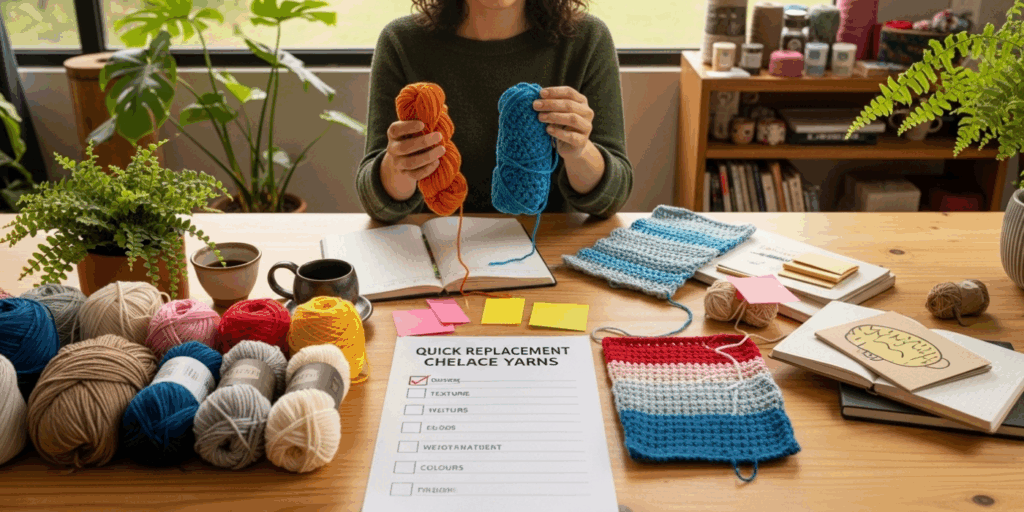
Before you grab a new yarn, run through this quick checklist:
✅ Fiber Match? Is it similar to the original? (e.g., cotton → cotton/bamboo, wool → wool/alpaca)
✅ Weight Match? Is it the same category? (e.g., worsted → worsted, not worsted → sport)
✅ Gauge Tested? Did you make a swatch? Adjusted hook size if needed?
✅ Texture & Drape? Does it feel and move like the original?
✅ Budget & Ethics? Is it affordable? Sustainable? Does it align with your values?
If you answered “yes” to all five? You’re golden.
And if you’re still unsure? Try this: Make a 10-stitch swatch with your new yarn. Crochet it, block it, then hold it next to the original. Does it feel like a sibling? Not an identical twin, but close enough to wear the same outfit?
That’s all you need.
Final Thoughts: Your Yarn, Your Rules
Here’s the truth no one tells you: patterns are suggestions, not rules.
The yarn you choose doesn’t define your skill. Your creativity does.
Every time you substitute yarn, you’re not just saving money or solving a shortage—you’re becoming a more confident, adaptable, and resilient maker. You’re learning to trust your hands, your instincts, and your ability to problem-solve.
And that’s worth more than any branded skein.
So the next time you’re stuck without your favorite yarn? Don’t sigh. Don’t quit. Don’t wait.
Reach for something else.
Try it. Swatch it. Love it.
Maybe you’ll discover a new favorite fiber. Maybe you’ll create a piece that’s even more unique than the original. Maybe you’ll inspire someone else to try a substitution—and pay it forward.
Crochet isn’t about perfection. It’s about presence.
It’s about turning what’s limited into what’s limitless.
Now go grab that leftover skein. Pick up that thrifted ball. Try something new.
And when you finish? Come back here and tell me what you made.
What’s the most surprising yarn substitution you’ve ever tried? Drop it in the comments—I’m dying to hear your stories.
You’ve got this. And your next masterpiece? It’s waiting in your stash.

Maria Santos is a dedicated crochet and knitting enthusiast who finds joy in turning simple strands of yarn into meaningful, handmade art. With a natural eye for detail and a deep love for fiber crafts, she brings warmth, creativity, and years of personal experience to every project. Maria is inspired by the stories woven into each stitch and loves sharing that passion with others.