You’ve just finished your third granny square blanket—soft, cozy, and absolutely beautiful. But as you hold it in your hands, you wonder: Where did this yarn really come from?
The truth is, most yarn on store shelves isn’t as gentle on the planet as your finished project looks. From petroleum-based acrylics to cotton grown with toxic pesticides, the fiber industry has a hidden environmental cost. But here’s the good news: you don’t have to choose between creativity and conscience.
In this article, we’ll explore the most sustainable yarn options for crocheters who want to make beautiful things and protect the Earth. You’ll discover natural fibers that regenerate the soil, recycled materials that give waste new life, and ethical brands that treat workers and animals fairly. We’ll also share simple tips to extend the life of your yarn stash, reduce waste, and even turn old clothes into crochet treasures.
Whether you’re a beginner or a seasoned crocheter, this guide will help you make choices that feel good—not just for your projects, but for the planet. Let’s dive in.
Why Sustainable Yarn Matters More Than You Think
Let’s start with a simple question: What happens to your old acrylic scarf when you’re done with it?
Chances are, it ends up in a landfill. And there, it’ll sit for up to 200 years without breaking down. Acrylic yarn is made from petroleum—a non-renewable resource—and its production releases harmful greenhouse gases. Even worse, every time you wash an acrylic item, tiny plastic fibers (microplastics) rinse down the drain and end up in oceans, harming marine life.
Meanwhile, conventional cotton—the “natural” alternative many assume is eco-friendly—is actually one of the most chemically intensive crops on Earth. It uses about 16% of all insecticides globally, despite covering only 2.5% of farmland. That’s not just bad for the environment—it’s bad for farmers, too.
But here’s the twist: you have power. As a crocheter, you’re not just making blankets or hats—you’re voting with your yarn. Every time you choose a sustainable fiber, you’re saying “yes” to cleaner water, healthier soil, and fair labor practices.
Think of it like this: if every crocheter switched just one acrylic project per year to a plant-based or recycled yarn, we’d save millions of plastic fibers from entering waterways. That’s not just a drop in the ocean—it’s a wave.
And the best part? Sustainable yarns are no longer hard to find or expensive. In fact, many are softer, more breathable, and more durable than synthetic options. You’re not sacrificing quality—you’re upgrading it.
The Top 5 Eco-Friendly Yarns You Need to Try
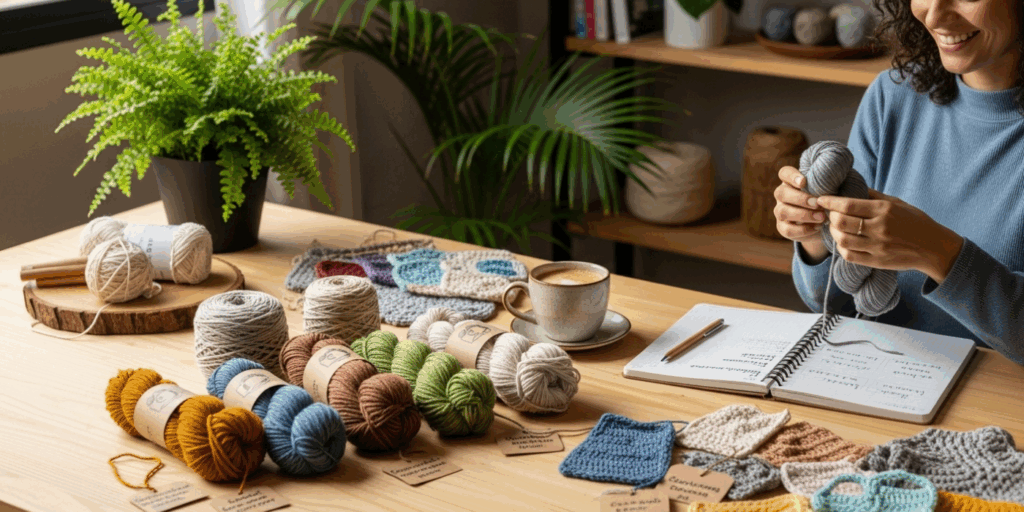
Not all natural fibers are created equal. Here are five of the most sustainable, accessible, and delightful yarns you can use today—each with real environmental benefits.
1. Organic Cotton
Unlike conventional cotton, organic cotton is grown without synthetic pesticides or GMOs. It uses 91% less water and supports healthier soil. Brands like Plymouth Yarn’s Eco Cotton and Lion Brand’s 24/7 Cotton offer soft, machine-washable options perfect for baby blankets and summer tops. Bonus? It’s biodegradable. When your project outlives its usefulness, you can compost it.
2. Hemp Fiber
Hemp is a superhero plant. It grows fast, needs no pesticides, and actually improves the soil it’s grown in by pulling toxins out. The resulting yarn is strong, breathable, and gets softer with every wash. Try Tahki Stacy Charles’ Hemp Blend or WeCrochet’s Hemp Yarn. It’s ideal for durable items like tote bags, coasters, or even dishcloths.
3. Bamboo (Viscose from Bamboo)
Bamboo grows incredibly quickly—up to 3 feet per day!—and requires no irrigation or chemicals. When processed responsibly (look for OEKO-TEX® certified or Lyocell processing), bamboo yarn is silky, drapey, and perfect for shawls and scarves. Just avoid cheap “bamboo” yarns that use harsh chemical baths—those can be just as polluting as acrylic. Brands like Knit Picks’ Shine are transparent about their processes.
4. Recycled Cotton & Recycled Polyester
This is where creativity meets recycling. Recycled cotton yarn is made from post-consumer fabric scraps—think old T-shirts, jeans, and towels—ground up and spun into new yarn. Lion Brand’s Re-Spun and Red Heart’s Eco-Cotton are great examples. Recycled polyester (often from plastic bottles) is another option—brands like Patagonia’s Synchilla and Cascade’s Eco+ turn waste into soft, warm yarn. It’s not perfect, but it keeps plastic out of landfills.
5. Wool from Ethical Sources
Wool is renewable—sheep grow it back every year! But not all wool is ethical. Look for ZQ Merino, RWS (Responsible Wool Standard), or GOTS-certified wool. These labels guarantee humane treatment of animals, no mulesing, and sustainable land use. Brands like Malabrigo Rios and The Fibre Co. source from farms that prioritize animal welfare and environmental stewardship.
Pro Tip: Always check labels for certifications. OEKO-TEX®, GOTS, Fair Trade, and RWS are your best friends when shopping for ethical yarn.
How to Turn Trash Into Treasures: Upcycling Old Clothes
You don’t always need to buy new yarn. Sometimes, your best material is already in your closet.
Think about all those faded T-shirts, worn-out sweaters, or socks with holes. Instead of tossing them, cut them into strips and turn them into t-shirt yarn—a chunky, rustic yarn perfect for baskets, rugs, or even statement coasters.
Here’s how to do it in 3 easy steps:
- Lay a cotton T-shirt flat.
- Cut off the seams and collar.
- Cut horizontal strips about 1 inch wide, connecting them in a spiral to form one long strip.
Stretch each strip gently to soften it, then coil it into a ball. Voilà—you’ve got yarn!
You can even mix colors for a fun, patchwork look. I made a cozy bath mat last summer from six old T-shirts I’d been saving “for something.” It’s now the most loved item in my bathroom—and no one would guess it came from my laundry basket.
Upcycling isn’t just eco-friendly—it’s deeply personal. Every stitch holds a memory: the concert T-shirt from your college days, the sweater your grandma knitted, the shirt you wore on your first date. Crocheting with them turns nostalgia into art.
And if you’re feeling adventurous, try re-spinning old wool sweaters. Soak them in hot water, felt them, then cut into strips and re-knit or crochet into new shapes. It’s magical—and 100% zero-waste.
Supporting Brands That Care (And Where to Find Them)
Not all yarn companies are created equal. Some prioritize profit over people and planet. But a growing number are proving that beauty and ethics can go hand-in-hand.
Here are a few standout brands that are leading the way:
- Hempy Yarn (USA): 100% organic hemp, hand-dyed with plant-based pigments, packaged in compostable bags.
- Darn Good Yarn (USA): Made entirely from recycled materials, including plastic bottles and textile waste. They donate a portion of profits to clean water initiatives.
- The Fibre Co. (USA/Canada): Uses ethically sourced wool, alpaca, and silk. Their packaging is plastic-free, and they partner with small farms in the Andes.
- Yarn and Colors (Netherlands): Offers a wide range of GOTS-certified organic cotton and recycled wool. Their website even includes a carbon footprint calculator for each skein.
Many of these brands sell on Etsy, Amazon Handmade, or through independent craft stores. Don’t be afraid to ask questions: Where is this yarn sourced? Is it certified? Are workers paid fairly?
Ethical brands don’t mind being asked. In fact, they want you to know the story behind your yarn.
And here’s a secret: supporting these companies helps push the whole industry forward. The more we buy from them, the more mainstream sustainable options become—making it easier (and cheaper!) for everyone to choose well.
Caring for Your Yarn—And the Planet—Long After You Crochet
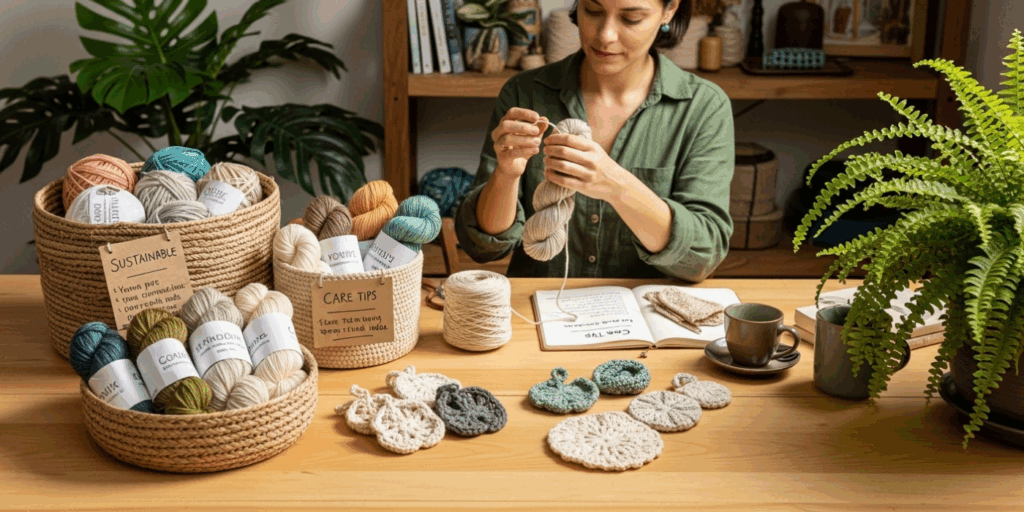
Sustainability doesn’t end when you tie off your last stitch. How you care for your finished pieces matters too.
Here are three simple habits to extend the life of your creations—and reduce your environmental footprint:
- Wash Less, Wash Cold
Every time you wash a synthetic yarn, you release microplastics. Even natural fibers benefit from gentle care. Spot-clean when you can. When you do wash, use cold water and a mild, biodegradable detergent. - Air Dry Everything
Skip the dryer. Heat damages fibers and uses energy. Lay your projects flat on a towel to dry. It’s better for your items and the planet. - Repair, Don’t Replace
That small hole in your scarf? Mend it with a needle and matching yarn. A loose stitch on your hat? Tighten it with a crochet hook. Repairing isn’t just practical—it’s a quiet act of resistance against our throwaway culture.
I once fixed a 10-year-old baby blanket that had a tiny snag. As I stitched it back together, I thought: This is what sustainability looks like—not buying new, but honoring what already exists.
The Ripple Effect: How Your Crochet Can Inspire Others
Here’s something beautiful: when you choose sustainable yarn, you don’t just change your own habits—you influence those around you.
Maybe your friend notices the softness of your hemp shawl and asks where you got it.
Maybe your child asks why your tote bag is made from old T-shirts.
Maybe your local craft group starts a “yarn swap” instead of buying new.
I know a woman in Portland who started a “Crochet for the Earth” group. Every month, members bring old yarn, fabric scraps, or unsold skeins to swap. No money changes hands. Just creativity, connection, and kindness.
That’s the magic of sustainable crafting. It’s not about perfection—it’s about intention.
You don’t need to switch everything overnight. Start with one project. Try one new fiber. Recycle one old sweater.
Each choice is a seed.
And seeds, given time and care, grow into forests.
Final Thoughts: Crochet With Purpose
The world doesn’t need more stuff.
It needs more meaning.
More care.
More love stitched into every loop.
Eco-friendly crochet isn’t a trend. It’s a return to something ancient and true: making things by hand, with respect—for the Earth, for the people who grow and spin the fibers, and for the future we’re shaping with every stitch.
You’re not just making a blanket.
You’re making a statement.
You’re healing a little piece of the planet.
You’re showing your children, your friends, your community, that beauty doesn’t have to cost the earth.
So the next time you pick up your hook, ask yourself:
What story do I want this yarn to tell?
Choose fibers that breathe.
Choose colors that come from the earth, not a petrochemical plant.
Choose compassion over convenience.
And when you finish your next project?
Don’t just admire it.
Celebrate it.
Because you didn’t just crochet something beautiful.
You crocheted hope.
Ready to make your next project greener?
👉 Try one of these today:
- Swap one acrylic skein for organic cotton
- Turn an old T-shirt into t-shirt yarn
- Visit a local yarn shop and ask, “Do you carry sustainable options?”
And if you’ve already made the switch—I’d love to hear your story. What’s your favorite eco-friendly yarn? Have you upcycled something unexpected? Drop a comment below—I read every one.
Don’t forget to share this with a fellow crocheter. The more of us who choose wisely, the brighter our future—and our yarn baskets—will be. 🌿🧶
Maria Santos is a dedicated crochet and knitting enthusiast who finds joy in turning simple strands of yarn into meaningful, handmade art. With a natural eye for detail and a deep love for fiber crafts, she brings warmth, creativity, and years of personal experience to every project. Maria is inspired by the stories woven into each stitch and loves sharing that passion with others.