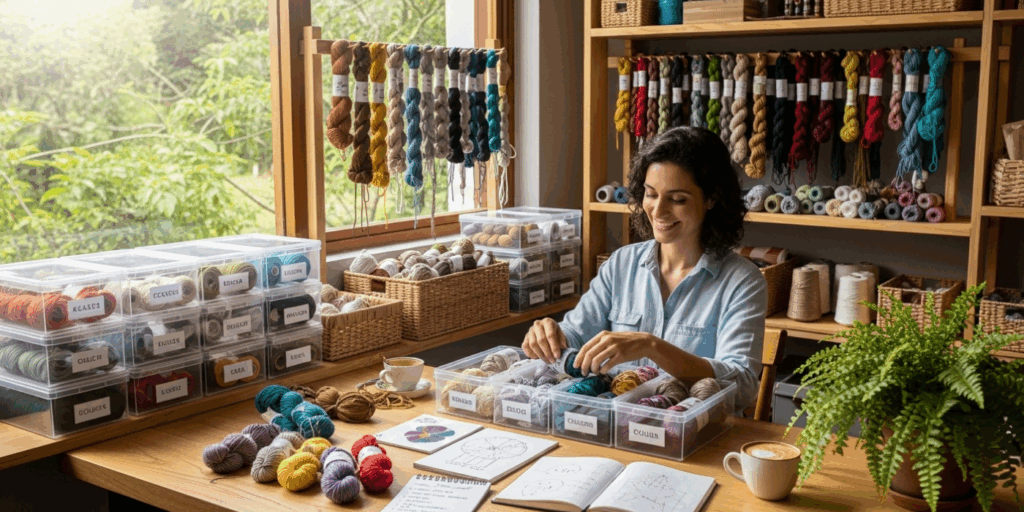
Imagine walking into your craft room—only to be greeted by a tidal wave of yarn. Balls tumbled from shelves, skeins tangled like spaghetti in a drawer, and half-used hanks peeking out from under a pile of half-finished projects. You reach for that perfect shade of lavender for your new sweater… and nothing. Just a mess.
If this sounds familiar, you’re not alone. Millions of knitters, crocheters, and fiber artists around the world struggle with the same problem: too much yarn, not enough space. But here’s the good news—you don’t need a huge closet or a fancy cabinet to tame the chaos. With a few smart, simple, and surprisingly creative storage solutions, you can turn your yarn stash from a nightmare into a joy.
In this guide, we’ll explore practical, budget-friendly, and visually pleasing ways to organize your yarn—whether you’re a casual hobbyist or a dedicated fiber enthusiast with hundreds of skeins. We’ll look at why organization matters beyond just aesthetics, share real-life examples from fellow crafters, reveal clever DIY hacks using everyday items, and even show you how to maintain your system so it lasts. By the end, you’ll walk away with more than just a tidy space—you’ll reclaim your creativity, save time, and rediscover the joy in every stitch.
Let’s dive in.
Why Your Yarn Stash Needs Organization (And Why It’s More Than Just “Looks”)
Let’s be honest: most of us buy yarn because we love the colors, the textures, the possibility. A soft merino in seafoam green? That’s a future scarf. A bold variegated cotton? Perfect for a summer blanket. But over time, those “possibilities” pile up—and soon, they become overwhelming.
A 2023 survey by the Craft Yarn Council found that 68% of knitters and crocheters own more than 20 skeins of yarn, and nearly 40% admit they’ve started a project only to abandon it because they couldn’t find the right yarn again. That’s not just frustrating—it’s a waste of money, time, and inspiration.
Organization isn’t about perfection. It’s about accessibility. When you can see what you have, you’re less likely to buy duplicates. You’re more likely to finish projects because you know exactly what’s waiting for you. And when you’re not digging through a mountain of yarn for 20 minutes before you even cast on? That’s pure magic.
Think of your yarn stash like a pantry. Would you keep your spices in a dark, overflowing drawer where you can’t tell paprika from cumin? Probably not. Your yarn deserves the same respect.
Start by asking yourself: What’s my biggest pain point? Is it tangled balls? Forgotten projects? Overbuying because you can’t remember what you already own? The solution begins with visibility.
Pro Tip: Take a photo of your entire stash—yes, even the messy parts. It’s shocking, but seeing it all at once is the first step toward change. You’ll spot colors you forgot you had, and maybe even find the perfect yarn for that project you’ve been dreaming about since last winter.
Smart Storage Ideas That Actually Work (No Fancy Shelving Required)
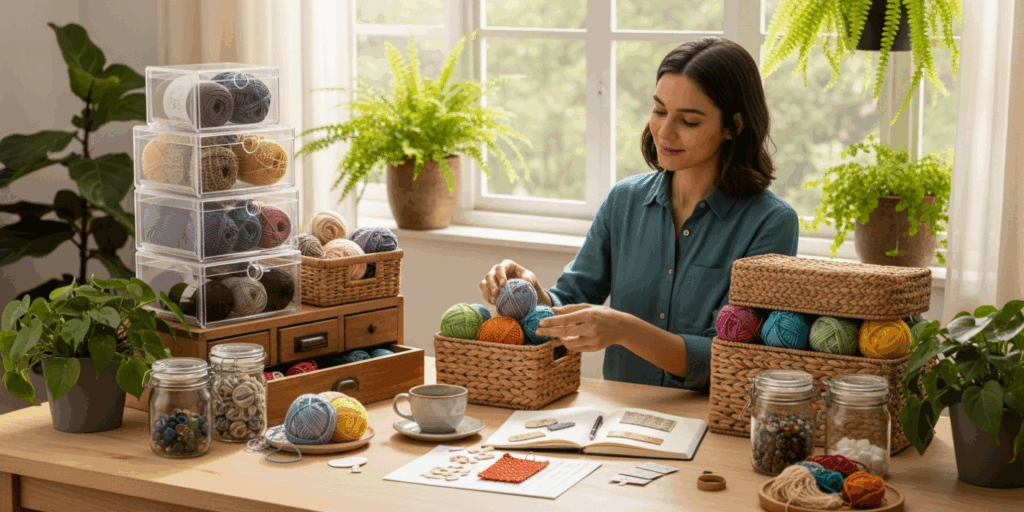
You don’t need to spend hundreds on custom cabinets to get your yarn under control. In fact, some of the best solutions are simple, affordable, and already sitting in your home.
1. Clear Plastic Bins with Lids
These are the unsung heroes of yarn organization. Look for stackable, clear bins with handles—like those from IKEA’s KUNGSBACKA or The Container Store’s Sterilite line. They’re durable, dust-proof, and let you see your yarn at a glance. Label each bin by color family (e.g., “Neutrals,” “Blues,” “Brights”) or fiber type (wool, cotton, acrylic). You’ll spend less time rummaging and more time creating.
2. Over-the-Door Shoe Organizers
Yes, really. That hanging organizer you used for shoes? Perfect for yarn. Hang it on the back of a closet or bedroom door. Each pocket holds one or two skeins, and you can easily see what’s inside. Bonus: it’s portable! Tuck it behind a door when guests come over, or move it to your favorite reading nook.
3. Repurposed Bookshelves or Floating Shelves
If you have a spare bookshelf, turn it into a yarn display. Arrange your yarn by color gradient—like a rainbow—and you’ll turn storage into art. Floating shelves work beautifully in small spaces. Just make sure to use bins or baskets on top to keep things tidy and prevent dust buildup.
4. Drawer Dividers + Yarn Bins
Use drawer dividers (like those from IKEA’s SKUBB system) to separate yarn by weight or project. Put each skein in a labeled zip-top bag or small fabric bin. This keeps them from rolling around and makes it easy to grab what you need for your next project.
Real-Life Hack: One crocheter I know uses a rolling laundry basket on wheels for her “current project” yarn. It rolls from her couch to her knitting chair to the guest room where she works on it while visiting family. Simple? Yes. Genius? Absolutely.
The key? Match your solution to your space and habits. If you’re mobile, go for portable options. If you have a dedicated craft corner, invest in labeled bins and good lighting. Your system should make life easier—not add another chore.
The Magic of Sorting: How Color, Weight, and Fiber Type Change Everything
Sorting your yarn isn’t just about making your shelf look Instagram-worthy—it’s about working smarter.
Most experienced crafters sort their yarn by three key criteria:
- Weight (e.g., lace, fingering, worsted, bulky)
- Fiber Type (wool, cotton, alpaca, synthetic blends)
- Color Family (pastels, neutrals, jewel tones, variegated)
Why does this matter?
Let’s say you’re planning a baby blanket. You know you want something soft, machine-washable, and in a light color. If your yarn is sorted by weight and fiber, you can instantly pull all your cotton worsted yarns—and then choose the perfect shade from the “pastels” section. No guessing. No digging. No frustration.
Try this simple system:
- Start with weight. Use labels like “Lace,” “Sport,” “DK,” “Worsted,” “Bulky.” These are standard categories most patterns use.
- Then, group by fiber. Wool can be itchy for some, so keep it separate from cotton or bamboo for sensitive projects.
- Finally, arrange by color. A rainbow gradient is visually soothing and helps you spot complementary colors for future projects.
Bonus Idea: Use colored tape or sticky notes on your bins to match the yarn inside. A little pink dot on the bin for pink yarn? Instant visual cue.
And here’s the secret most people miss: sort as you go. When you finish a project, don’t just toss the leftover yarn into a box. Take five minutes to wind it into a center-pull ball, tag it with fiber type and yardage, and put it in its proper spot. That tiny habit prevents the “yarn avalanche” down the road.
I once met a knitter who kept all her leftovers in a single grocery bag. She’d bought 15 different yarns for one blanket—and never finished it because she couldn’t remember what she had left. After sorting and labeling, she finished the blanket… in two weeks. All because she could see what was there.
Creative Hacks: Turning Everyday Items Into Yarn Storage Gold
You don’t need to buy anything new to get organized. Sometimes, the best solutions are hiding in plain sight.
Here are five genius DIY yarn storage hacks you can try today:
1. Tension Rods + Hanging Baskets
Install a tension rod between two closet walls or inside a cabinet. Hang lightweight fabric baskets (like those from IKEA) from it. Each basket holds a few skeins, and you can slide them in and out like files. Perfect for narrow spaces.
2. Shoeboxes + Contact Paper
Line old shoeboxes with pretty contact paper or scrapbook paper. Label them with a marker or printed tags. Stack them like drawers. They’re lightweight, customizable, and totally free if you’re reusing boxes.
3. Pegboard Wall System
Mount a small pegboard (like those used in garages) on your craft room wall. Add hooks, baskets, and even small bins. Hang your yarn balls on hooks, and use baskets for tools or small projects. It’s functional, visible, and looks cool.
4. Lazy Susan Turntable
Grab a kitchen turntable (the kind used for spices) and place it on your desk or shelf. Put yarn balls or small bins on it. Spin to find what you need. Works wonders for small collections or frequently used yarns.
5. Repurposed Magazine Holders
Those slim, vertical holders from your home office? Perfect for storing skeins upright. Stand them like books on a shelf—each one holds one or two balls. Great for visual impact and easy access.
One of my favorite stories? A retiree in Ohio turned her old wine rack into a stunning yarn display. Each slot held a skein, labeled with the project name and date bought. She called it her “Yarn Library.” Guests would ooh and ahh—and she’d say, “It’s not just storage. It’s my memory book.”
That’s the beauty of thoughtful organization: it turns practicality into meaning.
Maintaining Your System: How to Keep Your Stash Tidy (Without the Guilt)

Here’s the truth: organization only works if you stick with it.
A beautifully sorted yarn closet is useless if you just keep tossing new yarn in without a plan. So how do you avoid falling back into chaos?
Rule #1: The One-In, One-Out Rule
Before you buy a new skein, ask: What am I letting go of? Maybe it’s an old yarn you never used, or a duplicate color. Donate it, swap it, or give it to a friend. This keeps your stash growing thoughtfully—not endlessly.
Rule #2: Schedule a Monthly “Yarn Check-In”
Set a recurring calendar reminder: “Yarn Inventory 1st Saturday of the Month.” Spend 15 minutes:
- Re-wind any loose balls
- Check for moth damage or dust
- Relabel anything that’s faded
- Take a photo of your updated stash (yes, again!)
This isn’t about perfection. It’s about awareness.
Rule #3: Keep a Digital Inventory
Use a free app like Ravelry (the knitter’s holy grail) or even a simple Google Sheet. Log each skein:
- Brand and name
- Weight and yardage
- Color and dye lot
- Where it’s stored
- Project it’s meant for
It takes 30 seconds per skein—and saves you hours later. I’ve personally avoided buying 3 duplicate skeins of the same blue yarn because my spreadsheet told me I already had it. That’s $24 saved. Just by typing a few words.
And if you’re feeling overwhelmed? Start small. Pick one drawer. Sort it. Celebrate it. Then move to the next. Progress, not perfection.
The Emotional Payoff: How Organization Fuels Your Creativity
There’s something deeply calming about walking into a space that feels orderly—even if it’s full of yarn.
When your stash is organized, you stop feeling guilty about your purchases. You stop feeling anxious about unfinished projects. You stop saying, “I’ll start that when I find the right yarn.”
Instead, you start saying: “I have everything I need right here.”
Organized yarn isn’t just about tidiness. It’s about freedom.
Freedom to experiment.
Freedom to try new patterns.
Freedom to gift handmade items without stress.
One reader wrote to me last month: “I organized my yarn after my mom passed away. She was a knitter too. Seeing all her colors—her favorites, her leftovers—it felt like talking to her again. I finished her scarf last week. I cried, but I smiled more.”
That’s the quiet power of organization. It doesn’t just hold your yarn. It holds your memories, your dreams, your healing.
You’re not just storing thread and fiber. You’re preserving moments.
Final Thoughts: Your Yarn, Your Rules
There’s no single “right” way to store yarn. What works for a college student in a dorm room won’t work for a retired knitter with a sunlit studio. The best system is the one you’ll actually use.
So ask yourself:
- What’s stopping me from organizing?
- What’s one small step I can take today?
Maybe it’s putting your next project yarn in a labeled bin.
Maybe it’s taking a photo of your stash.
Maybe it’s donating three skeins you haven’t touched in two years.
Start there.
Your future self—calm, creative, and confident—will thank you.
And hey, if you’ve tried any of these ideas—or have your own genius hack—drop it in the comments below. I’d love to hear what works for you. Let’s build a community of organized, joyful crafters together.
Because your yarn deserves more than a dusty corner.
It deserves to be seen.
It deserves to be used.
And most of all?
It deserves to inspire you.
Now go find that perfect skein—and make something beautiful.

Maria Santos is a dedicated crochet and knitting enthusiast who finds joy in turning simple strands of yarn into meaningful, handmade art. With a natural eye for detail and a deep love for fiber crafts, she brings warmth, creativity, and years of personal experience to every project. Maria is inspired by the stories woven into each stitch and loves sharing that passion with others.