You’ve spent hours—maybe even days—crocheting that perfect blanket, hat, or amigurumi. The colors are soft, the stitches even, the pattern flawless. But when you fasten off… something feels off. A lumpy seam. A visible join. A gap where the magic should be.
If you’ve ever stared at your finished project and thought, “This looks handmade… too handmade,” you’re not alone. Many crocheters—even experienced ones—struggle with finishes that scream “I did this by hand” instead of whispering, “This was made with care.”
The truth? Seamless finishes aren’t magic. They’re technique.
In this guide, we’ll walk through the most effective, beginner-friendly methods to create smooth, invisible joins in your crochet projects—whether you’re working in the round, sewing pieces together, or finishing off edges. No more lumpy seams. No more visible ends. Just clean, professional-looking results that make people ask, “Did you buy this?”
We’ll cover everything from the magic ring to the invisible join, the slip stitch secret that changes everything, and how to weave in ends so neatly, they vanish. Plus, we’ll share real-life tips from crocheters who’ve turned “meh” projects into heirlooms.
By the end, you’ll have a toolkit of seamless techniques you can use on any project—and the confidence to finish with pride. Let’s make your next creation look like it came from a boutique, not your couch.
Why Seamless Finishes Matter (More Than You Think)
Let’s be honest: most of us crochet because it’s relaxing. It’s meditative. It’s a way to slow down and create something beautiful with our hands. But here’s the irony—when we rush the finish, we undermine all that care.
Think about it. You spent 20 hours on a baby blanket. You picked the yarn with love. You matched every color change perfectly. Then, you fastened off with a simple knot and left six inches of yarn dangling. Suddenly, that blanket doesn’t feel special anymore. It feels unfinished.
Seamless finishes aren’t just about aesthetics—they’re about respect. Respect for your time. Respect for the person who’ll use or receive your creation. And yes, even respect for yourself.
A visible seam can make a project look amateurish—even if the rest is flawless. A lumpy edge on a beanie? It won’t sit right. A jagged join on a granny square afghan? It breaks the flow. And those loose ends poking out? They catch on everything.
The good news? You don’t need fancy tools or advanced skills to fix this. Most seamless techniques take less than a minute to master—and once you do, your projects will look like they were made by a pro.
I remember my first real “aha!” moment: I’d been crocheting scarves for years, always ending with a clumsy slip stitch and a knot. Then I tried the invisible join—just a simple slip stitch followed by weaving the tail through the front loops. The difference? Night and day. My scarf looked like it had been machine-knit. My friend asked if I’d bought it at a craft fair.
That’s the power of a seamless finish. It doesn’t just hide flaws—it elevates your work.
So if you’ve been skipping the finish because it feels tedious… I get it. But trust me—this part? It’s where the magic happens.
The Invisible Join: Your Secret Weapon for Rounds
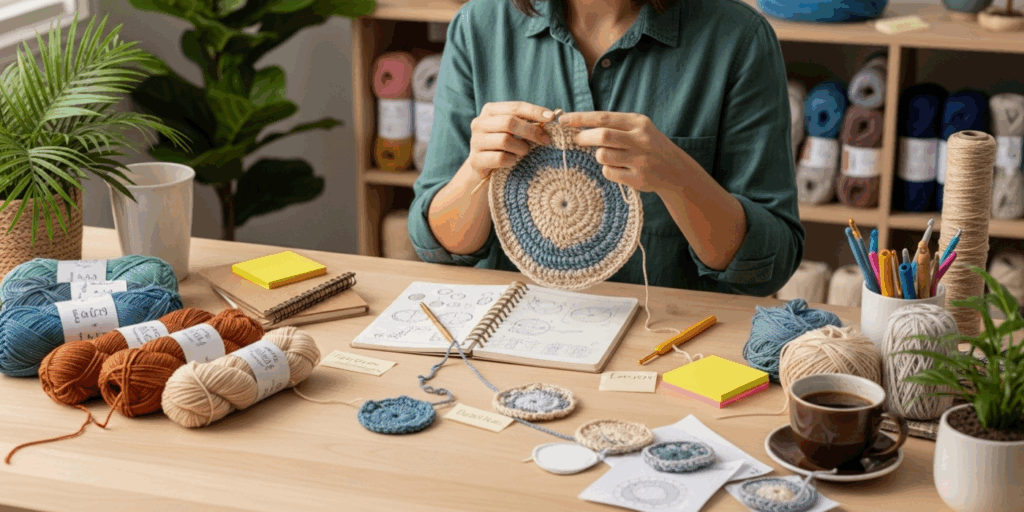
If you crochet in the round—whether it’s hats, amigurumi, or coasters—you’ve probably used the classic slip stitch to close your rounds. But here’s the problem: that slip stitch creates a visible bump. It looks like a little “stair step” around your circle.
Enter: the invisible join.
This technique replaces the traditional slip stitch with one that hides the join entirely. It’s so subtle, even seasoned crocheters sometimes don’t notice it until you point it out.
Here’s how to do it (and yes, I’ll walk you through it slowly):
- Work your last stitch as normal—don’t pull it tight yet.
- Cut your yarn, leaving a 6-inch tail.
- Insert your hook into the first stitch of the round (the same one you started with), but not through both loops—just the front loop only.
- Pull the tail through that front loop. You now have one loop on your hook.
- Gently tug the tail to close the gap. The stitch should disappear into the fabric.
- Weave in the end as usual—through the back of the stitches, following the path of the yarn.
That’s it. No bump. No line. Just a smooth, continuous circle.
Pro tip: For amigurumi, this technique is a game-changer. It makes your stuffed animals look polished, not patched. And if you’re making a hat? The invisible join means no ridge on the crown—just a clean, snug fit.
I used this on a set of Christmas ornaments last year. My niece thought they were store-bought. She didn’t believe me when I told her I made them. That’s the kind of reaction you want.
Try it on your next round. You’ll wonder why you ever used the old way.
Mastering the Slip Stitch Seam: No More Gaps or Lumps
Now, let’s talk about sewing pieces together. Whether you’re joining granny squares, attaching sleeves, or closing the back of a cardigan, the slip stitch seam is your best friend.
But here’s what most people do wrong: they sew too tightly, or they skip stitches, or they don’t match the tension. The result? A wavy edge, a puckered seam, or—worst of all—a gap where the two pieces don’t quite meet.
The solution? Match your seam tension to your stitch tension.
Here’s how:
- Lay your two pieces side by side, right sides facing each other.
- Thread your yarn needle with the same yarn you used for the project.
- Insert the needle through the front loop of the first stitch on one piece, then through the front loop of the matching stitch on the other piece.
- Pull gently—not tight, not loose. Just enough to bring the edges together without distorting the fabric.
- Repeat, stitch by stitch, keeping your needle parallel to the edge.
Why front loops only? Because the back loops create a ridge. Front loops lie flat. And if you’re working with a stretchy fabric (like a hat or sock), this method gives you just enough give to stay comfortable.
I once made a blanket from 48 granny squares. The first few I sewed with the old “through both loops” method. They looked like little mountains. I ripped them all out. Then I tried the front-loop slip stitch seam. It was like magic—flat, even, and invisible from both sides.
Bonus tip: If you’re joining two pieces of different sizes? Use a ladder stitch (also called the whip stitch) instead. It’s more forgiving and allows slight adjustments as you go.
And don’t forget: always weave in your ends after sewing. That way, you avoid having to unpick your seam later.
Weaving in Ends Like a Pro (No More Bumps or Bulges)
You’ve joined your pieces. You’ve hidden your seams. Now comes the part everyone dreads: weaving in ends.
It’s tedious. It’s time-consuming. And if you do it poorly, it ruins the whole look.
Here’s the truth: a well-woven end should be undetectable. No bumps. No loose threads. No unraveling after the first wash.
Let me share my foolproof method:
- Use a yarn needle—not a regular sewing needle. It’s blunter and won’t split your yarn.
- Weave in both directions. Go in one direction for 1.5 inches, then turn and go back along the same path. This locks the end in place.
- Follow the path of the stitches. Don’t weave across the grain—go with it. If you’re in a single crochet row, weave under the top loops of the stitches beside you.
- Weave into the same color area. If you’re changing colors, don’t weave the new end into the old color—it’ll show. Always match.
- Trim the end close—but not too close. Leave about 1/8 inch. If you cut it flush, it might pull loose over time.
One trick I swear by: After weaving in, give the yarn a gentle tug from the back. If it moves, weave it again. If it stays put? You’re golden.
I learned this the hard way. I made a sweater and rushed the ends. After two washes, three little tails popped out like flags. I had to unravel half the hem to fix it. Never again.
And here’s a pro tip for color changes: Instead of cutting the yarn every time, carry it up the side. For stripes, this means fewer ends to weave in—and a cleaner look. I’ll show you how in the next section.
The Carry-Along Technique: Fewer Ends, Cleaner Looks
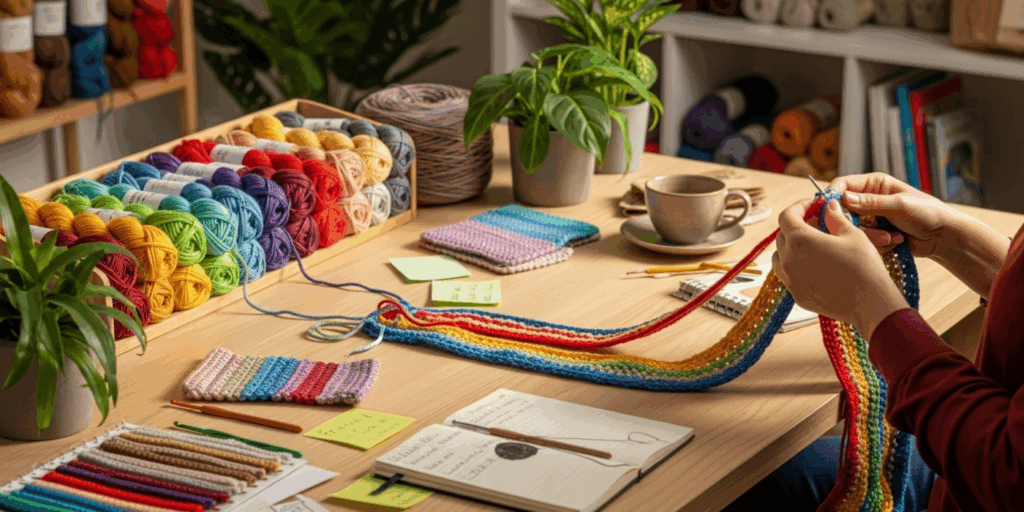
One of the biggest culprits of messy finishes? Too many cut ends.
Every time you change colors—especially in stripes—you’re adding another end to weave in. Multiply that by 50 rows, and you’ve got a mountain of tails.
Enter: the carry-along technique.
This is a game-changer for striped blankets, scarves, and even amigurumi with color accents.
Here’s how it works:
- When you finish a row in Color A, instead of cutting it, carry the unused yarn along the edge of your work.
- Hold it loosely behind your work as you crochet the next row in Color B.
- When you come back to Color A, just pick it up and continue.
It’s simple, but it takes practice. The key? Don’t pull it tight. If you tug the carried yarn too hard, it’ll pucker your fabric. Keep it loose—like you’re giving it a little hug.
I used this on a baby blanket with 12 alternating stripes. Instead of 24 ends to weave in, I had just 4—two at the start and two at the end. The result? A smooth, uninterrupted surface with no visible “color change lines.”
Bonus: This technique also reduces bulk. No more thick, lumpy edges where you’ve woven in ten ends in one spot.
Just remember: carry the yarn only if the next color change is within 3–4 rows. If you’re waiting 10 rows? Cut it. Otherwise, you’ll get a long, loose strand that can snag.
Try it on your next stripe project. You’ll cut your finishing time in half—and your project will look impossibly clean.
The Magic of Blocking: Turning Good into Gorgeous
You’ve done everything right: invisible join, slip stitch seam, perfectly woven ends. But your project still looks a little… off.
That’s where blocking comes in.
Blocking isn’t just for knitters. Crocheters need it too—especially with lace, blankets, and garments.
Blocking is the process of wetting (or steaming) your finished piece and shaping it to dry in the desired form. It evens out stitches, relaxes tension, and smooths out any tiny imperfections.
Here’s how to block your crochet like a pro:
- Soak your item in lukewarm water with a bit of gentle detergent (no soap!).
- Gently squeeze out the water—don’t wring.
- Lay it flat on a towel, roll it up, and press to remove excess moisture.
- Transfer to a blocking mat (or a clean towel on the floor).
- Use rust-proof pins to stretch and shape your piece to the desired dimensions.
- Let it dry completely—this can take 24–48 hours.
I blocked my first shawl and nearly cried. It went from a floppy, uneven mess to a crisp, elegant triangle that looked like it belonged in a catalog.
Blocking doesn’t fix bad stitches—but it does turn good stitches into breathtaking ones. It’s the final touch that says, “This wasn’t just made. It was cared for.”
And here’s the best part? It’s free. You don’t need special tools. Just water, pins, and patience.
Final Thoughts: Finish With Pride
You’ve made something beautiful. You’ve poured your time, your thoughts, your quiet moments into it. So why settle for a finish that says “I rushed”?
Seamless crochet isn’t about perfection. It’s about presence. It’s about honoring your work by giving it the attention it deserves—not just in the making, but in the closing.
The invisible join? It’s quiet confidence.
The slip stitch seam? It’s thoughtful precision.
The woven ends? They’re love made visible.
And blocking? That’s the final breath of care before you let your creation go into the world.
Next time you finish a project, pause. Don’t just cut and run. Take five minutes. Use one of these techniques. Feel the difference.
Because the best part of crochet isn’t just the finished item—it’s the quiet pride that comes when you know, deep down, that you didn’t just make something… you crafted it.
What’s your favorite seamless technique? Have you tried the invisible join? Or do you have a trick I didn’t mention? Drop a comment below—I read every one. And if this helped you, share it with a fellow crocheter who deserves smoother finishes too.
Your next project? Let it be the one that looks like it came from a studio… even though you made it with your own two hands.
Maria Santos is a dedicated crochet and knitting enthusiast who finds joy in turning simple strands of yarn into meaningful, handmade art. With a natural eye for detail and a deep love for fiber crafts, she brings warmth, creativity, and years of personal experience to every project. Maria is inspired by the stories woven into each stitch and loves sharing that passion with others.