
You don’t need to be a craft expert to fall in love with crochet. In fact, some of the most beautiful, cozy, and handmade things in the world — from baby blankets to cozy scarves, from amigurumi toys to stylish hats — started with just three simple stitches. Yes, really. If you’ve ever looked at a crocheted item and thought, “I could never make that,” let me tell you: you absolutely can. And it all begins with mastering the single crochet, the double crochet, and the half double crochet. These aren’t just stitches — they’re your gateway to creativity, calm, and confidence.
In this guide, we’re going to break down these three foundational stitches in a way that feels like a friendly chat over coffee — no jargon, no pressure, no confusing diagrams that leave you staring blankly. Whether you’re holding a hook for the first time or you’ve been tinkering with yarn for a while but feel stuck, this is your moment to finally get it. We’ll walk through exactly how to make each stitch, why they matter, how they differ, and how to use them in real projects you’ll love. Plus, I’ll share practical tips, common mistakes to avoid, and even a little story about how a single stitch changed someone’s life (yes, really). By the end, you won’t just know how to crochet — you’ll feel like you’ve unlocked a quiet, joyful superpower.
Why These Three Stitches Are Your New Best Friends
Let’s be honest: the internet is full of crochet tutorials that overwhelm beginners with 15 different stitches before you’ve even learned how to hold the hook. It’s like being handed a piano and told to play Beethoven on day one. But here’s the truth: you don’t need 50 stitches to make something beautiful. In fact, most patterns you’ll ever love — from granny squares to afghans, from dishcloths to sweaters — are built almost entirely on just three stitches: single crochet (sc), double crochet (dc), and half double crochet (hdc).
Think of them like the ABCs of crochet. Once you know them, you can read patterns, fix mistakes, and even design your own pieces. They’re the building blocks. And the best part? They’re all made with the same basic motions — just slightly different steps. Mastering them doesn’t take weeks. With a little practice, you can get comfortable in just a few hours.
I remember my first crochet project: a simple dishcloth. I was tired after work, scrolling through Pinterest, and saw a photo of a soft, textured cloth in a warm beige. It looked handmade, cozy, and doable. So I bought a hook and some cheap acrylic yarn — $5 total. I watched a 10-minute video on single crochet, practiced for 20 minutes, and made my first row. It was messy. Uneven. A little crooked. But I kept going. And by the end of the evening, I had a real, usable dishcloth. That tiny win? It changed everything. Suddenly, I wasn’t just making a cloth — I was making something with my hands. And that felt powerful.
These three stitches give you control, texture, and versatility. Single crochet gives you tight, dense fabric perfect for bags or baby items. Double crochet creates open, airy fabric ideal for shawls or blankets. Half double crochet? It’s the happy medium — slightly taller than single, slightly denser than double. It’s the stitch many designers use when they want something soft but not too loose. Understanding these differences isn’t just technical — it’s creative freedom.
And here’s the secret: you don’t need to memorize everything at once. Start with one. Master it. Then move to the next. That’s all.
Single Crochet: The Quiet Hero of Crochet
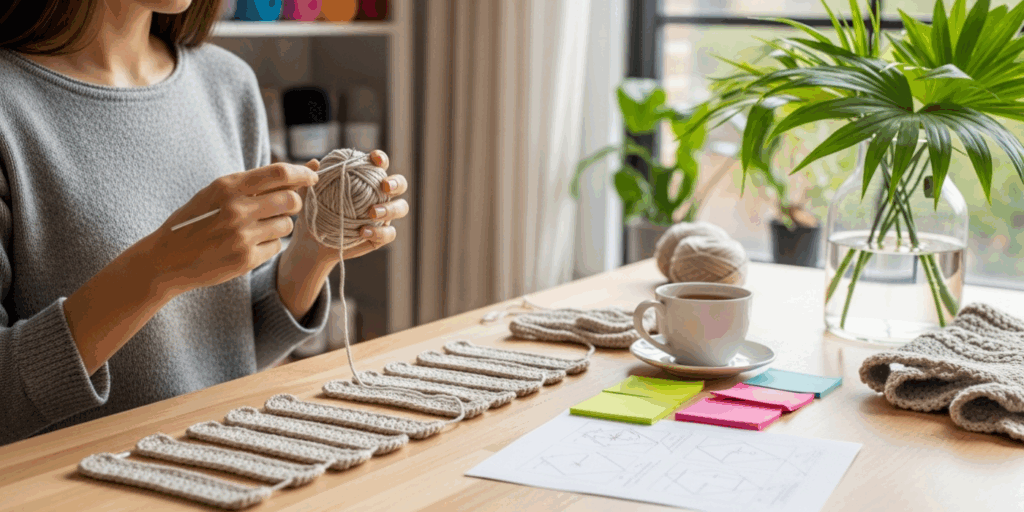
If crochet had a foundation stone, single crochet would be it. It’s short, sturdy, and surprisingly versatile. You’ll see it in amigurumi (those adorable stuffed animals), dishcloths, beanies, and even intricate lace patterns — often paired with other stitches for texture.
Here’s how to do it, step by step — no fancy terms, just clear instructions:
- Start with a slip knot and chain a few stitches (10–15 is fine for practice).
- Insert your hook into the second chain from the hook. (Yes, the first chain is just your starting point — you skip it.)
- Yarn over (wrap the yarn over the hook from back to front).
- Pull the yarn through the chain. Now you have two loops on your hook.
- Yarn over again.
- Pull through both loops on the hook. One single crochet done!
That’s it. Repeat across the row. At the end, chain one (this is your turning chain), turn your work, and start again in the next stitch.
Why it matters: Single crochet creates a tight, warm fabric. It’s perfect for items that need structure — like a tote bag that won’t stretch out, or a baby blanket that needs to be durable. It’s also great for colorwork because the stitches are small and neat, making patterns pop.
Pro tip: If your edges look wavy or uneven, you’re probably not counting your stitches. Use a stitch marker or even a small piece of tape to mark the first stitch of each row. Count every 10 stitches out loud — it helps train your eye.
I once made a scarf using only single crochet. It took me three weeks. But when I wrapped it around my neck on a chilly morning, it felt like a hug. That’s the magic of this stitch — it doesn’t shout. It whispers comfort.
Half Double Crochet: The Sweet Spot Between Two Worlds
Now, let’s talk about the stitch that most beginners overlook — the half double crochet (hdc). It’s often called the “middle child” of crochet stitches, but honestly? It’s the MVP.
Here’s why: it’s taller than single crochet, so your project grows faster. But it’s not as open as double crochet, so it holds its shape beautifully. The result? A fabric that’s soft, warm, and has a lovely drape — perfect for scarves, cowls, and even sweaters.
How to make it:
- Start the same way — yarn over before inserting your hook.
- Insert your hook into the next stitch (again, skip the first chain unless the pattern says otherwise).
- Yarn over again.
- Pull through the stitch — now you have three loops on your hook.
- Yarn over one more time.
- Pull through all three loops at once.
Boom. One hdc done.
The magic trick: That initial yarn over before you insert the hook? That’s what makes it different from single crochet. It adds height and a slightly looser texture — but not so loose that it gaps. It’s like the Goldilocks of crochet stitches: not too tight, not too loose. Just right.
I used hdc for my first-ever shawl. I thought I’d need a fancy pattern, but I just did rows and rows of hdc, switched colors every 10 rows, and ended up with a lightweight, cozy wrap that my sister still asks for every winter. No fringe. No tassels. Just pure, simple texture.
Bonus benefit: HDC is forgiving. If you make a mistake, it’s easier to fix than single crochet because the stitches are taller. And if you’re working with bulky yarn? HDC is your best friend — it doesn’t get too stiff.
Try this: Make a small swatch with single crochet, then one with half double crochet side by side. Feel the difference. Notice how the hdc looks more “full” and has a subtle ridge? That’s the signature of this stitch. Once you see it, you’ll start noticing it everywhere — in sweaters at the mall, in handmade scarves on Instagram, even in vintage blankets passed down through generations.
Double Crochet: The Speedy Star That Builds Big Projects
If single crochet is the quiet hero and hdc is the sweet spot, then double crochet is the rockstar. It’s tall, fast, and creates that classic, open, lacy look we all associate with cozy blankets and elegant shawls.
Here’s how to do it:
- Chain 2 (this counts as your first double crochet in most patterns).
- Yarn over.
- Insert your hook into the next stitch (the third chain from the hook if you’re starting a row).
- Yarn over again.
- Pull through the stitch — now you have three loops on your hook.
- Yarn over.
- Pull through the first two loops.
- Yarn over again.
- Pull through the last two loops.
One double crochet complete.
Why it’s a game-changer: Double crochet works up fast. If you’re making a blanket, this is the stitch that gets you there without burning out. It’s also the backbone of granny squares, ripple afghans, and lace patterns. The open structure lets air flow through — perfect for spring wraps or summer tops.
But here’s the catch: because it’s taller, it can sometimes look “loose” or “gappy” if you’re not careful. That’s why tension matters. Don’t pull too tight — your yarn should glide smoothly. And always count your stitches. A single missed stitch in a long row of dc can throw off your whole project.
I made my first blanket using only double crochet. I thought I’d be done in a weekend. I was wrong. It took three weeks. But every night, I’d sit on the couch, watch a show, and make row after row. It became my meditation. The rhythm of yarn over, hook in, pull through… it was calming. When I finished, I draped it over my bed. It didn’t just keep me warm — it reminded me that consistency, not perfection, creates something beautiful.
Pro tip: If you’re making something with lots of dc stitches (like a blanket), use a slightly larger hook than recommended. It helps the fabric breathe and prevents it from becoming too stiff.
Putting It All Together: How to Choose the Right Stitch for Your Project
So now you know the three. But which one should you use when?
Let’s break it down simply:
| Baby blankets, dishcloths, amigurumi | Single Crochet | Dense, warm, holds shape |
| Scarves, cowls, lightweight sweaters | Half Double Crochet | Soft, drapey, quick to work |
| Afghans, shawls, lace patterns | Double Crochet | Fast, airy, classic look |
Here’s a real-life example: I wanted to make a gift for my niece’s first birthday. I chose a single crochet baby blanket — not because it was the “easiest,” but because I wanted it to be safe. No gaps for tiny fingers to get caught, no loose threads. It took time, but every stitch felt like a promise.
Then, for my mom’s birthday, I made a shawl using hdc. She’s always cold in the house. I wanted something that felt luxurious but didn’t weigh her down. The hdc gave it that soft, cloud-like drape she loved.
And for my own winter wrap? Double crochet. I wanted something quick, airy, and beautiful enough to wear with jeans. I used a chunky yarn and made it in three days.
The point? Your project should guide your stitch choice — not the other way around.
And here’s the beautiful thing: you don’t have to stick to just one. Most patterns mix them. A scarf might start with hdc for warmth, then switch to dc for a lacy border. A blanket might have a single crochet edge to keep it tidy. Learning all three gives you the power to adapt, to experiment, to make things your own.
Common Mistakes (and How to Fix Them Without Frustration)
Let’s be real — you’re going to make mistakes. And that’s okay. In fact, mistakes are how you learn.
Here are the top three I see beginners struggle with — and how to fix them:
- Tension too tight → Your fingers are gripping the yarn like you’re holding a phone during a Zoom call. Relax. Let the yarn flow. Try using a larger hook size — it gives you more room.
- Counting stitches wrong → You lose one here, gain one there, and suddenly your blanket is crooked. Solution? Use stitch markers. Clip one at the beginning of each row. Count every 5 or 10 stitches. Say them out loud. “One… two… three…” It sounds silly, but it works.
- Starting in the wrong stitch → Especially with double crochet, people often start in the very first chain. Nope. You skip the first chain (or chain 2, depending on the pattern). This keeps your edges straight. Always check your pattern’s instructions — they’ll say “ch 2, turn, dc in next stitch.”
And if you mess up? Don’t rip it all out. Just undo one row at a time. It’s easier than you think. I’ve undone entire sweaters — and lived to tell the tale. Every mistake is just a step toward mastery.
The Quiet Joy of Making Something With Your Hands

There’s something deeply human about creating with your hands.
In a world where everything is instant — fast food, quick videos, one-click shopping — crochet slows you down. It asks you to be present. To count. To breathe. To watch a tiny loop of yarn turn into something real.
I’ve met people who started crocheting after a breakup. Others during lockdown. One woman told me she began after her husband passed away. “It was the first thing,” she said, “that didn’t make me feel alone.”
You don’t need to make a masterpiece to feel the benefit. Just one row. One square. One scarf.
These three stitches — single, half double, double — are more than techniques. They’re invitations. Invitations to slow down. To create. To heal. To connect.
When you finish your first project — whether it’s a dishcloth or a hat — don’t just admire it. Hold it. Feel the texture. Remember the quiet hours you spent making it. That’s not just craft. That’s care.
Your Turn: Start Today — One Stitch at a Time
You don’t need expensive yarn. You don’t need a fancy hook. You don’t need to be “good” at crafts.
All you need is 10 minutes. A hook. Some yarn. And the willingness to try.
So here’s what I want you to do:
- Grab any hook and yarn you have lying around.
- Make a slip knot.
- Chain 10.
- Do 10 single crochets.
- Then 10 half double crochets.
- Then 10 double crochets.
Feel the difference. Notice how each one feels in your hands. Write down what you liked best.
Then — and this is the important part — do it again tomorrow.
That’s how you learn. Not by watching a 30-minute video. Not by buying a $50 kit. But by showing up. One stitch. One row. One day at a time.
Crochet isn’t about perfection. It’s about presence.
And you? You’re already on your way.
What’s your first crochet project going to be?
Drop a comment below — I’d love to hear! And if this helped you feel less intimidated by crochet, please share it with someone who’s been wanting to start but doesn’t know where to begin. Sometimes, the kindest thing we can do is hand someone a hook — and say, “You’ve got this.” 💛
Maria Santos is a dedicated crochet and knitting enthusiast who finds joy in turning simple strands of yarn into meaningful, handmade art. With a natural eye for detail and a deep love for fiber crafts, she brings warmth, creativity, and years of personal experience to every project. Maria is inspired by the stories woven into each stitch and loves sharing that passion with others.